


The report is based on AppMagic data going back to 2022. For the live ops section, data was collected from December 2024 through November 2025.
Market condition
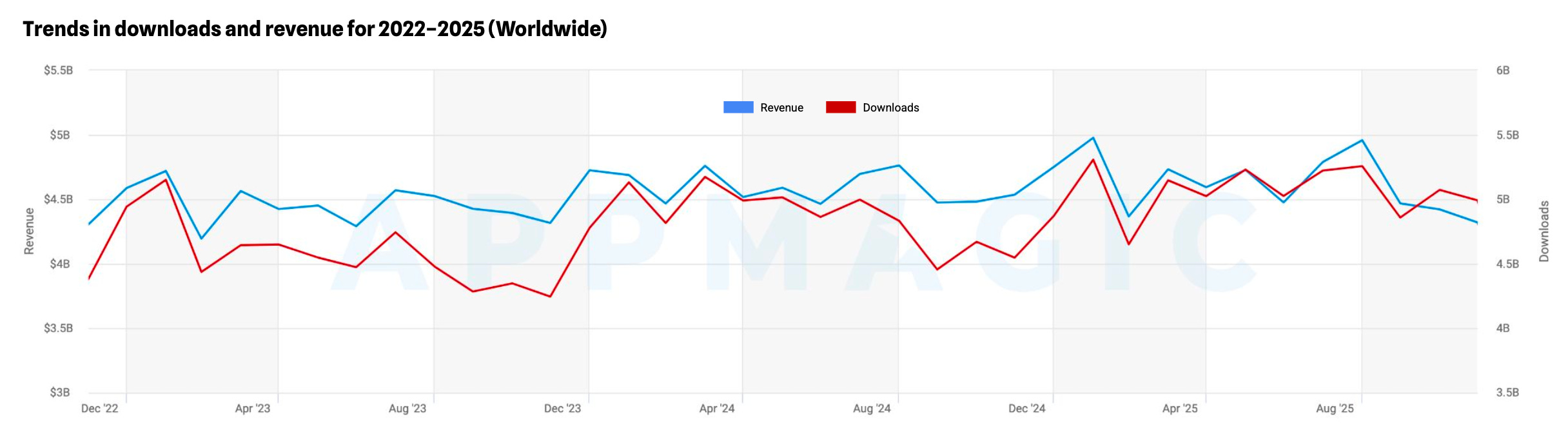
Mobile game downloads grew 4.1% YoY in 2025.
❗️Sensor Tower reports have cited a decline in mobile game downloads. The discrepancy comes down to different time windows (AppMagic’s dataset is shifted by a month) and different counting methodologies.
Revenue growth was a modest 0.7%.

In 2025, 65% of revenue came from midcore titles, 34% from casual, and 1% from hypercasual.
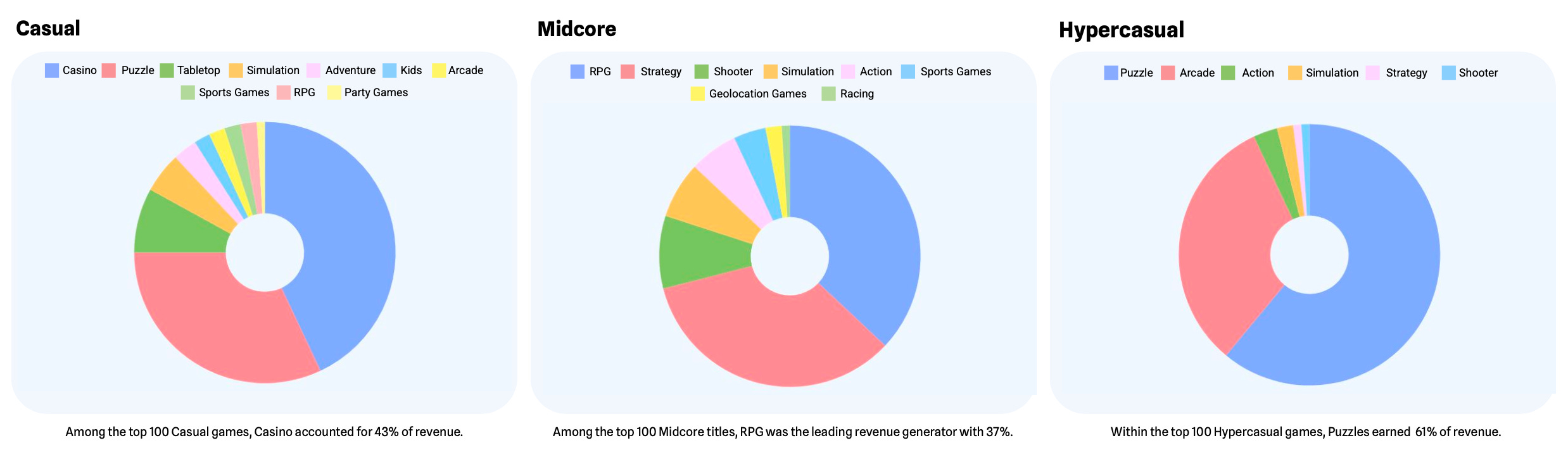
Casino accounts for 43% of all casual game revenue; RPG accounts for 37% of all midcore revenue; puzzles account for 61% of all hypercasual revenue.
Games released between 2015 and 2020 account for 49% of all mobile game revenue. Games released between 2023 and 2025 account for 22%.

The number of live ops events per game continues to grow. The year started with an average of 73 live ops events per month and ended with an average of 89. Intensity is increasing.
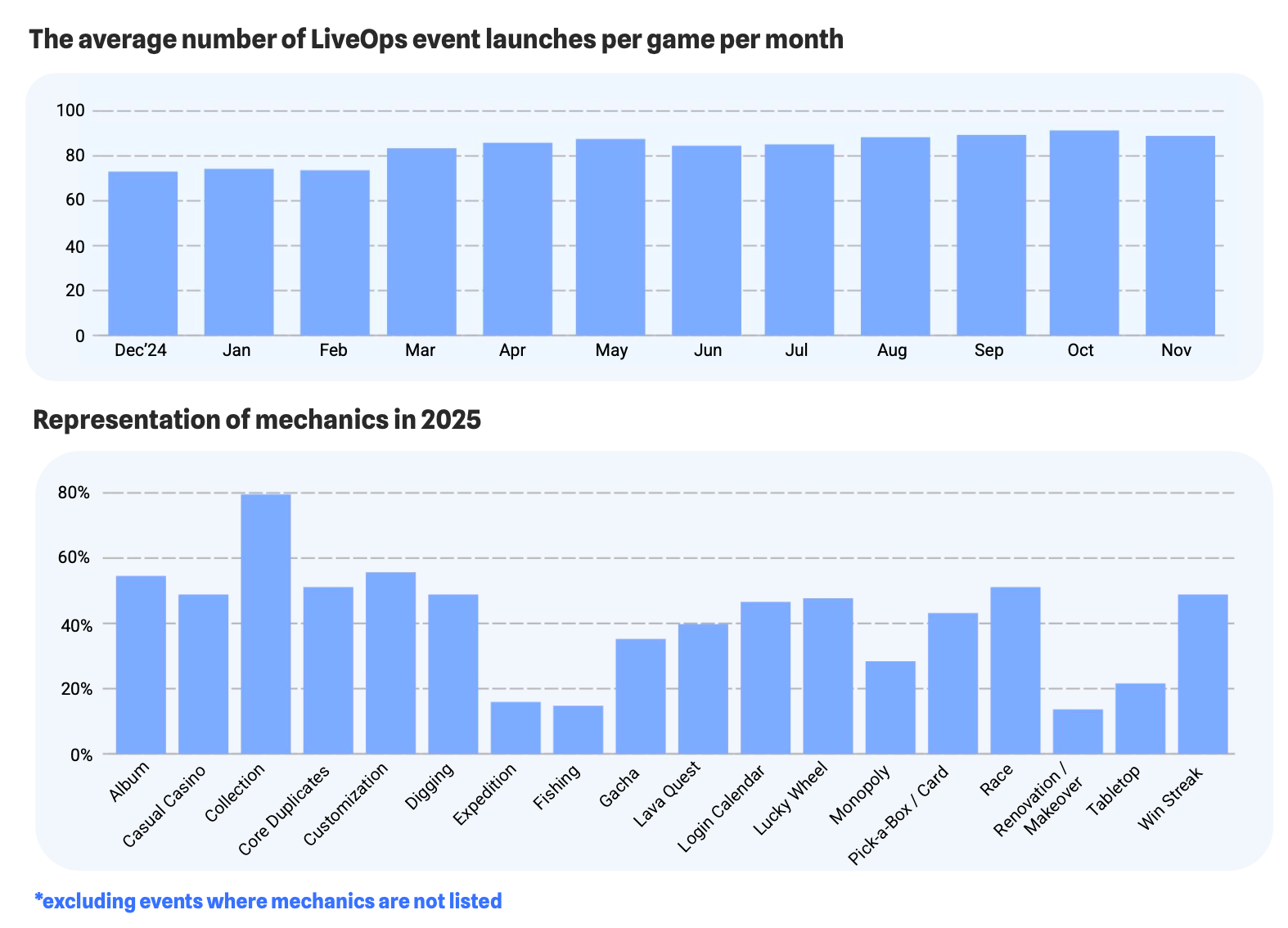
The most popular mechanic of 2025 is collections, present in 80% of analyzed titles. All mechanics related to collecting and gathering objects also grew in popularity.
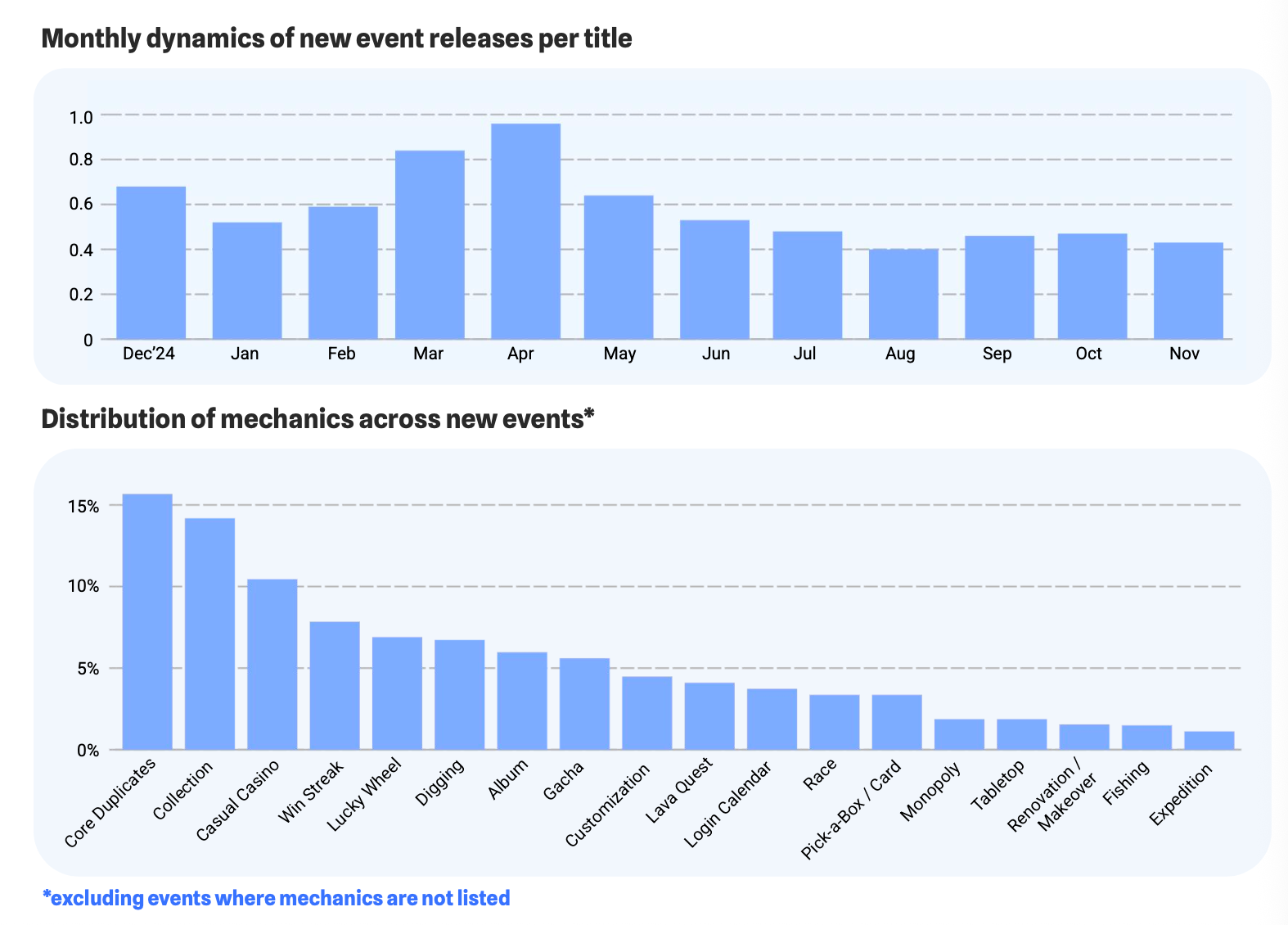
The rate of new mechanic introductions peaks in spring and slows in winter. AppMagic attributes this to developers preferring to rely on proven mechanics heading into the holiday period.
Even among new mechanics added during the year, developers tended to pick familiar ones. The least popular new event types were expeditions (1%) and fishing (1%).
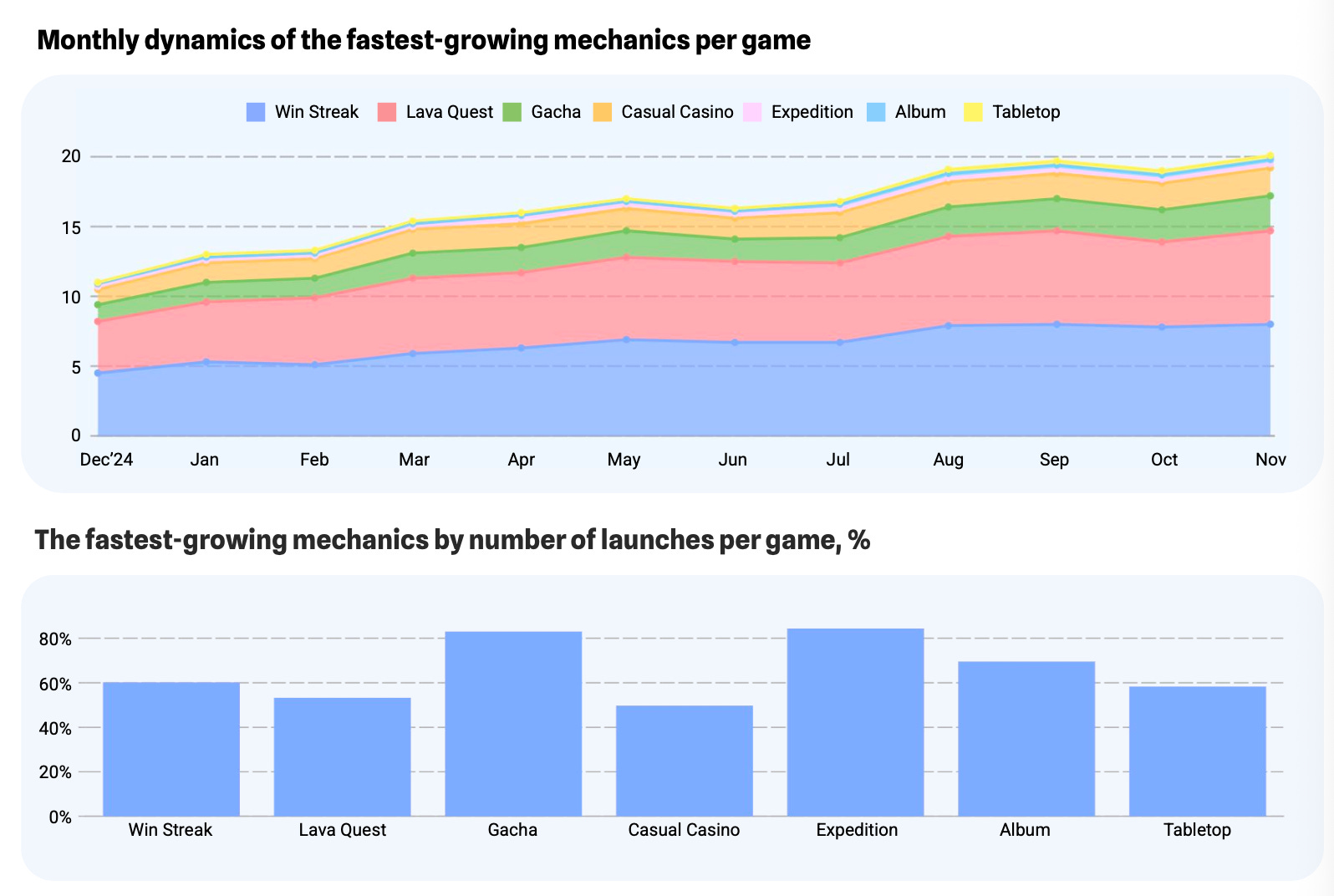
Usage of Win Streak and Lava Quest events grew by more than 50% in 2025, with nearly all of that growth in casual games.
Expeditions are rarely introduced as new events, but their usage frequency (once already in a game) exceeds 80%. The same applies to gacha. These are complex mechanics, and it makes sense that once implemented, developers lean on them heavily.
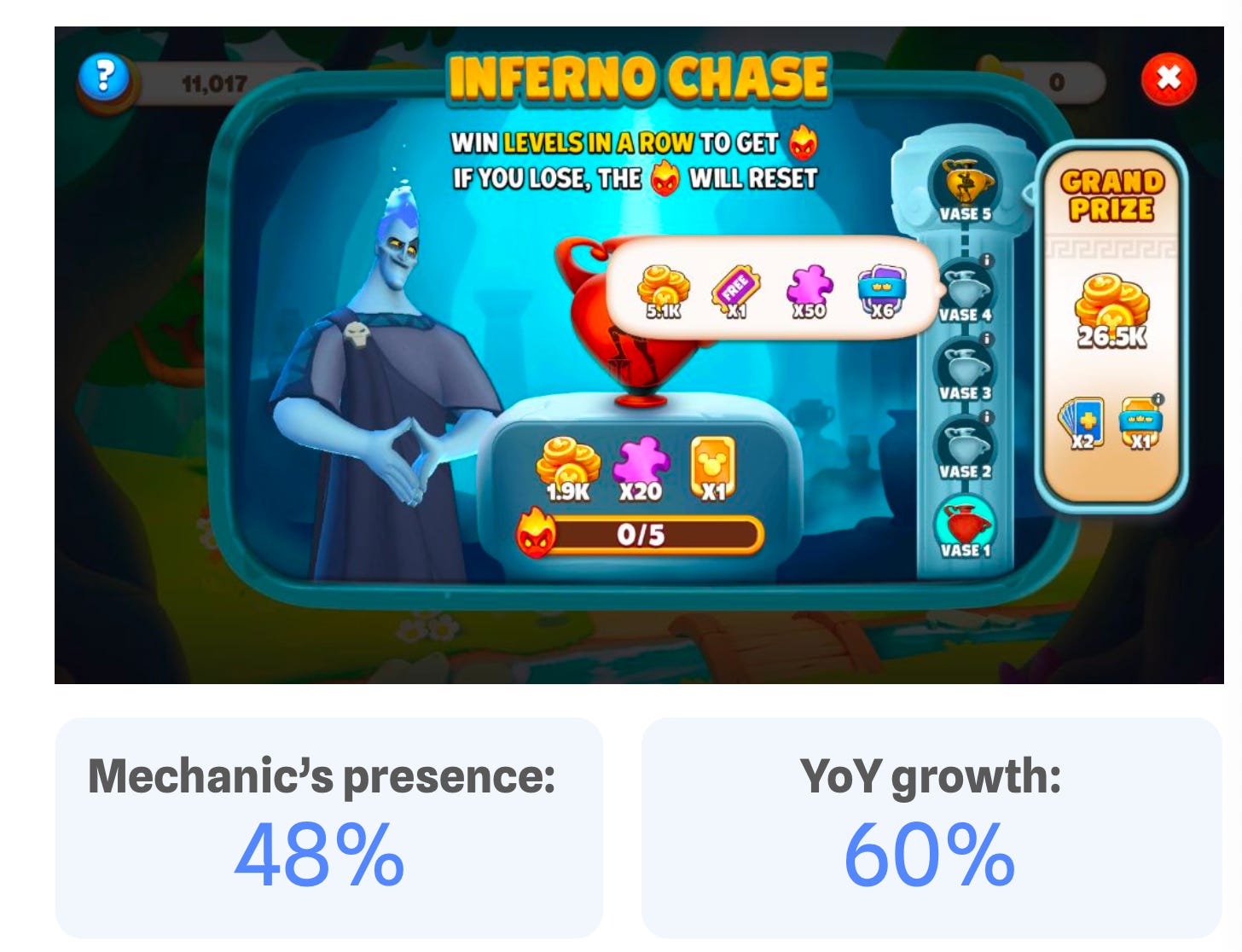
Win streaks are present in 48% of titles in AppMagic’s sample. The mechanic is popular in both casual and midcore games.
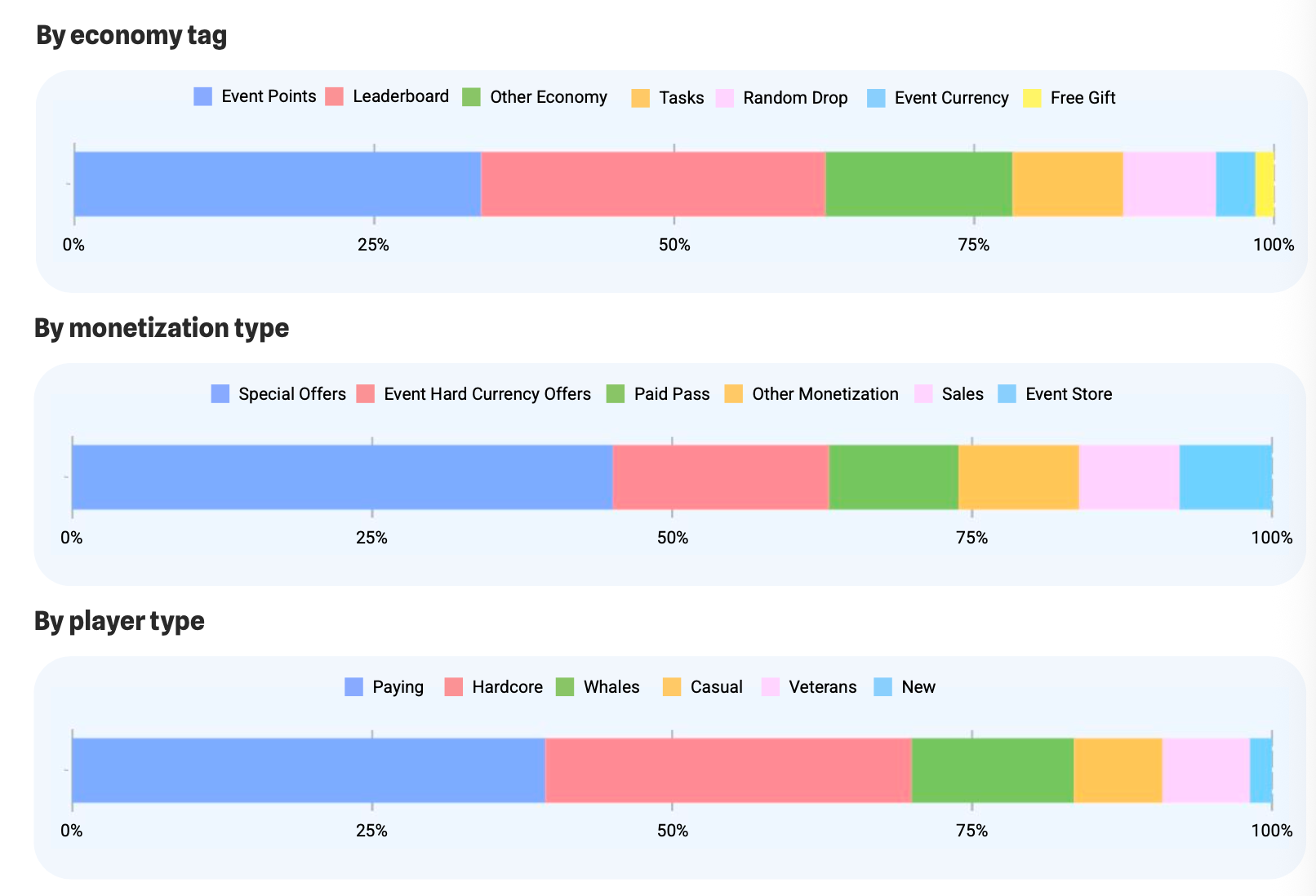
Almost all live ops events are available to both paying and non-paying users. But around 70% of them are clearly focused on paying users.
The most popular monetization mechanics are leaderboards and event currency. By year's end, free gifts appear around 30% more frequently.
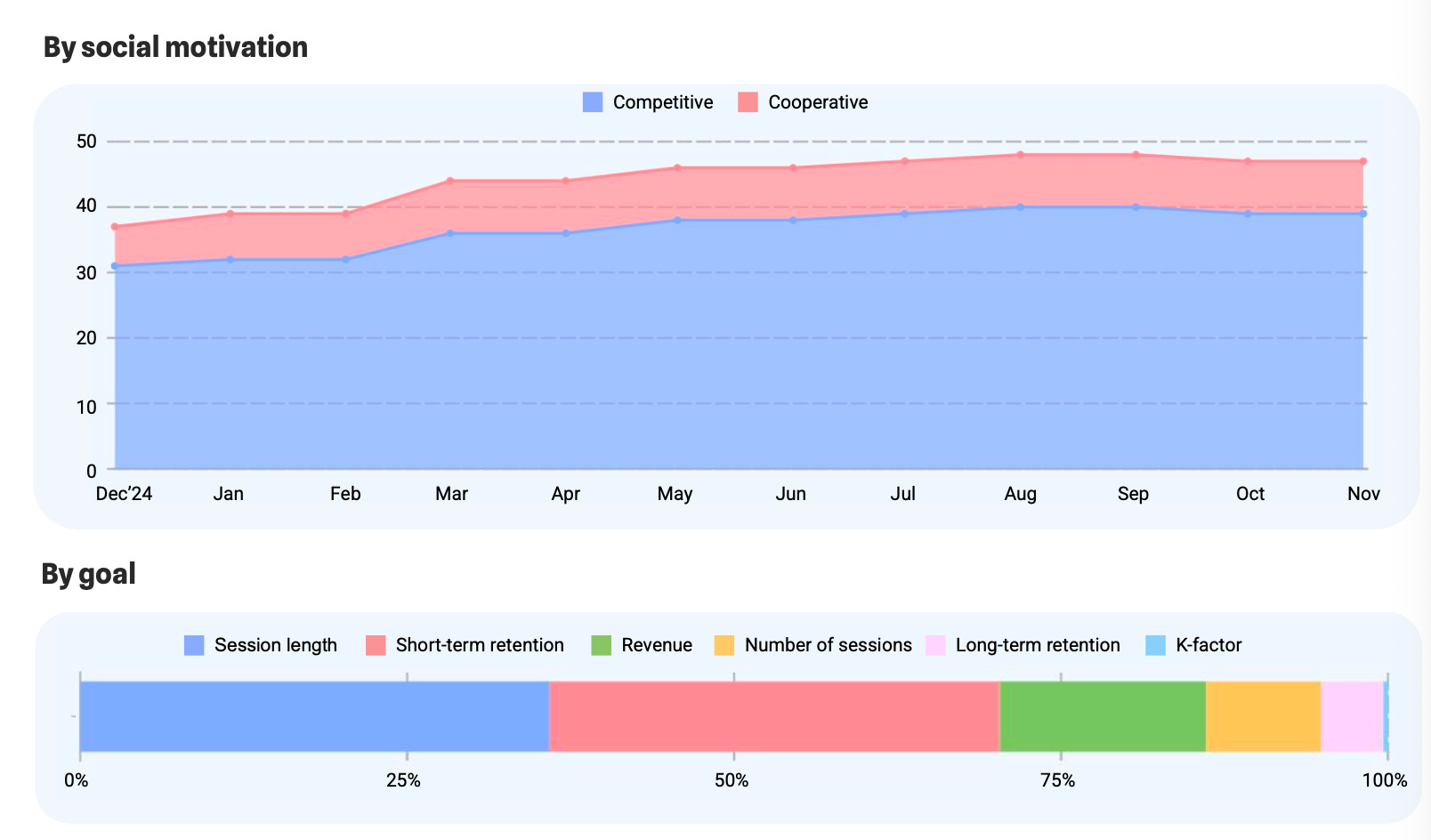
Competitive events are the most popular among social live ops formats, with growth of 24% in 2025.
Per AppMagic, most of these events are designed to increase session length and short-term retention.
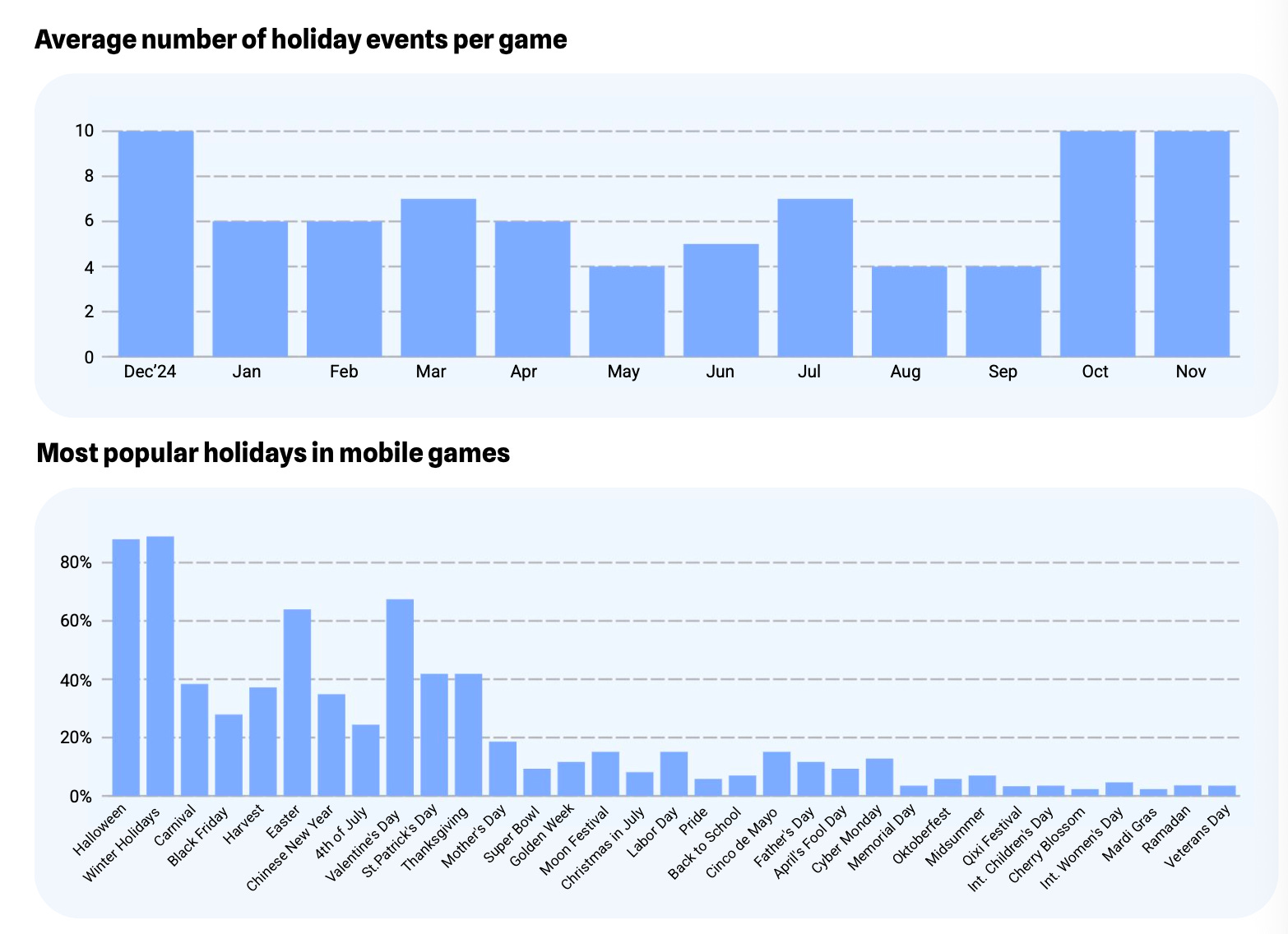
The most popular seasonal events are tied to Halloween, Christmas, and Valentine’s Day.
Live Ops Trends in Casual Games
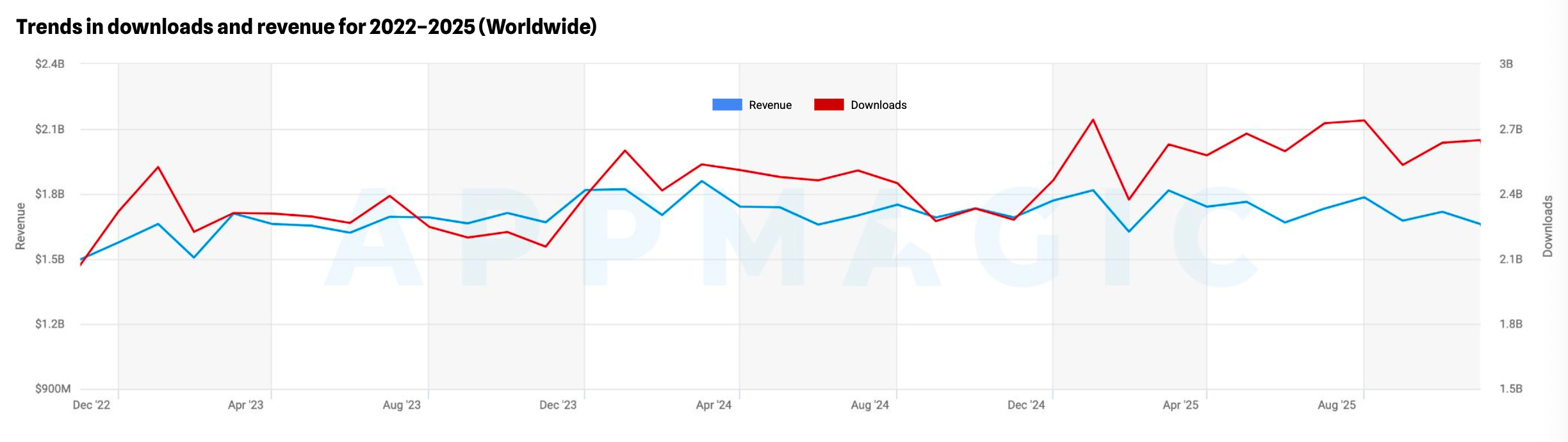
Casual game revenue fell 1% in 2025 to $20.7 billion.
Downloads grew 7.2% to 31.3 billion.

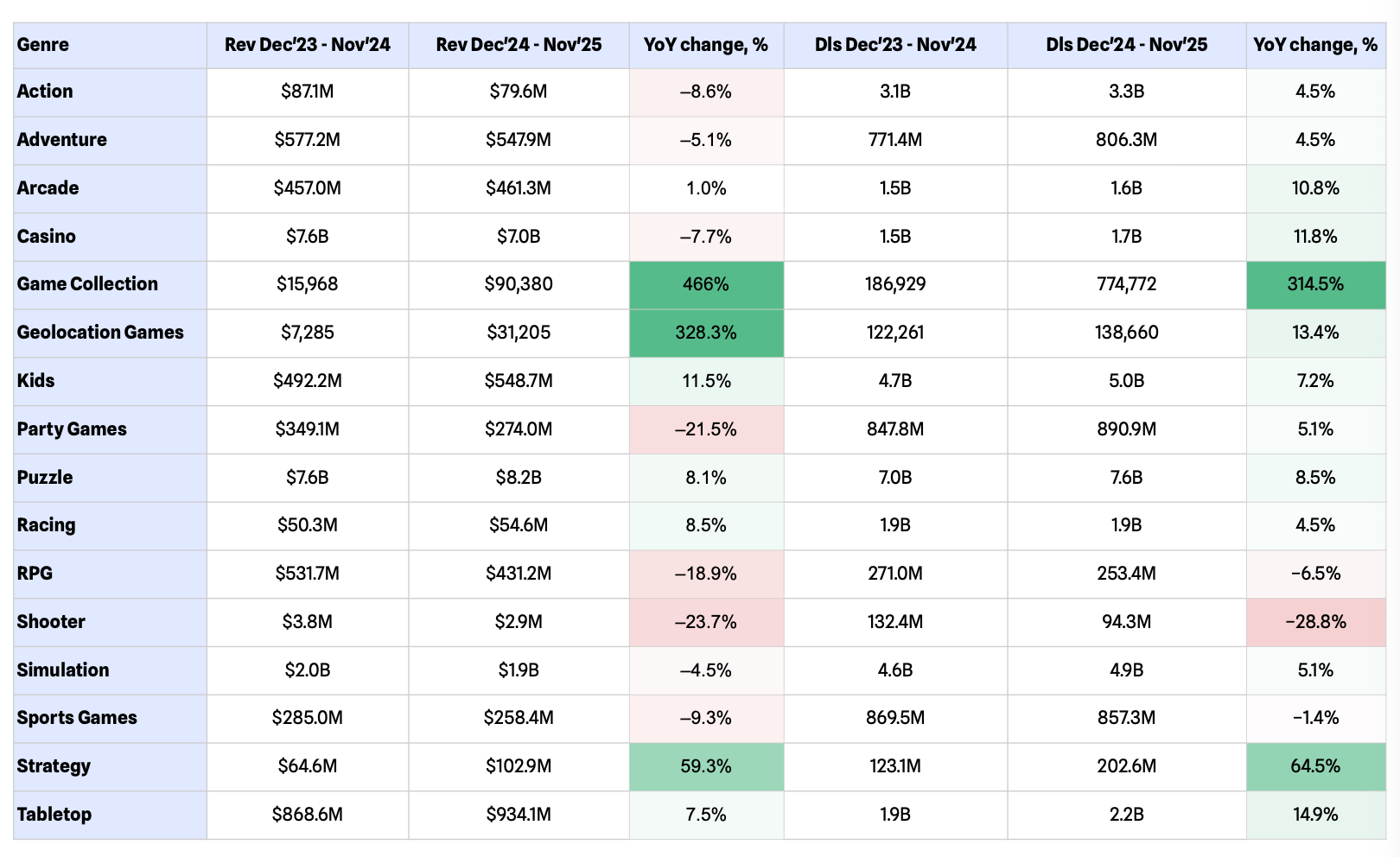
Puzzles, casino, and simulators are the three genres generating the largest share of casual game revenue.
The number of live ops events in casual games is growing, with frequency spiking heavily around the New Year holidays.
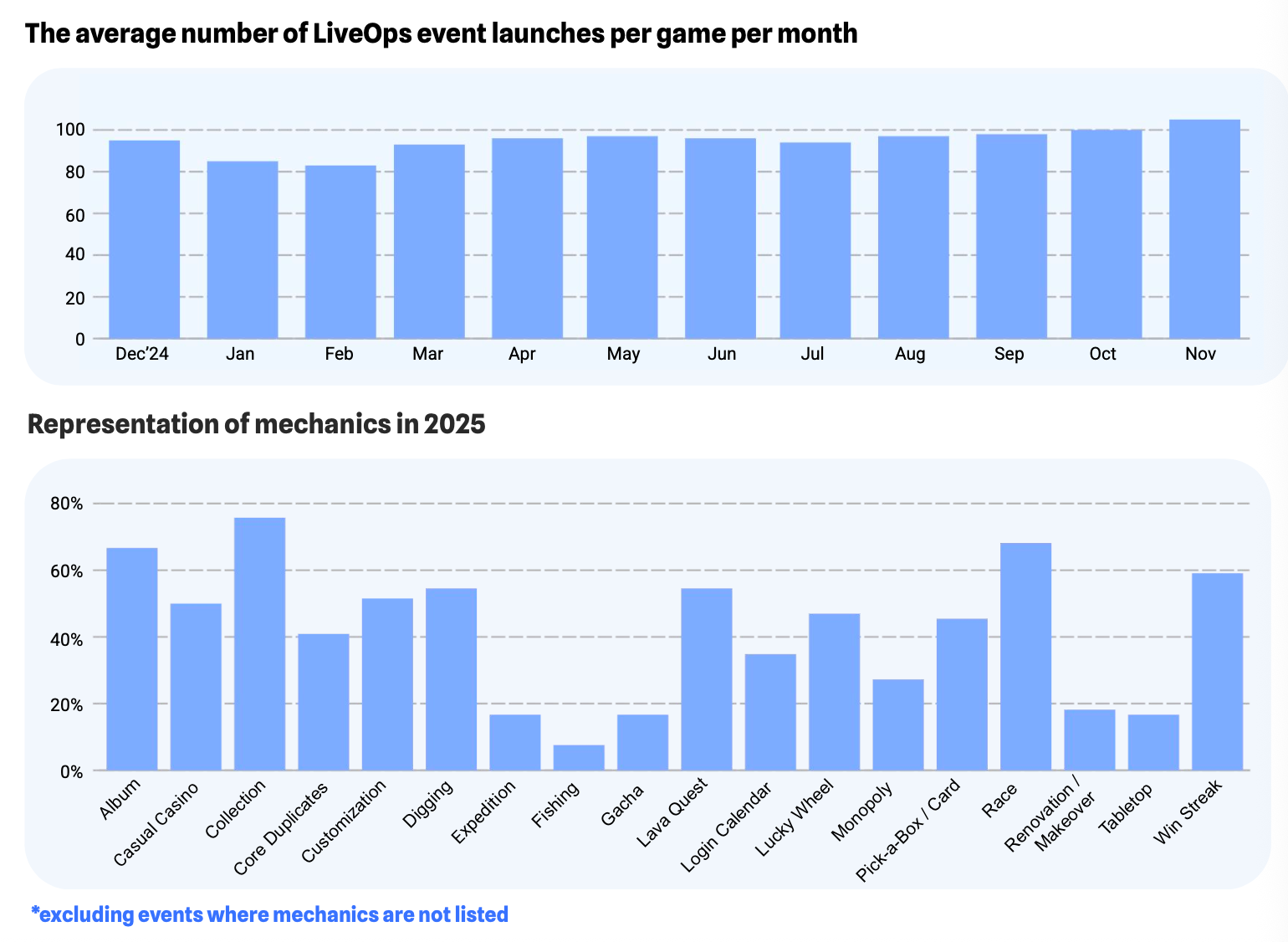
Collections (75%), race events (68%), and albums (66%) are the most common event types in casual games.
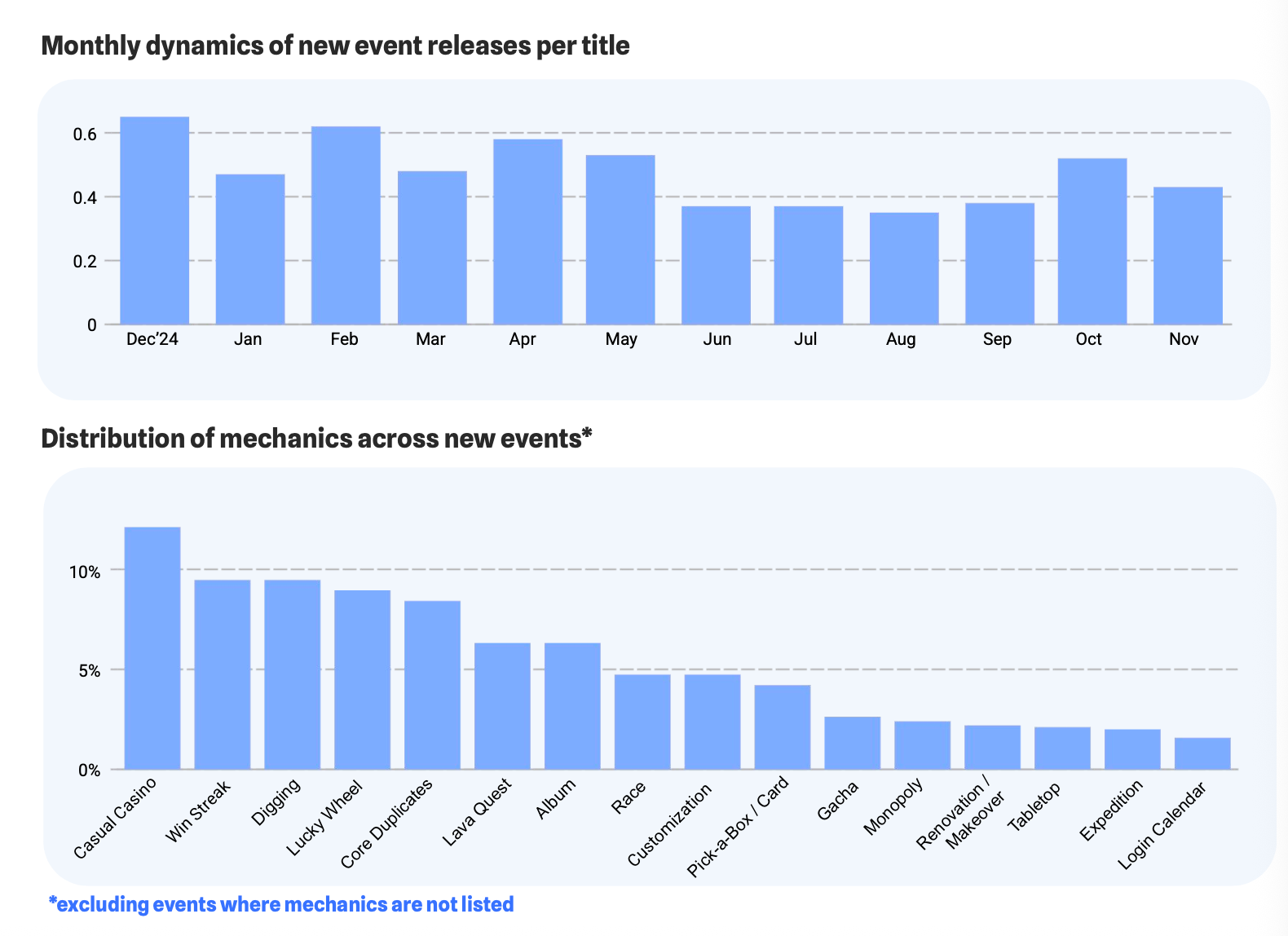
According to AppMagic, casual games are more dependent on new events than other genres, which means they must constantly introduce new mechanics.
On average, 0.7 new live ops events are added per month in casual games. This number dips in summer.
Casino events, win streaks, and digging events top the list of new additions.
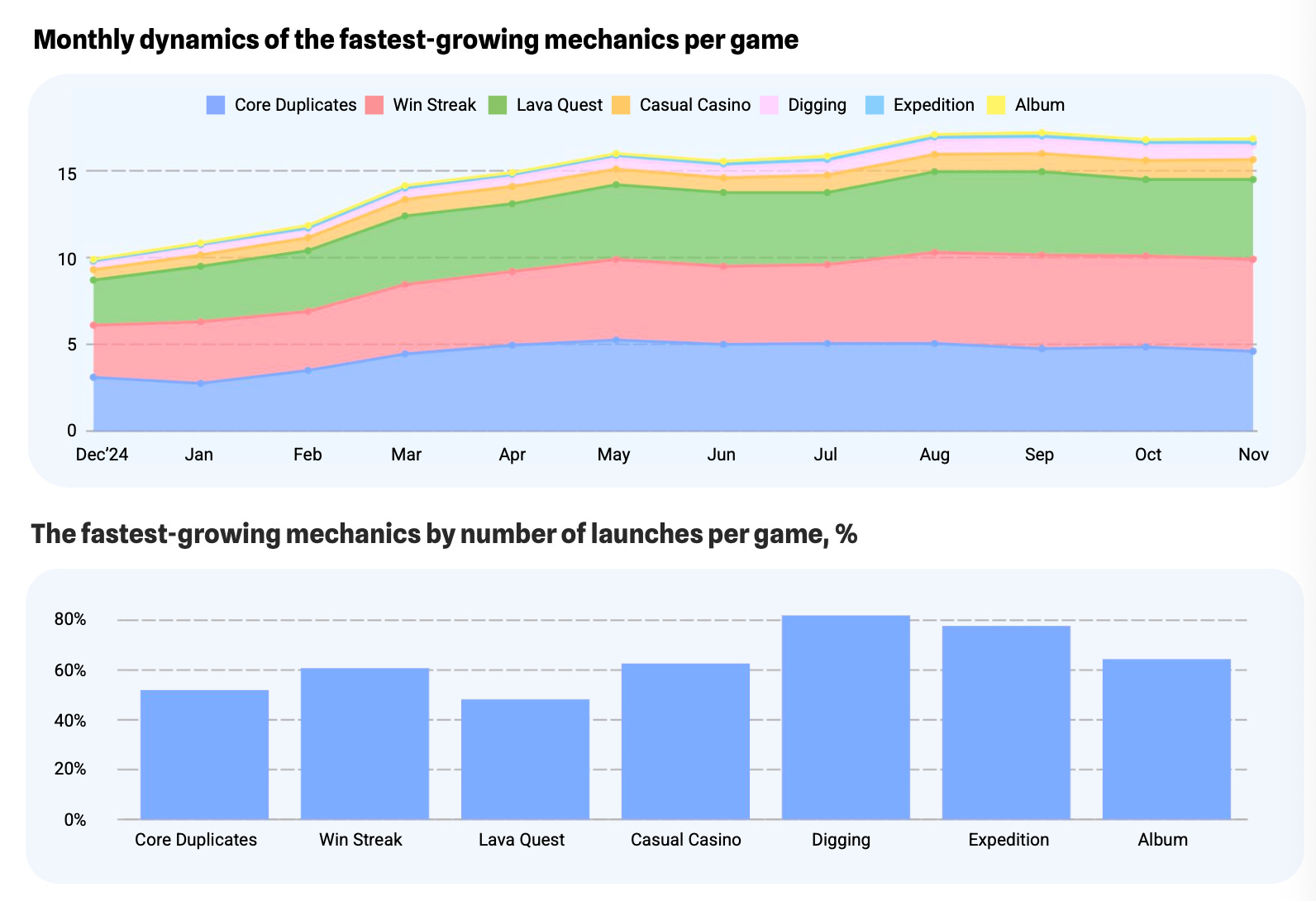
Digging events and expeditions are among the fastest-growing in terms of usage frequency. That said, expeditions are present in fewer than 2% of casual titles in AppMagic’s sample.
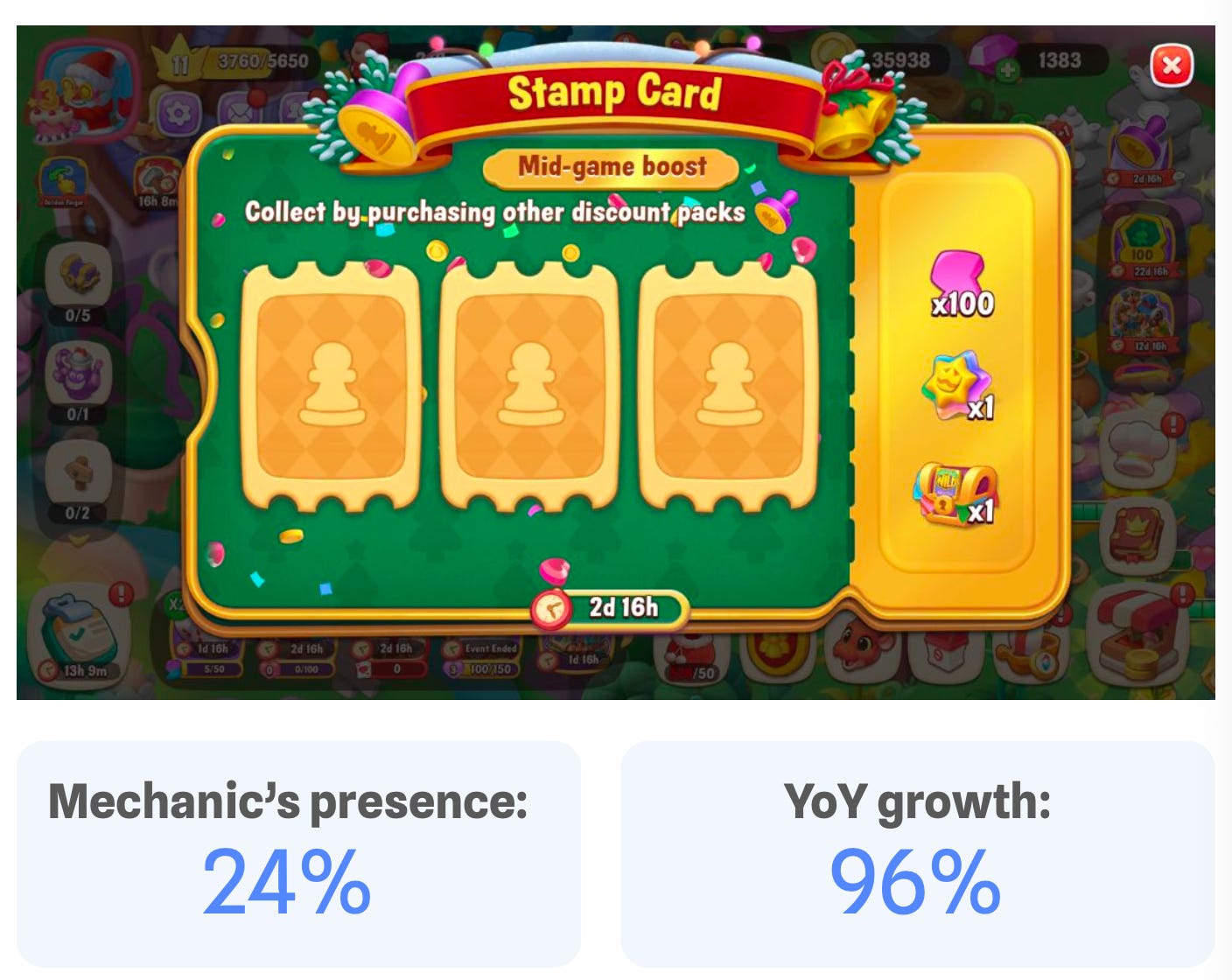
Stamp events grew 96% over the past year. These events are directly tied to monetization: rewards are given either for completing in-game tasks or for purchases, with players earning currency and collectibles upon reaching the required stamp count.
The mechanic is most common in social casino, but is actively spreading into traditional casual genres.
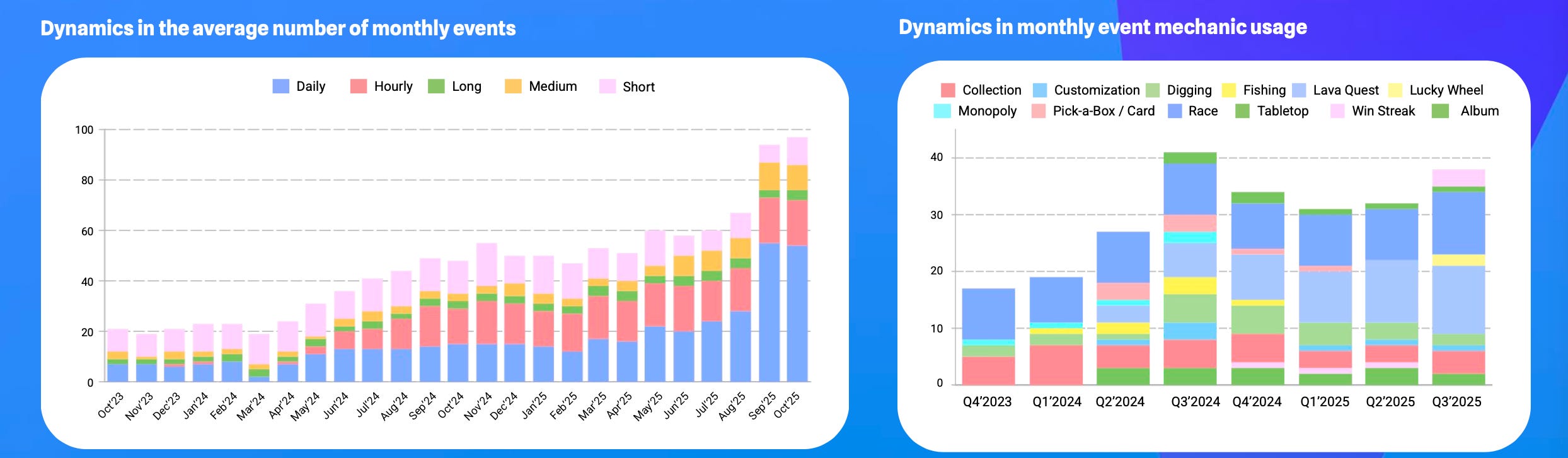
AppMagic highlights Gossip Harbor’s activity: in Q3 2025, the game was running around 100 events per month. New mechanics are rarely added, but there is intensive ongoing work on improving existing ones. Many developers have started adopting Microfun’s live ops approach.
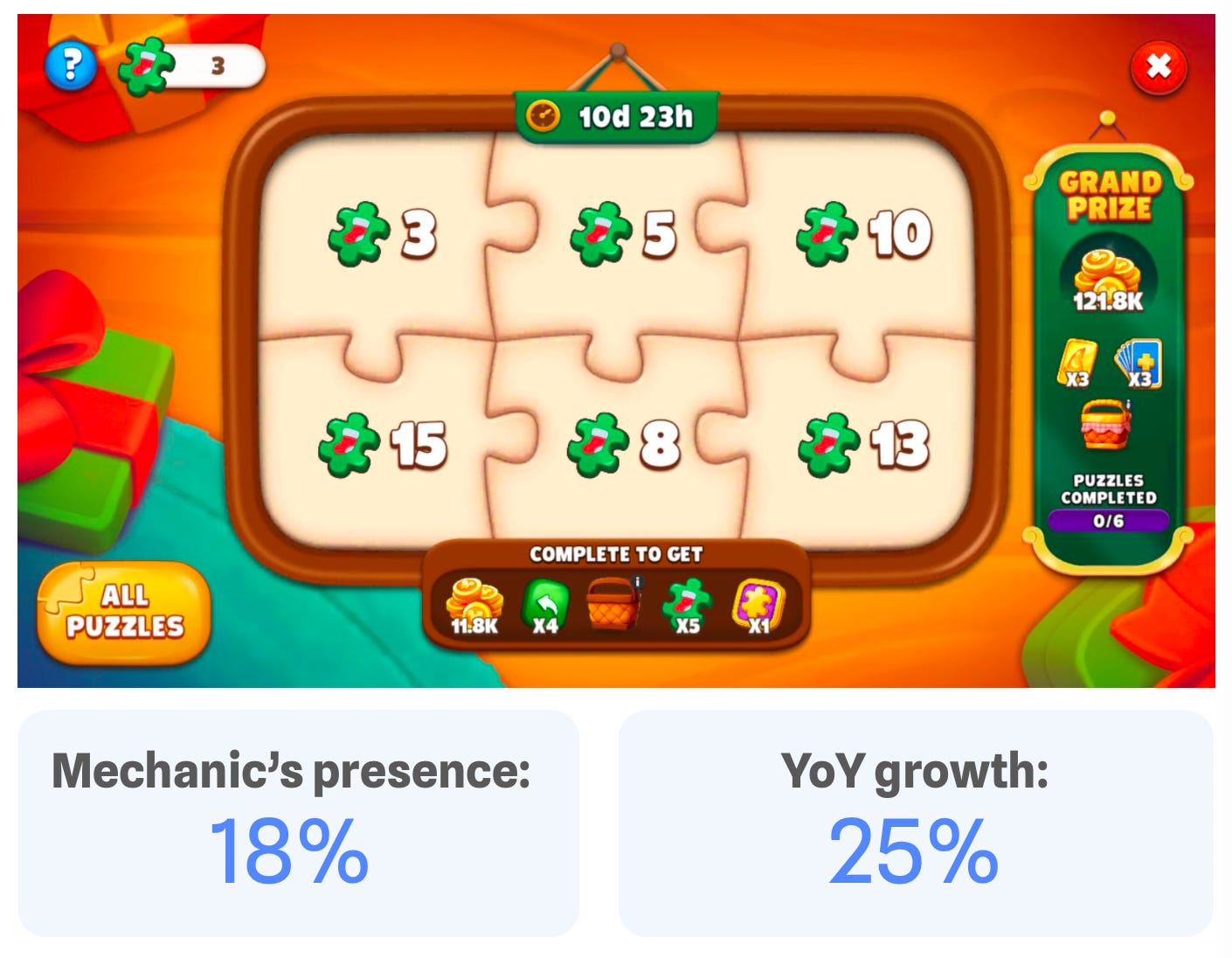
AppMagic highlights the evolution of the collectible album mechanic in puzzle format. Typically, players unlock puzzle pieces by completing in-game tasks, with monetization centered on offers that let them purchase missing currency to complete the puzzle.
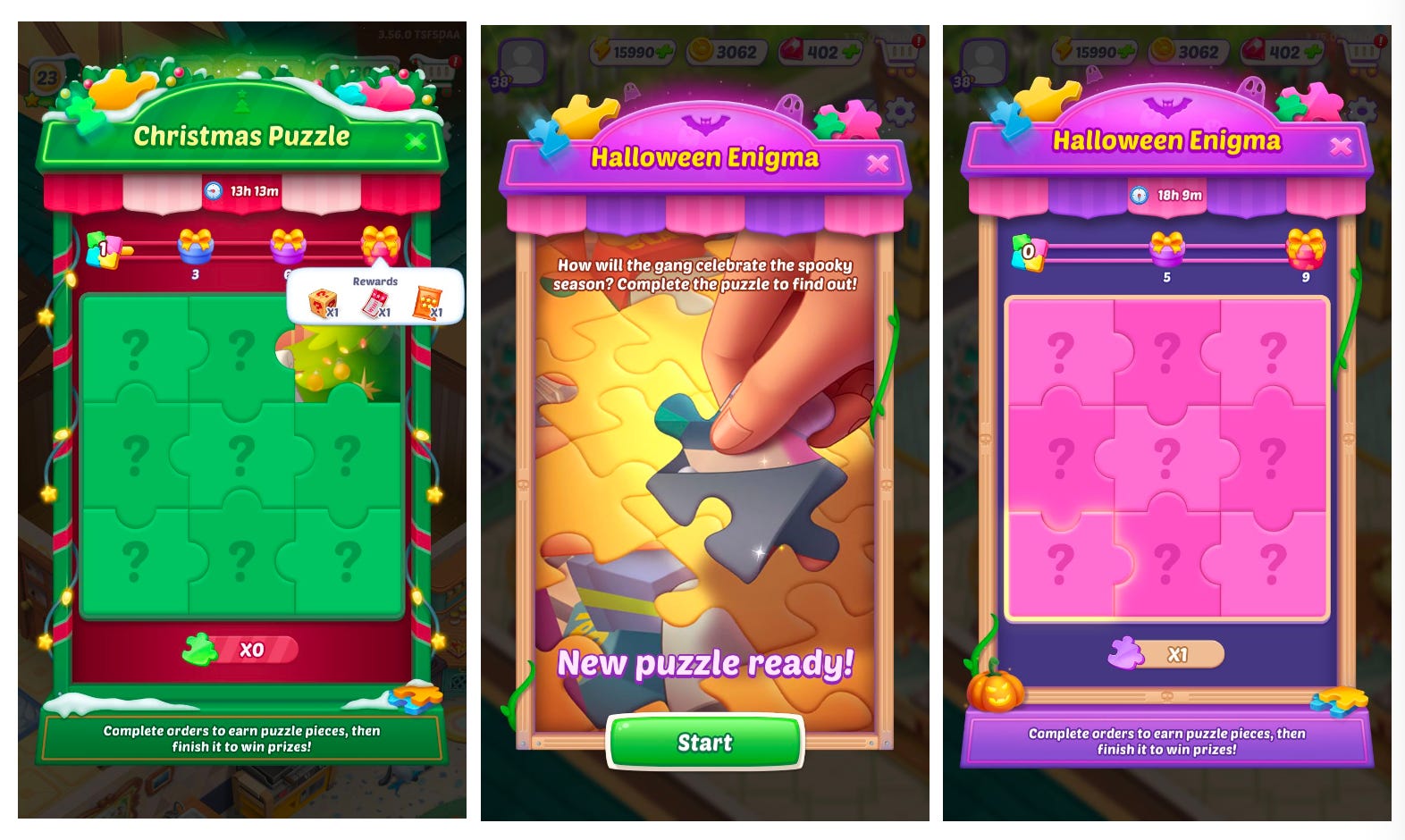
Gossip Harbor was one of the first merge genre titles to integrate this mechanic, back in November 2024. The event now runs around almost every major holiday and is focused on driving user engagement.
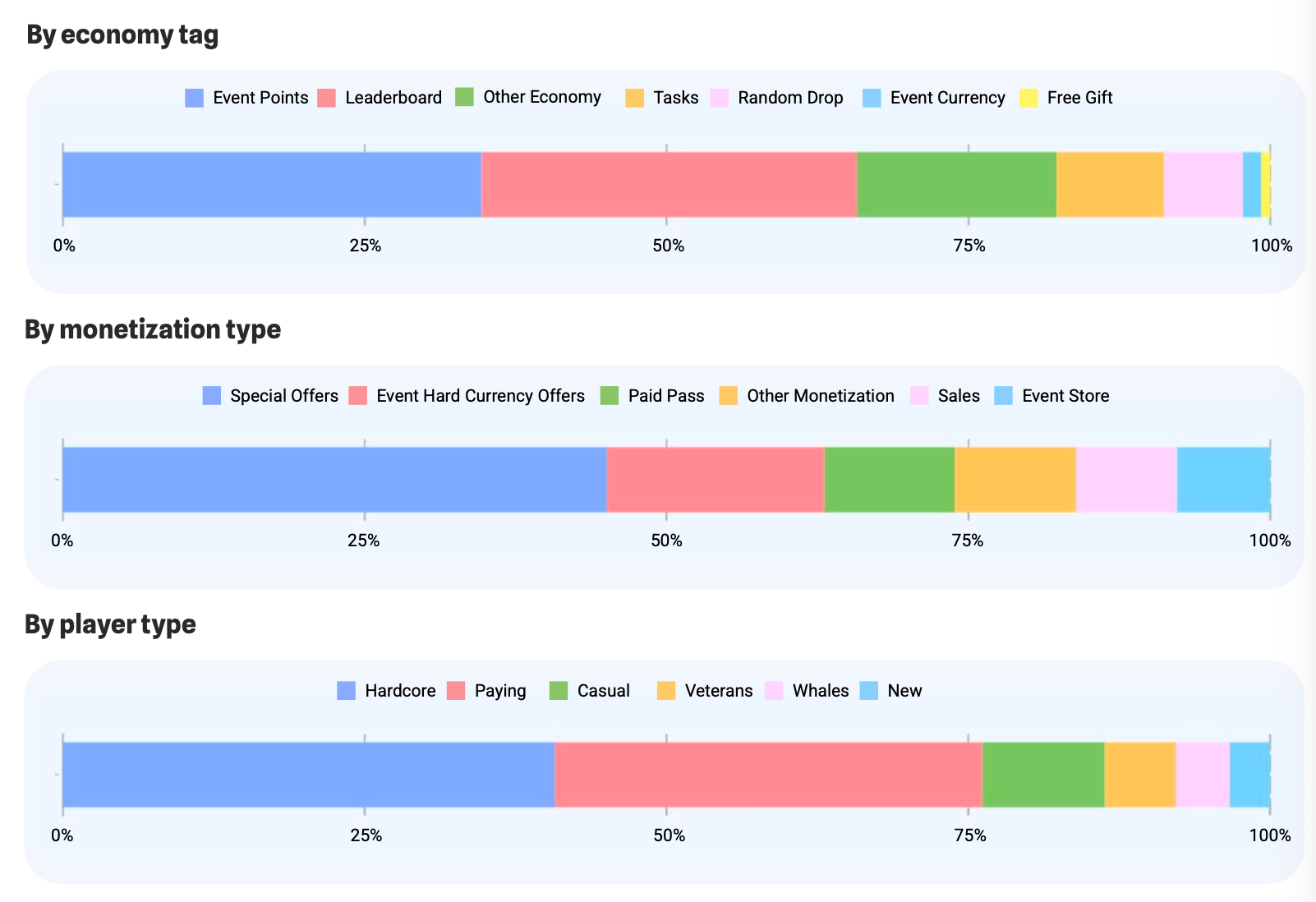
Casual games broadly follow the overall trend of monetizing audiences through live ops. Around 70% of events have a monetization focus.
Monetization is most commonly driven by special offers, hard currency, and dedicated hard-currency spending opportunities.
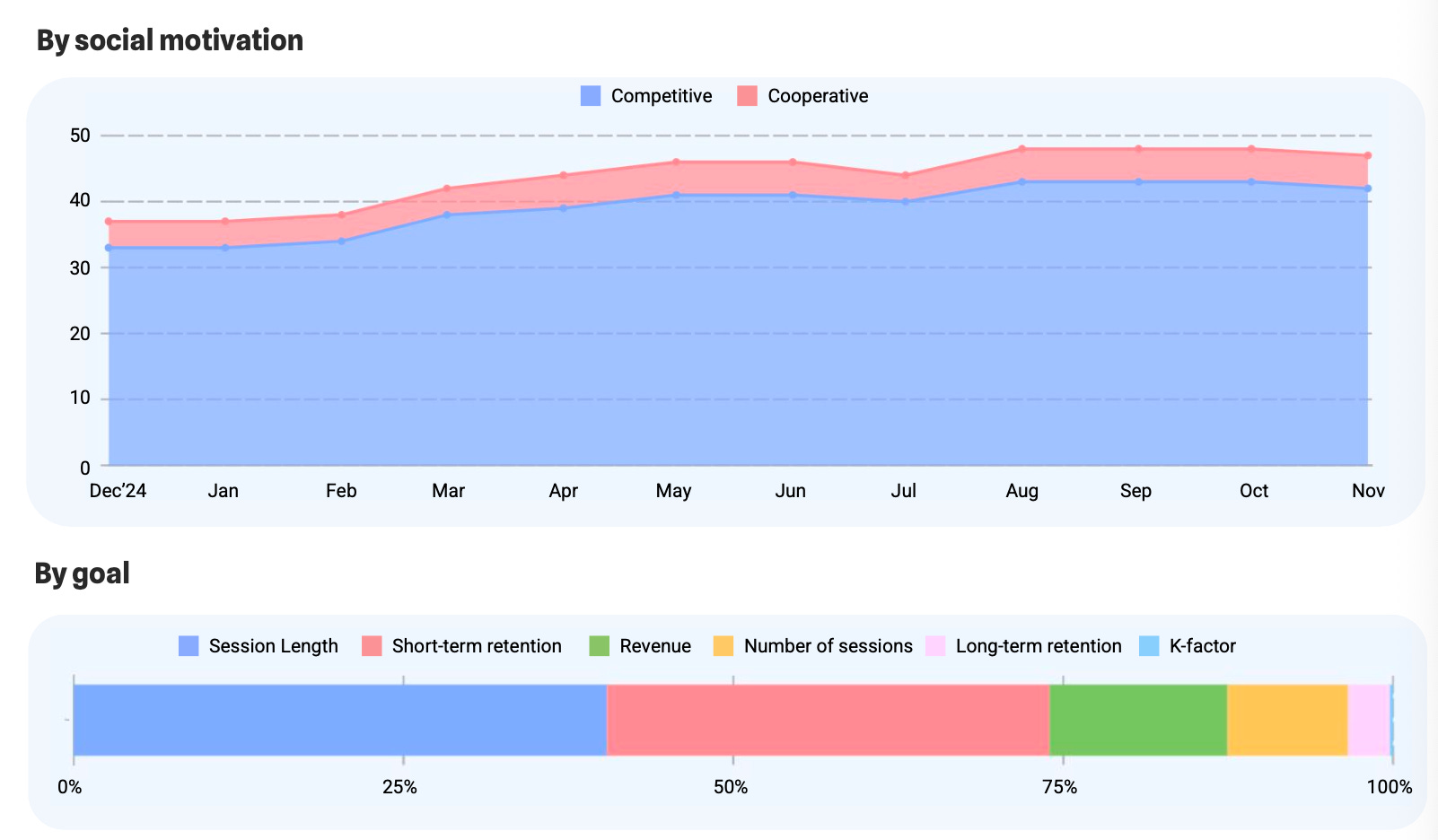
Despite being casual, live ops in casual games are almost entirely built around competitive formats. Over the past year, the number of such events grew 26%.
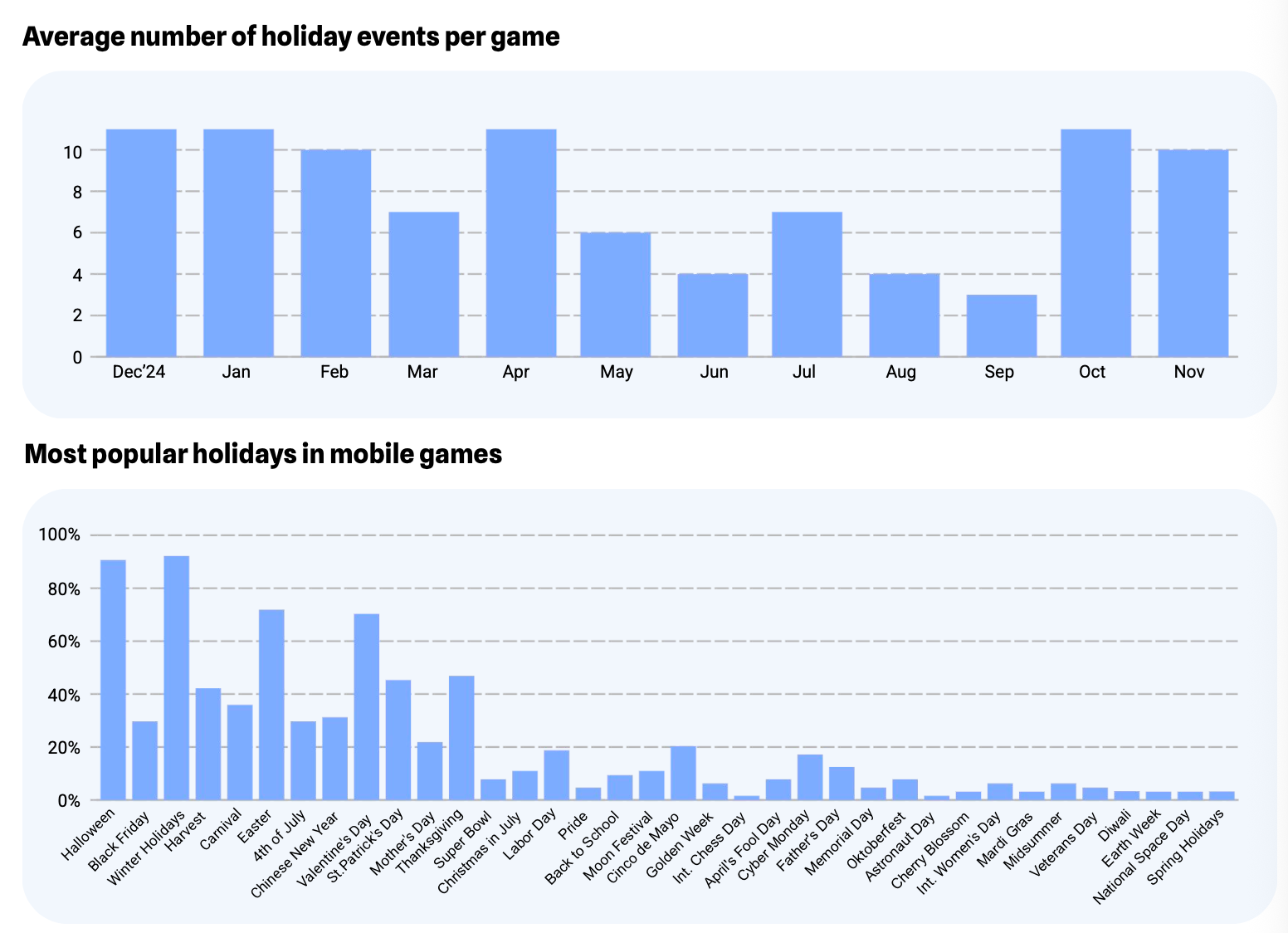
Casual games are far more tied to public holidays than other genres, which leads them to lean into smaller occasions as well: Mother’s Day, Cyber Monday, and others.
Casual titles also frequently recycle visuals and themes from past events. Some projects, for example, relaunch Christmas events in summer to play on the contrast.
Black Friday received noticeably more attention in 2025, with around 30% of titles launching dedicated events for it, not counting special offers tied to the day.
Live Ops Trends in Midcore Games
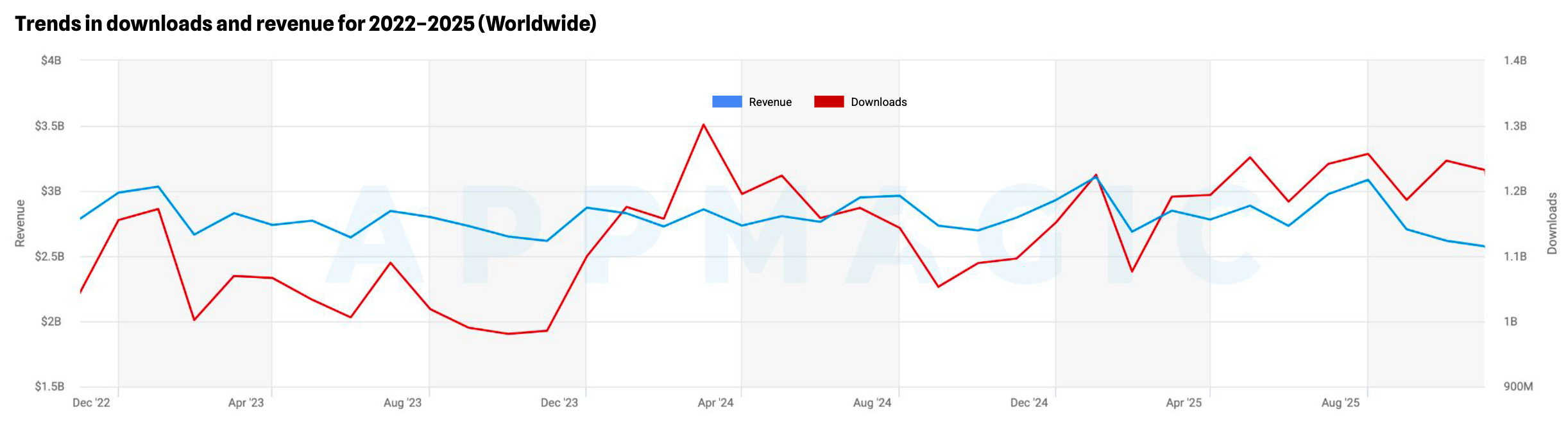
The midcore segment shows steady revenue growth: +2.3% YoY to $33.9 billion.
Downloads grew +8.3% YoY to 14.4 billion.

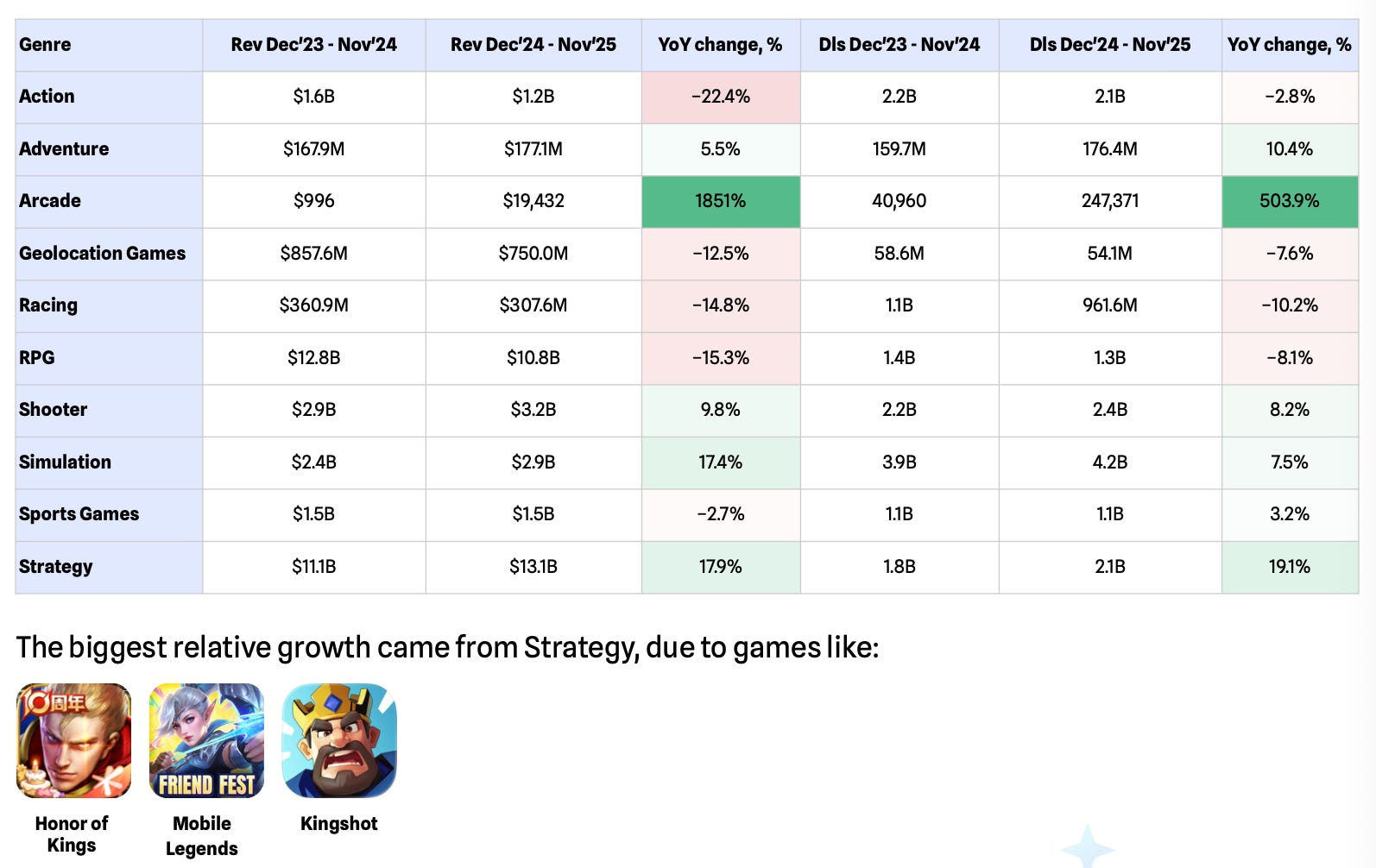
Strategy revenue grew 17.9%, with downloads up 19.1%.
RPG, the former revenue leader, is going through a rough patch. Revenue fell 15.3% YoY, and downloads dropped 8.1%.
Seasonality is less pronounced in midcore games, so live ops event density grows more gradually. Over the past year, the number of events grew 23%.
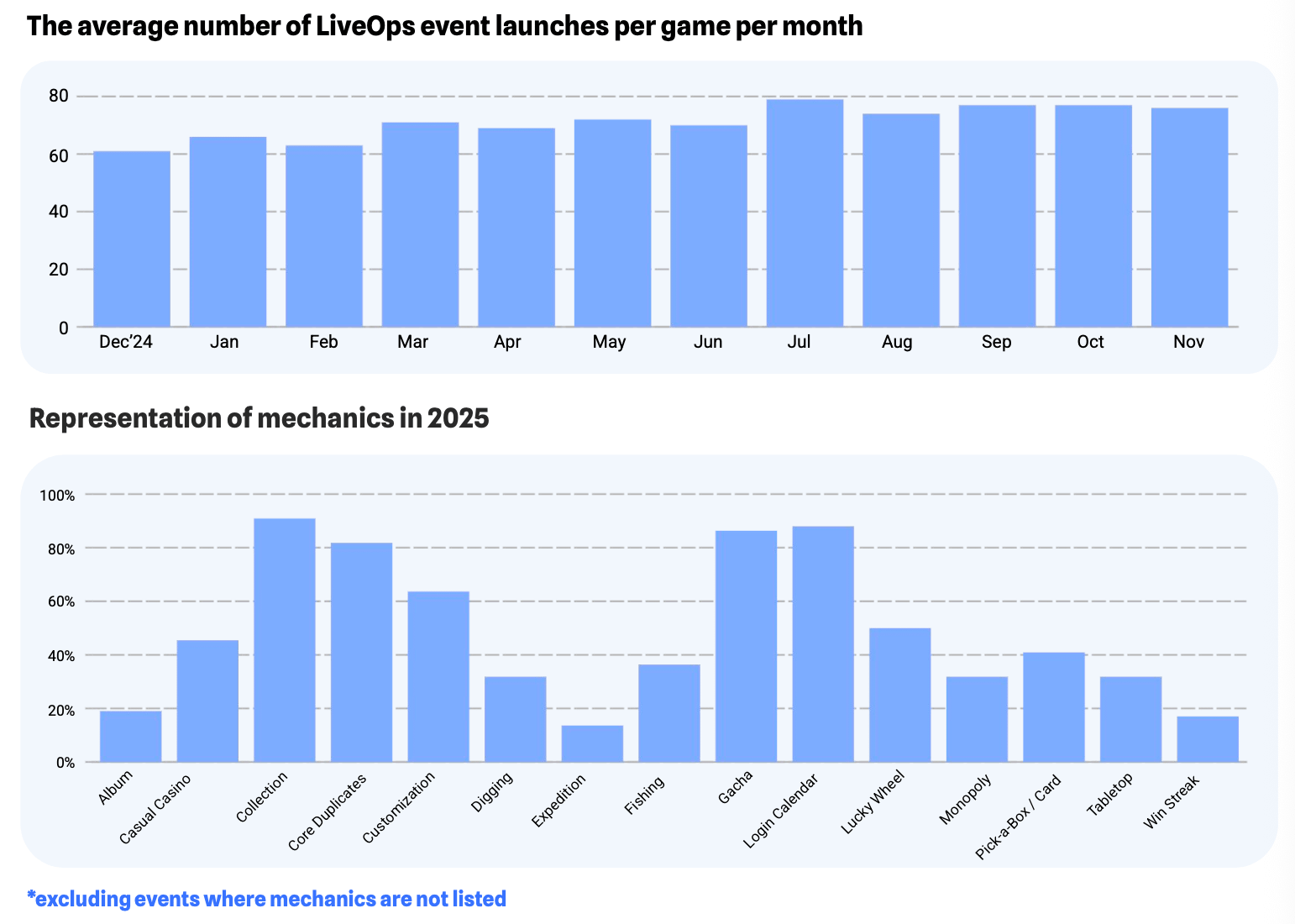
The most popular mechanics are various types of collections, login calendars, and gacha.
Over the course of 2025, fishing events, digging events, and albums all grew in popularity.
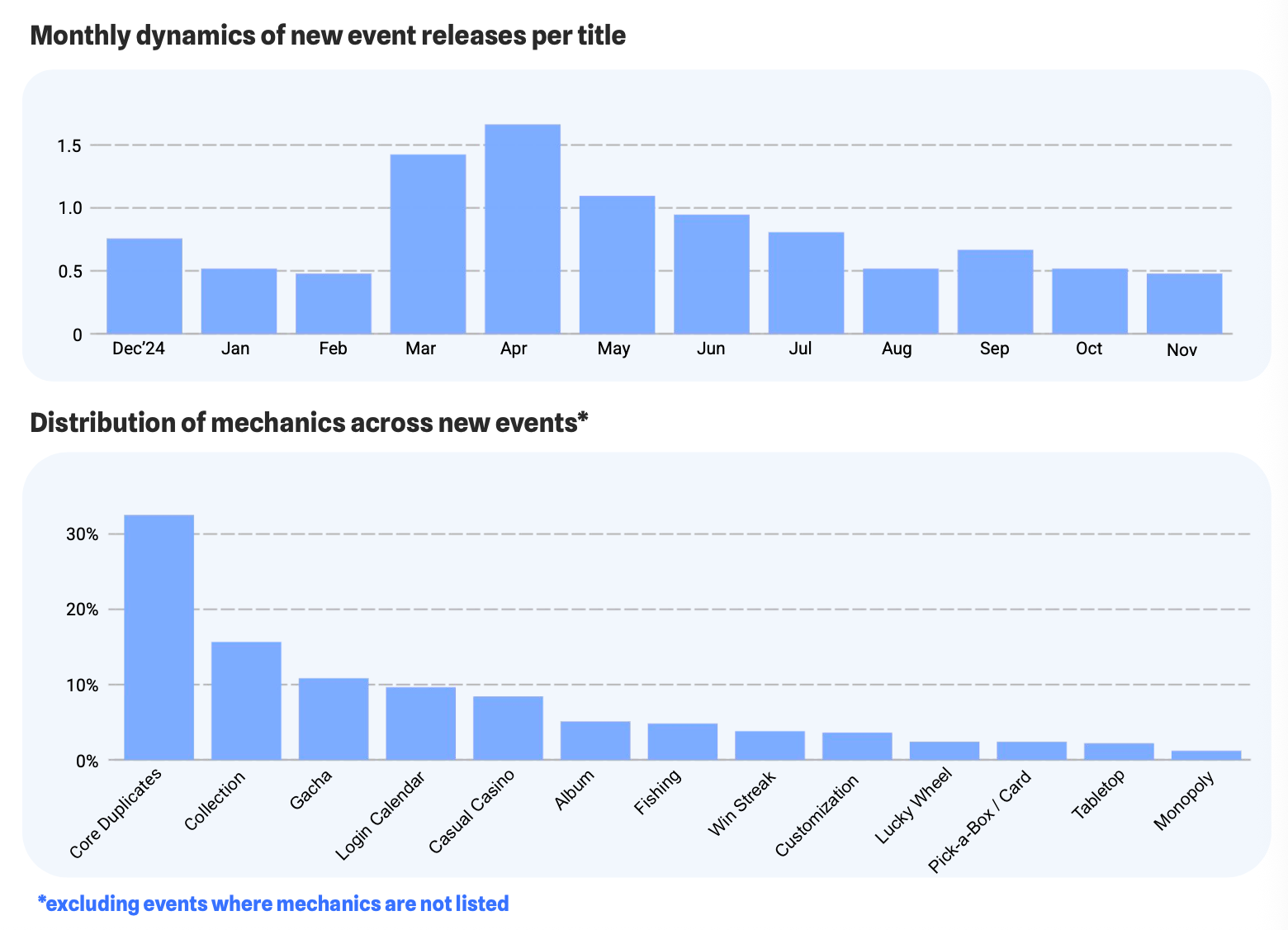
New event activity peaks in March and April. AppMagic attributes this to the post-holiday slowdown, with developers shifting focus toward monetizing their audiences.
32% of new events are essentially a repackaging of existing core gameplay into an event format. Collections come in second among new additions at 15%. Mechanics that differ significantly from existing core loops are very rare in midcore games.
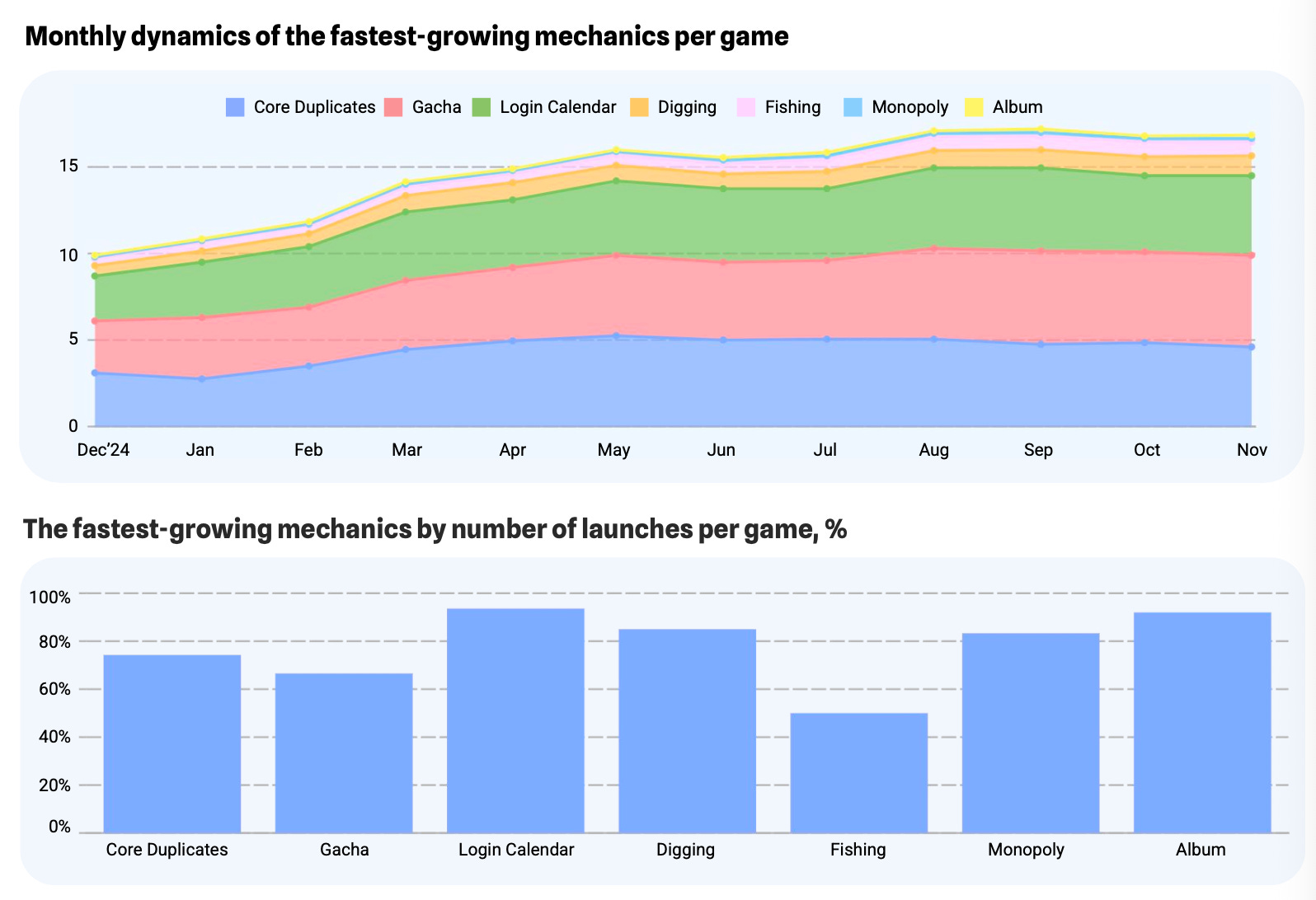
Login calendar usage grew 93% year-over-year. High growth rates were also seen for albums, Monopoly-style board events, and digging events.
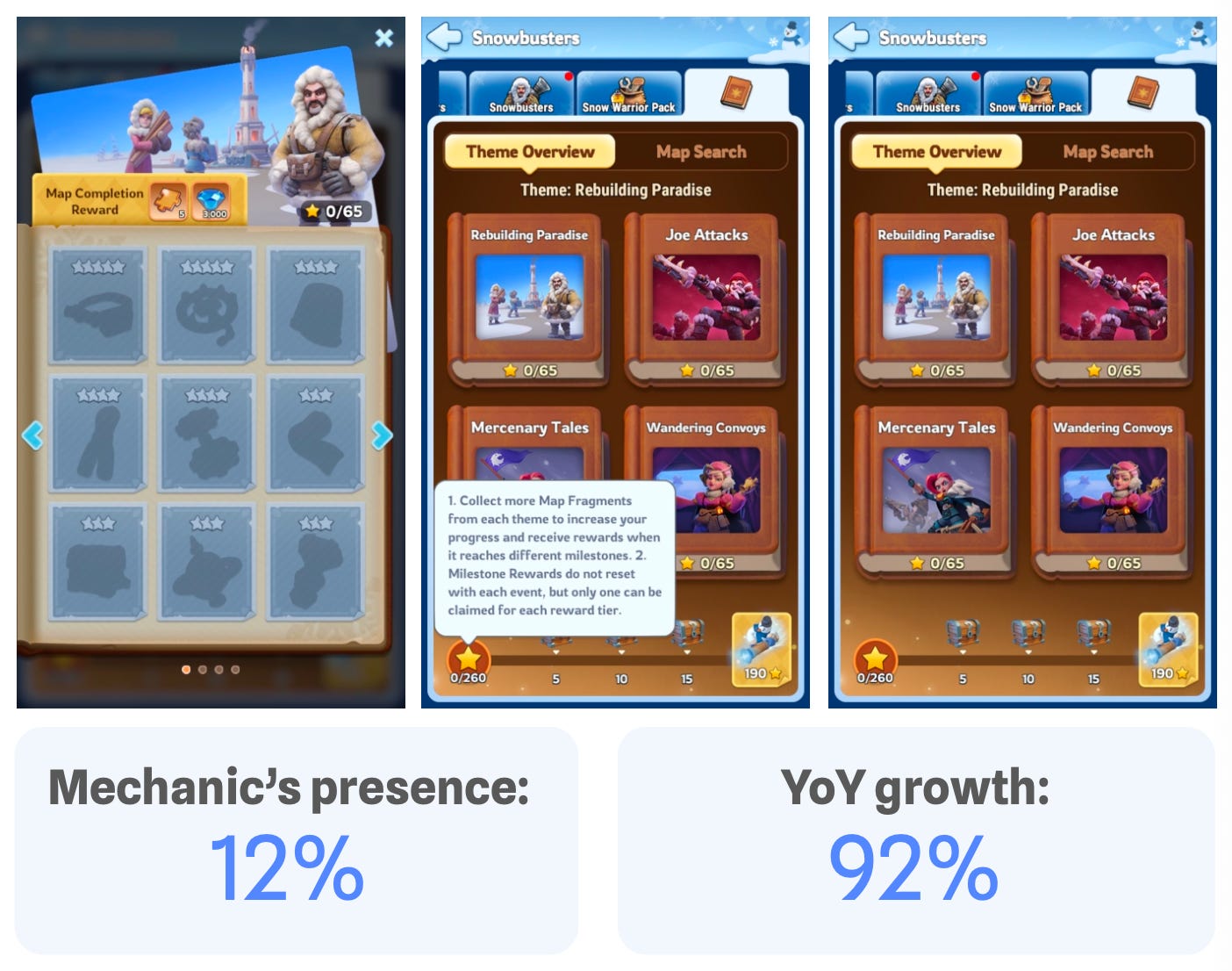
Whiteout Survival uses the basic album mechanic familiar from casual games. Other titles are experimenting more.
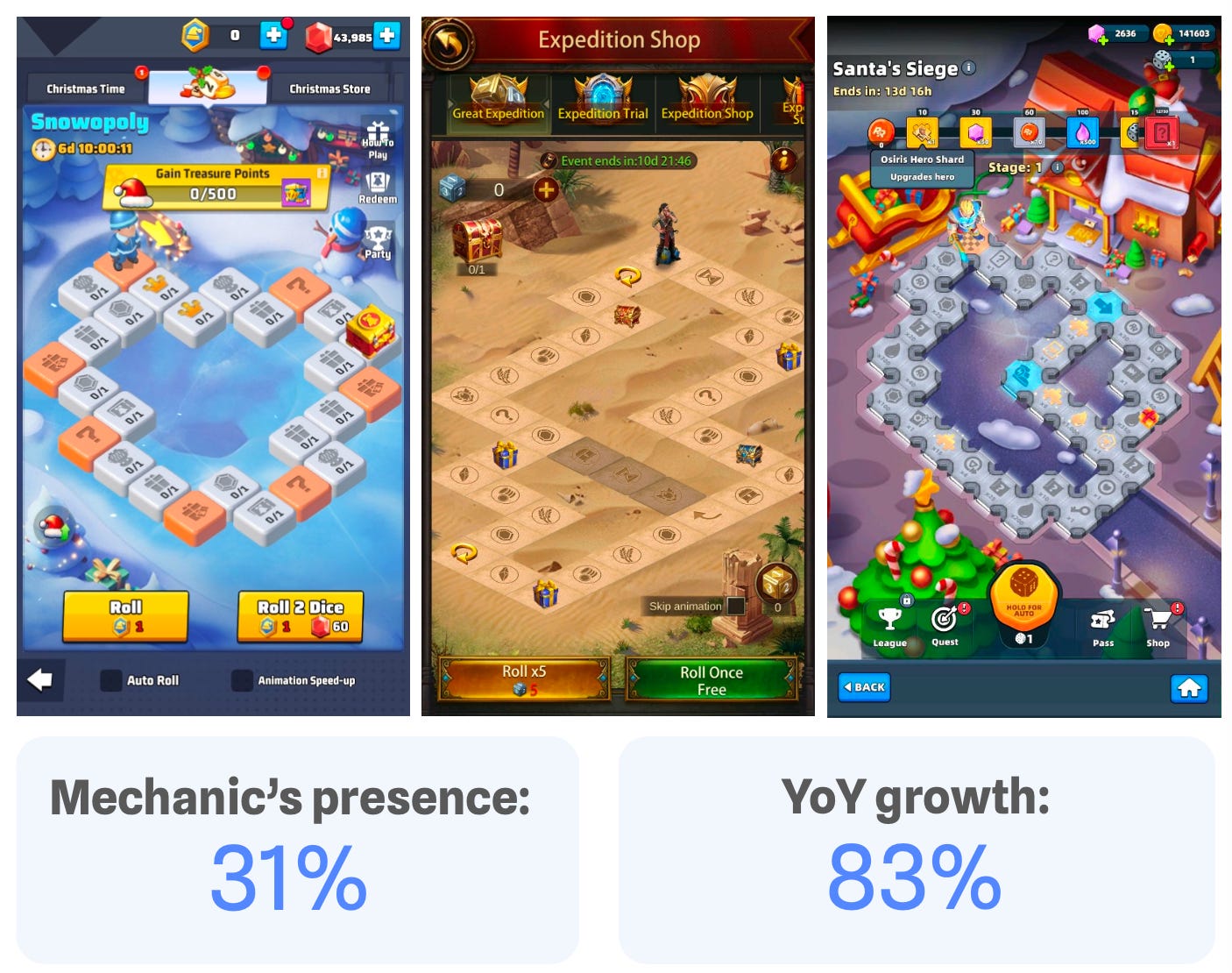
Monopoly-style board mechanics are present in 31% of titles in AppMagic’s sample and are widely used in 4X strategy and RPG games.
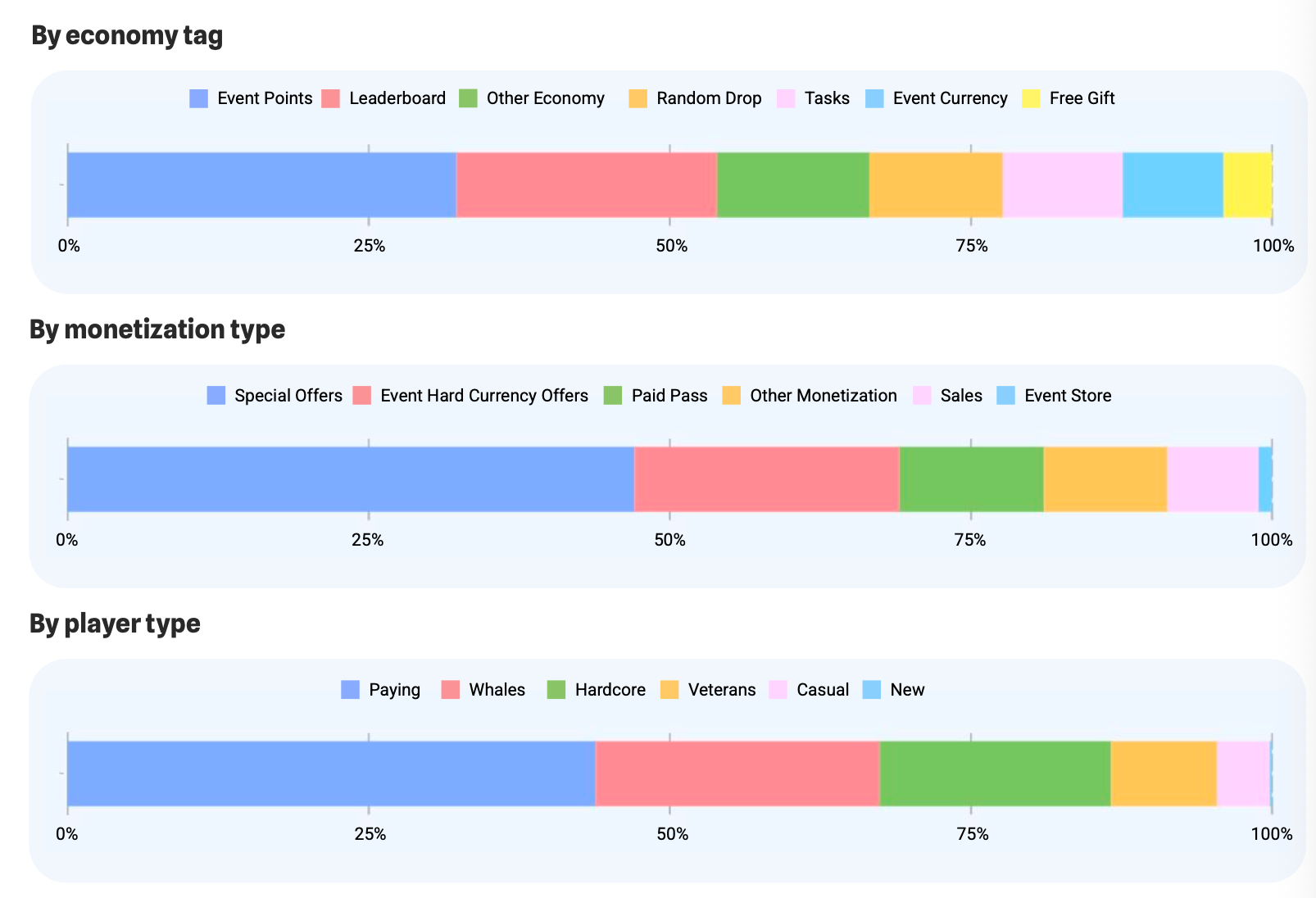
Midcore events are focused on paying users, particularly whales, who together account for almost 70% of targeted players.
Developers are increasingly moving away from discounts and toward special offers and dedicated hard currency spending spots.
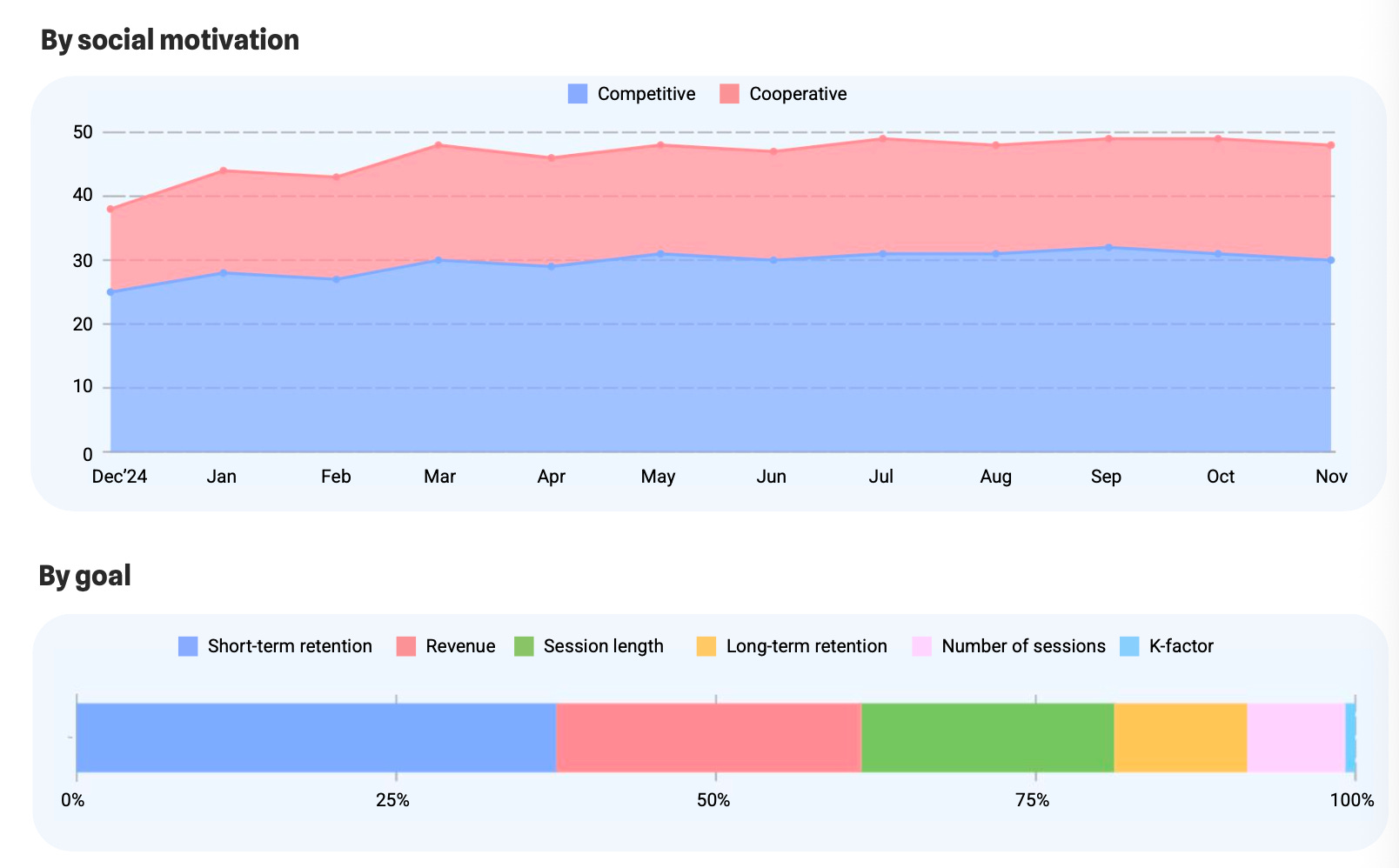
Cooperative events appear far more frequently in midcore games than in casual. Their growth rate is also higher (+36% YoY) than competitive events (+16% YoY).
Most events focus on short-term user re-engagement.
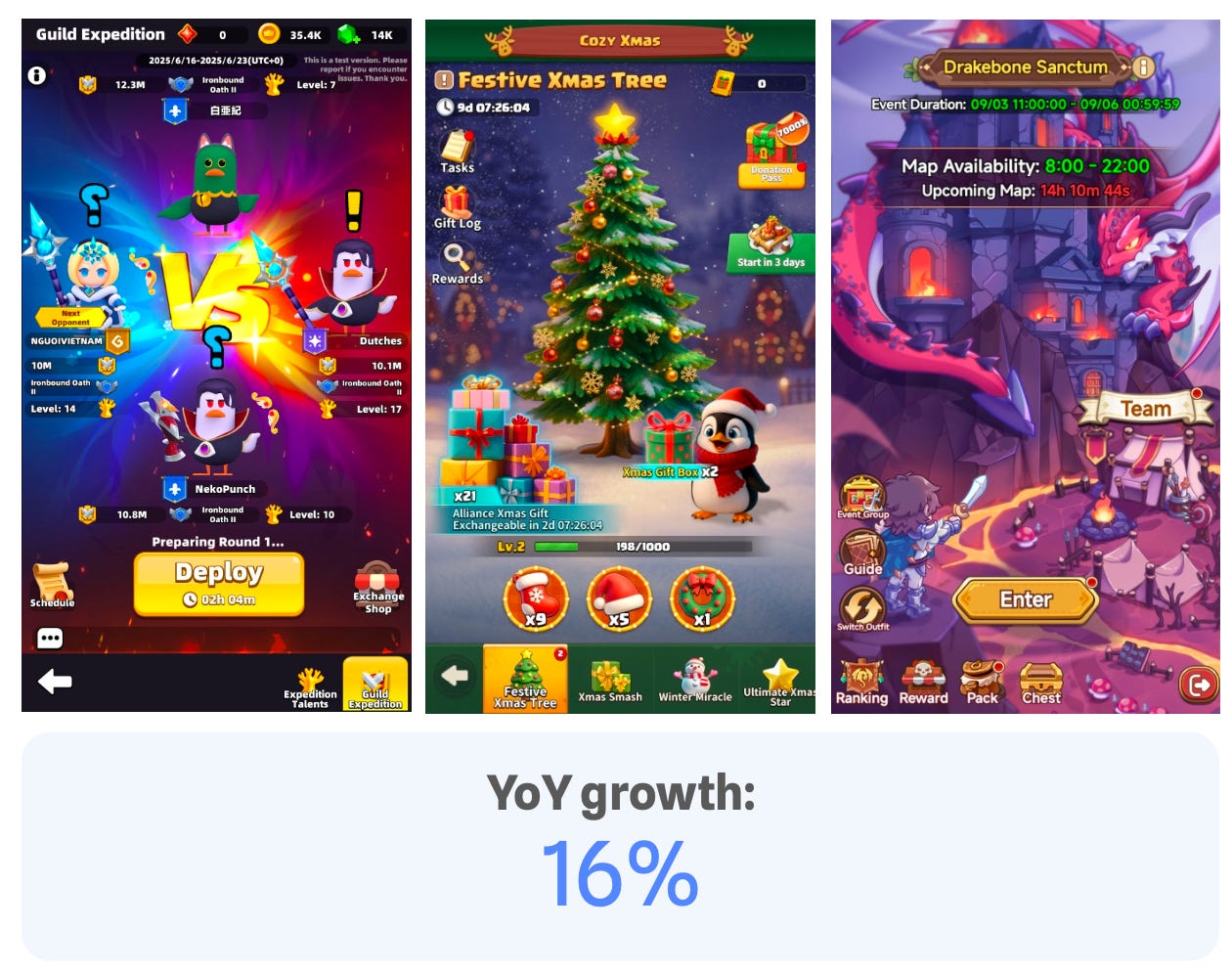
AppMagic notes the growing popularity of cooperative events. Developers are increasingly trying to bring together not just clanmates or group members but also random players.
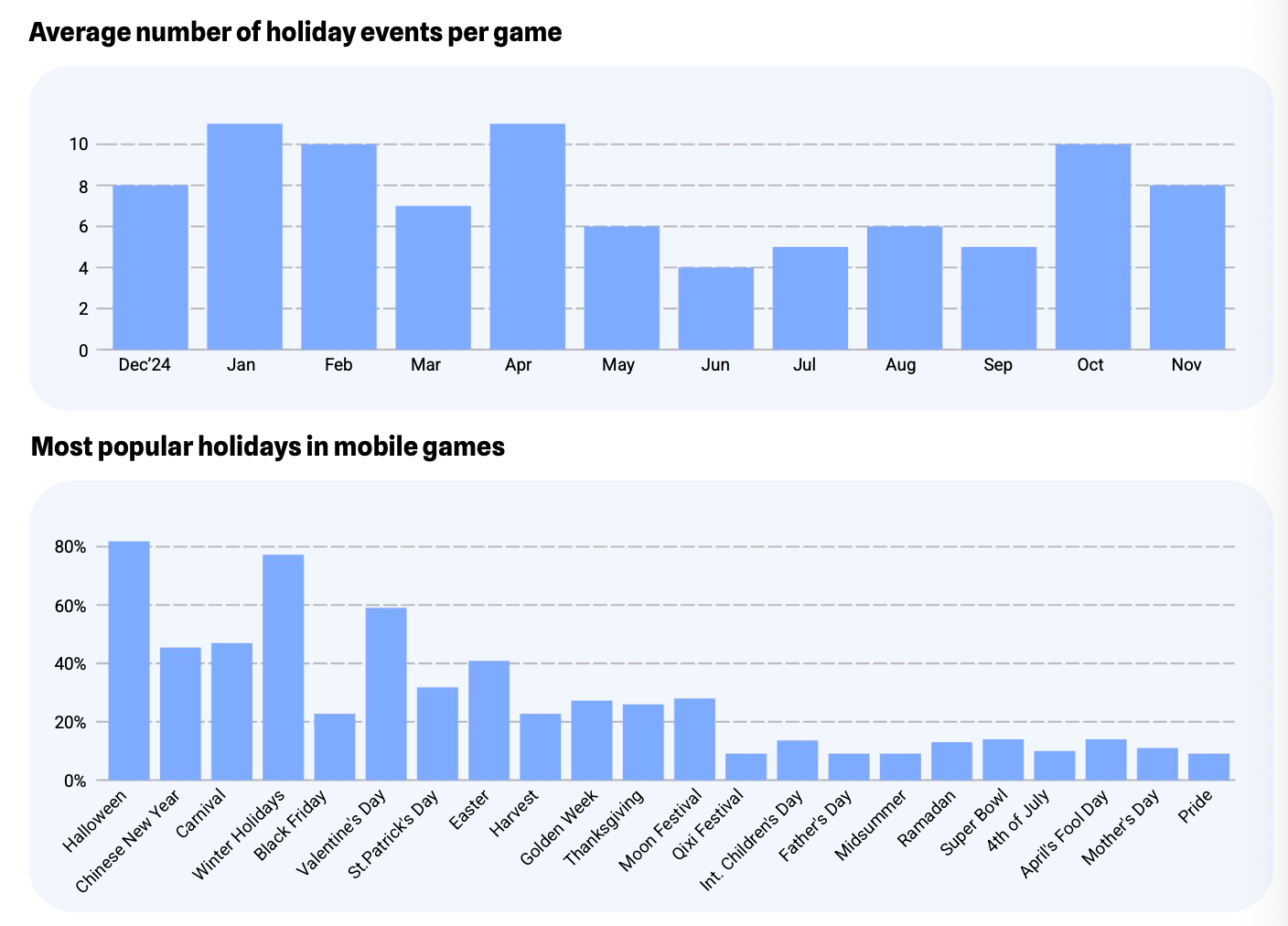
Per AppMagic, midcore live ops is closely tied to holidays, though with lower frequency than casual titles.
Live Ops Trends in Hybrid Casual and Hypercasual Games
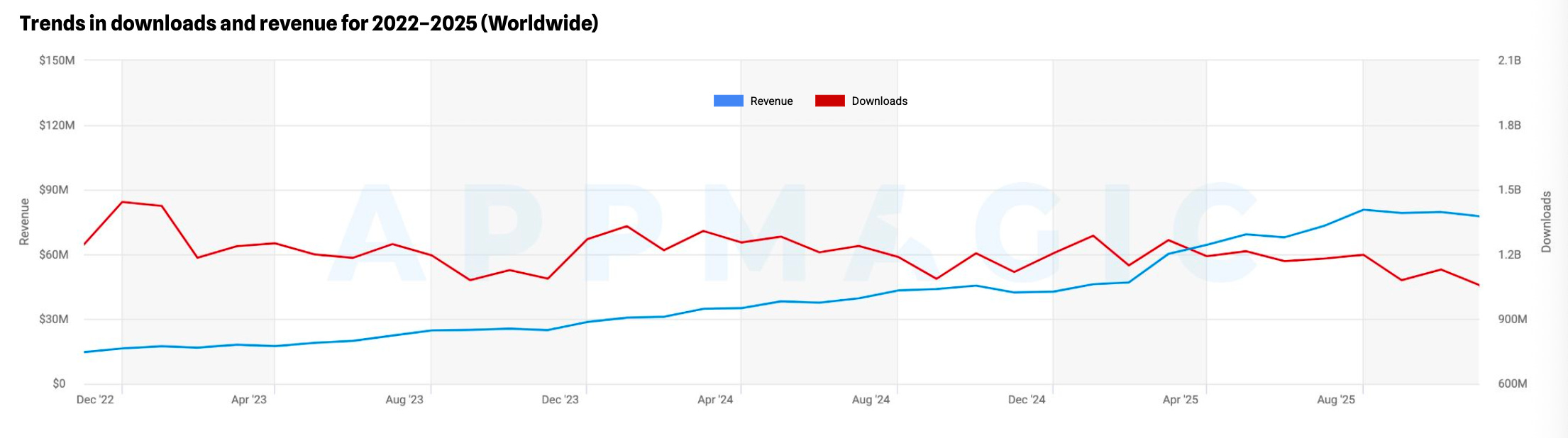
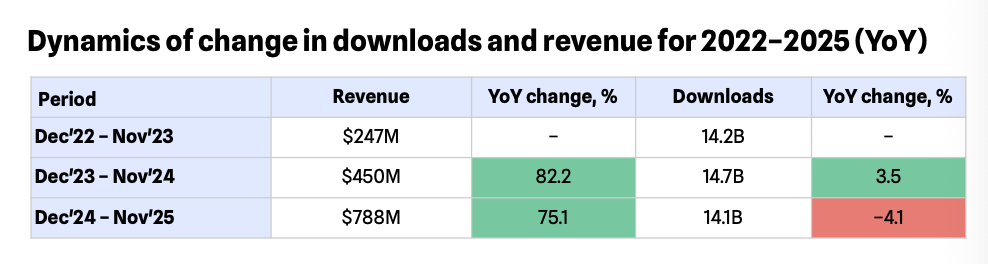
The hybrid casual segment is growing strongly. Revenue in 2025 reached $788 million (+75.1% YoY).
Downloads dipped slightly to 14.1 billion (-4.1% YoY).
Puzzles are the key growth driver in the segment, with revenue up 136.1% despite a 3.3% decline in downloads.
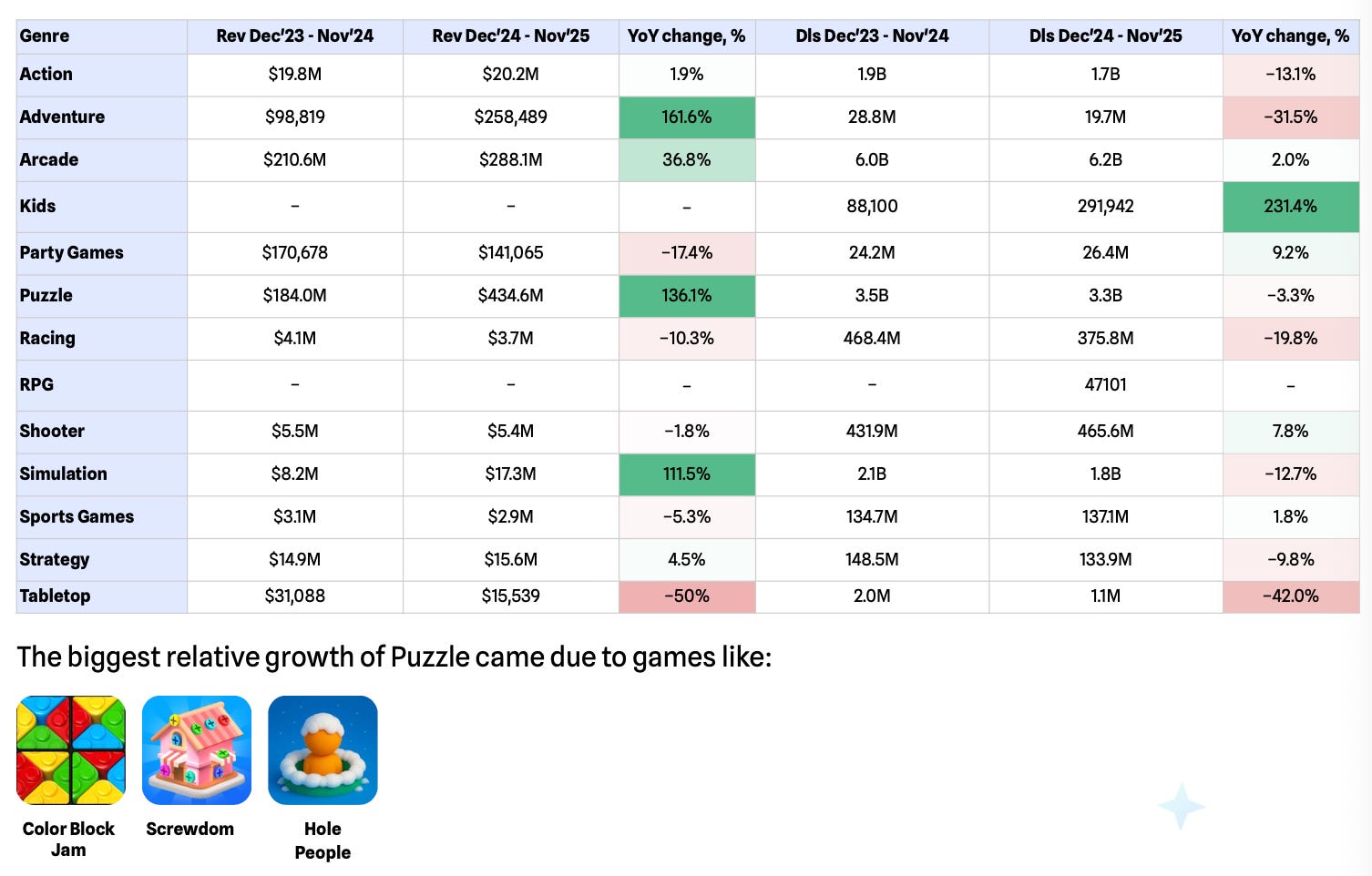
Adventure games (+161.6% YoY in revenue) and simulators (+111.5%) are also posting strong growth.
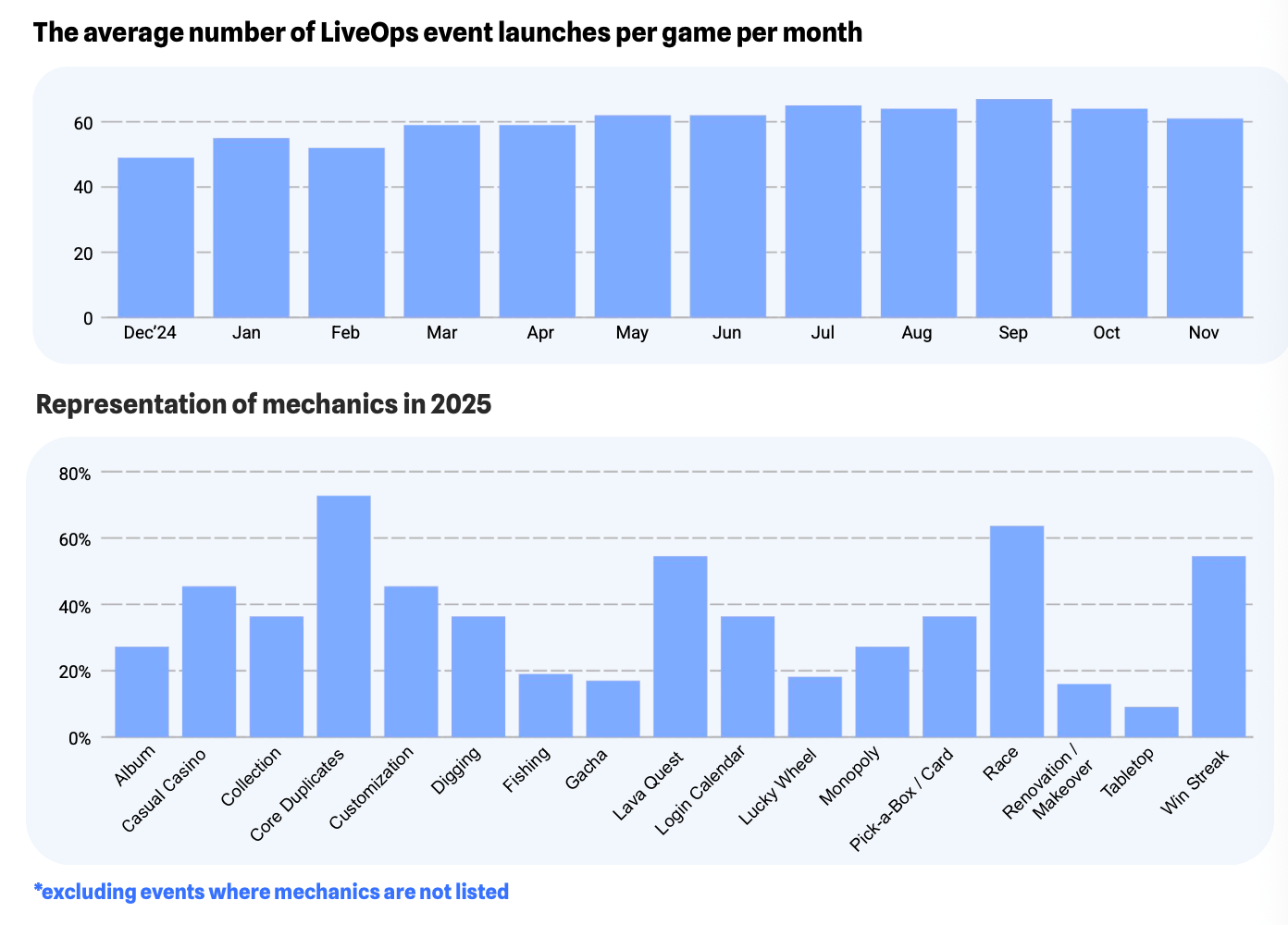
The average number of live ops events in hybrid casual and hypercasual games grew 19% over the year. Their count (64 on average) is still lower than in midcore or casual games.
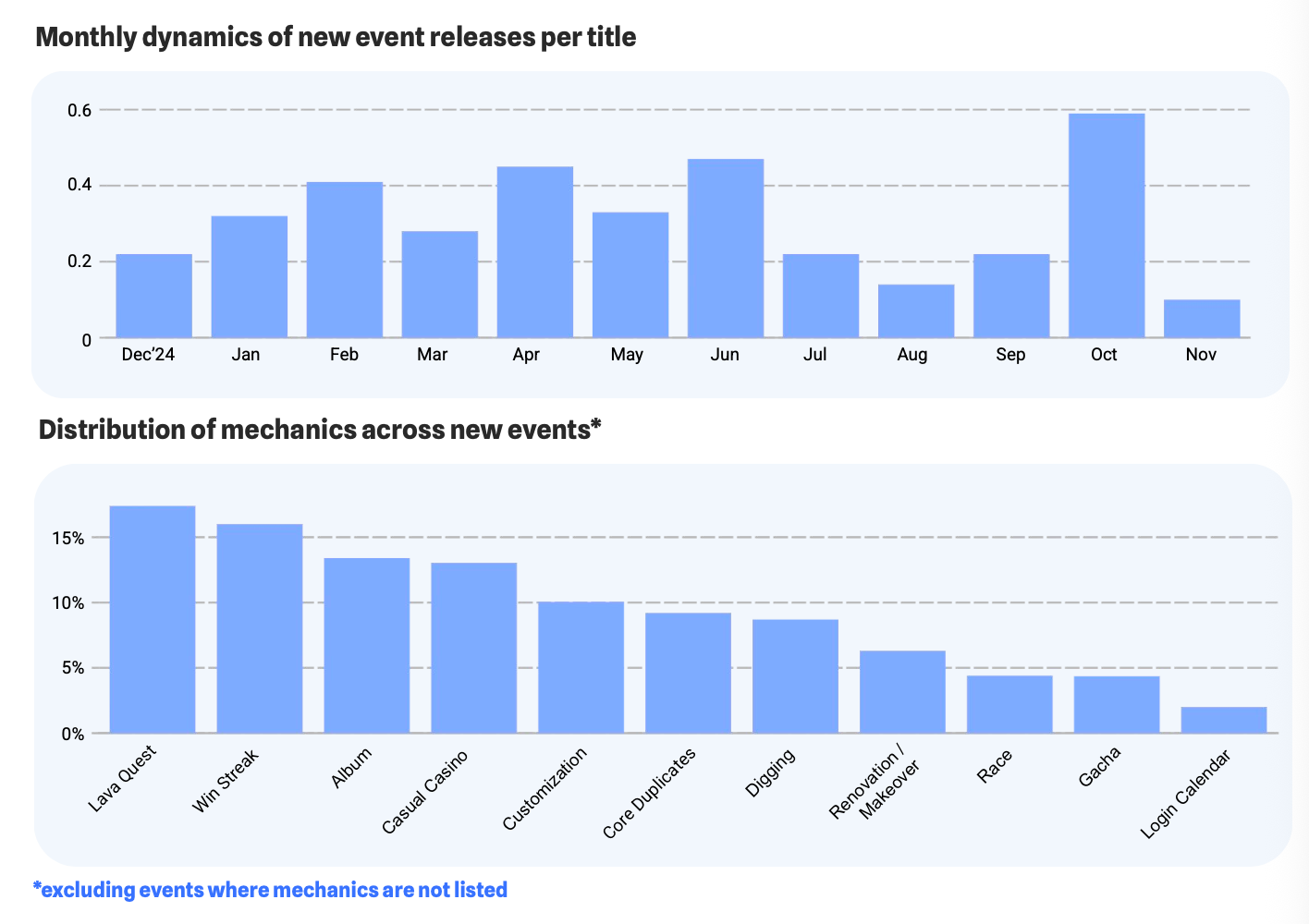
The rate of new event introductions in this segment is significantly lower than in casual or midcore games.
Among the newly added events leaders are Lava Quest, win streak mechanics, and albums.
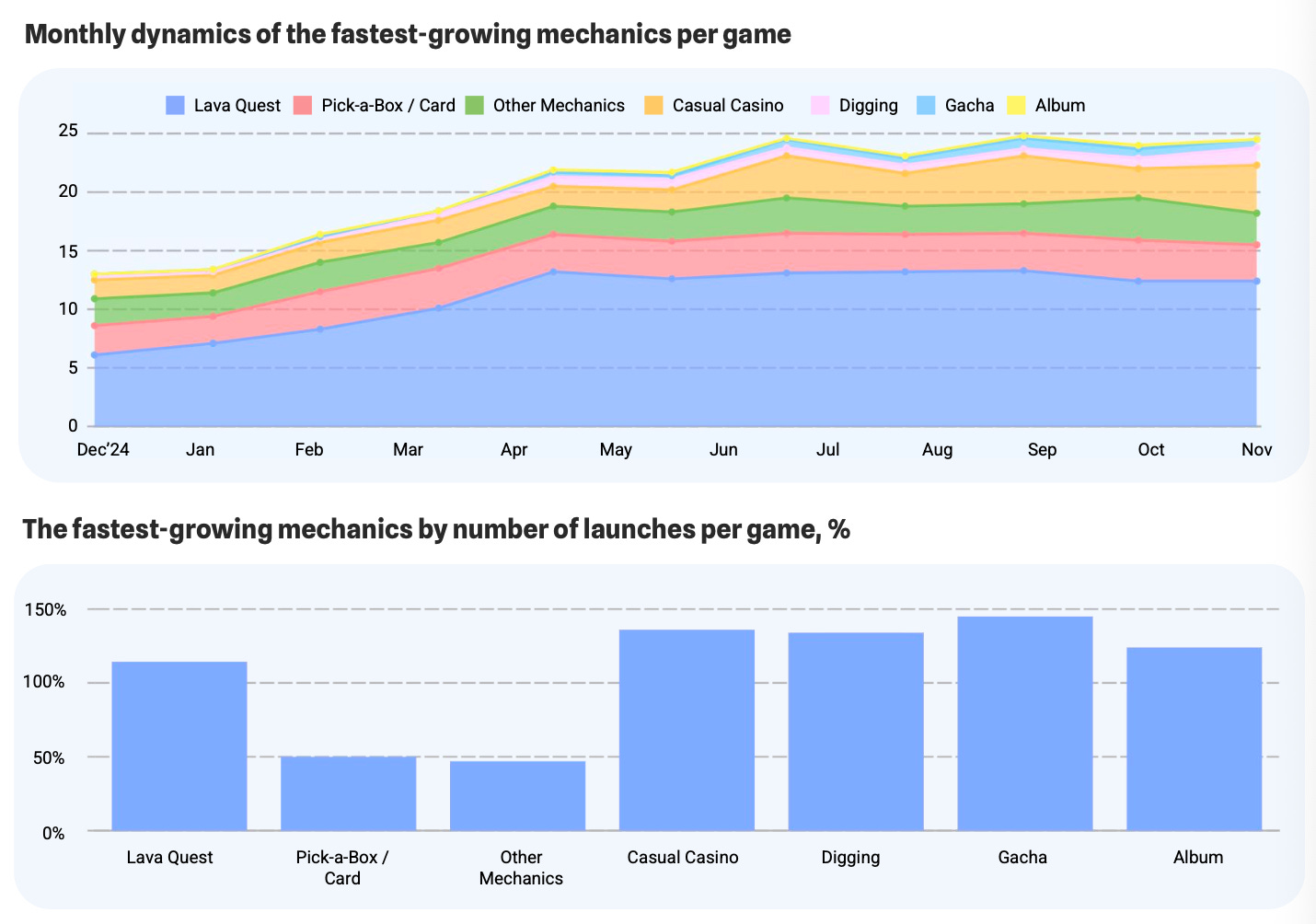
By absolute growth in event frequency, the leaders are gacha, social casino elements, and digging.
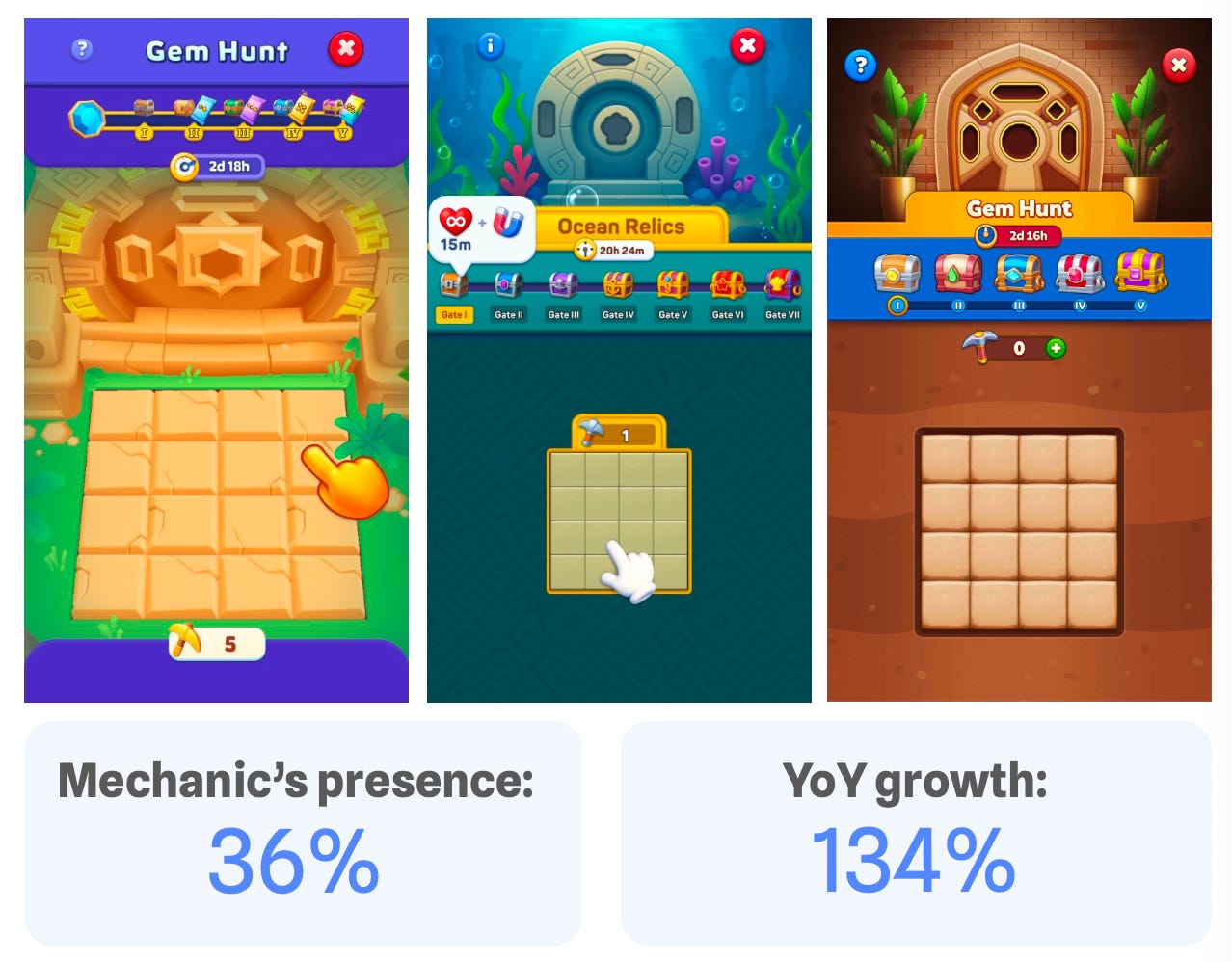
These mechanics migrated from social casino games, where they were actively used many years earlier.
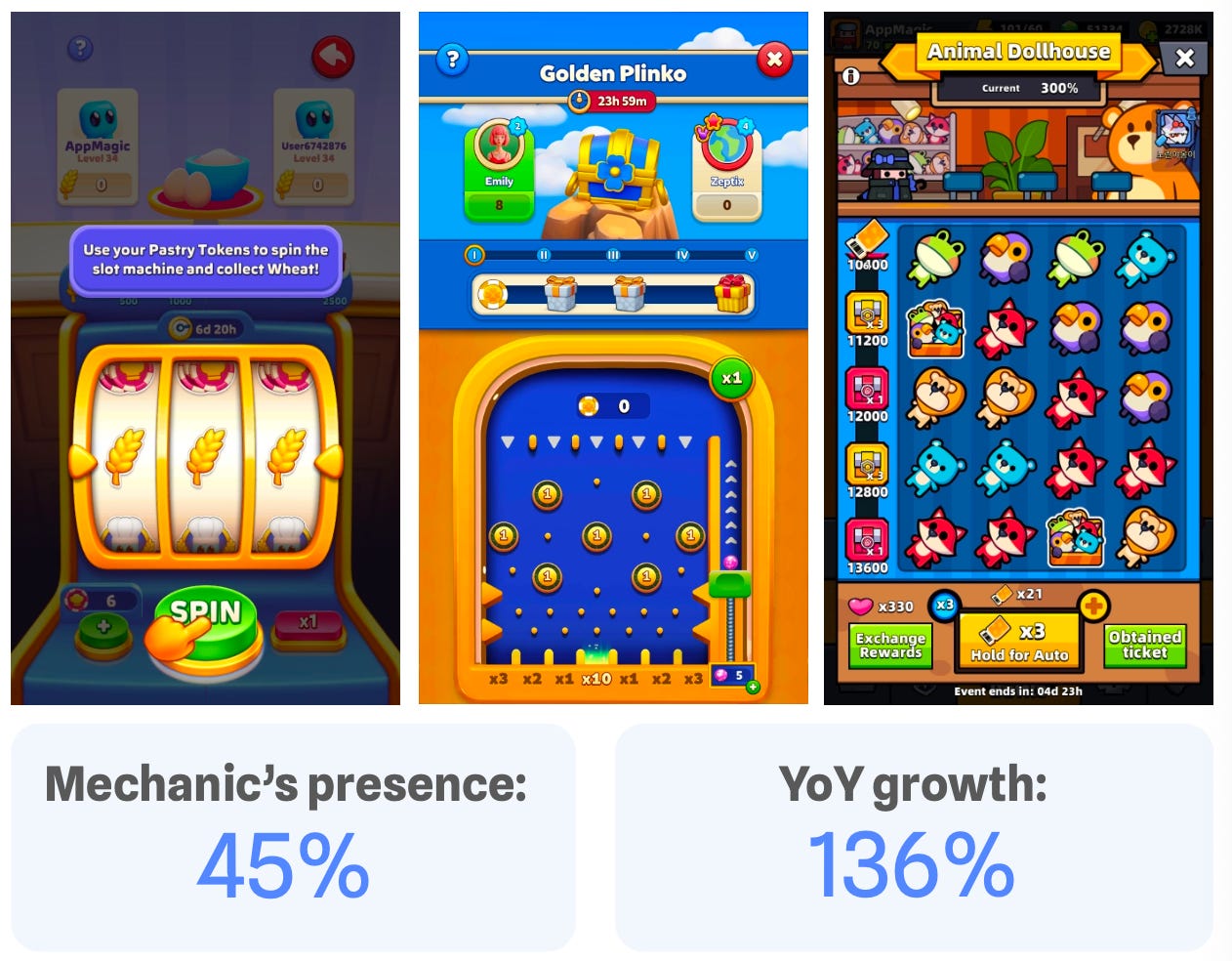
Social casino mechanics themselves (slot machines, Plinko, etc.) have become more present in hybrid casual titles, appearing in My Perfect Hotel, Survivor.io, and others.
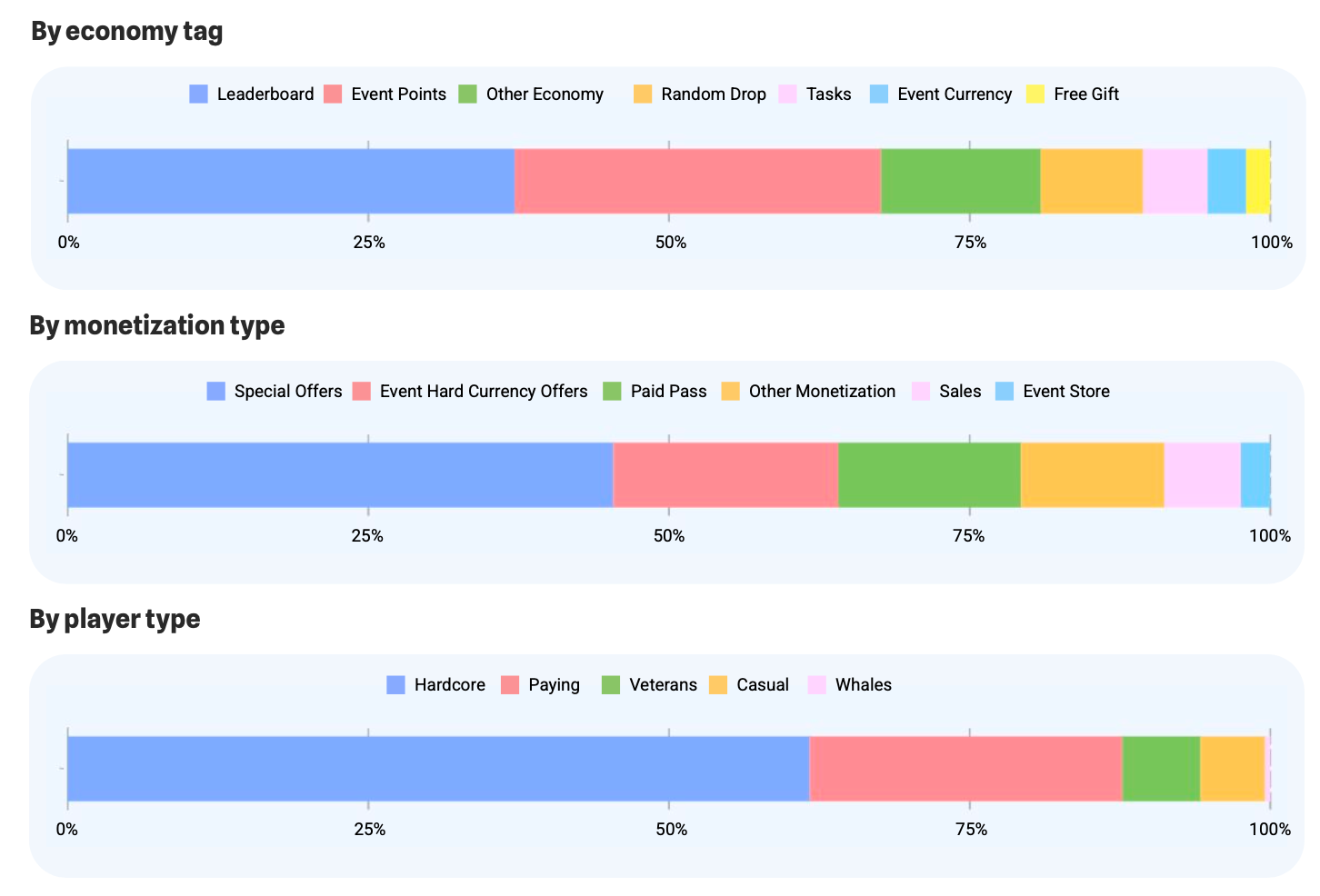
Hybrid casual titles tend to design events for hardcore players but do not focus exclusively on paying users. Overall, event design rarely targets whales specifically.
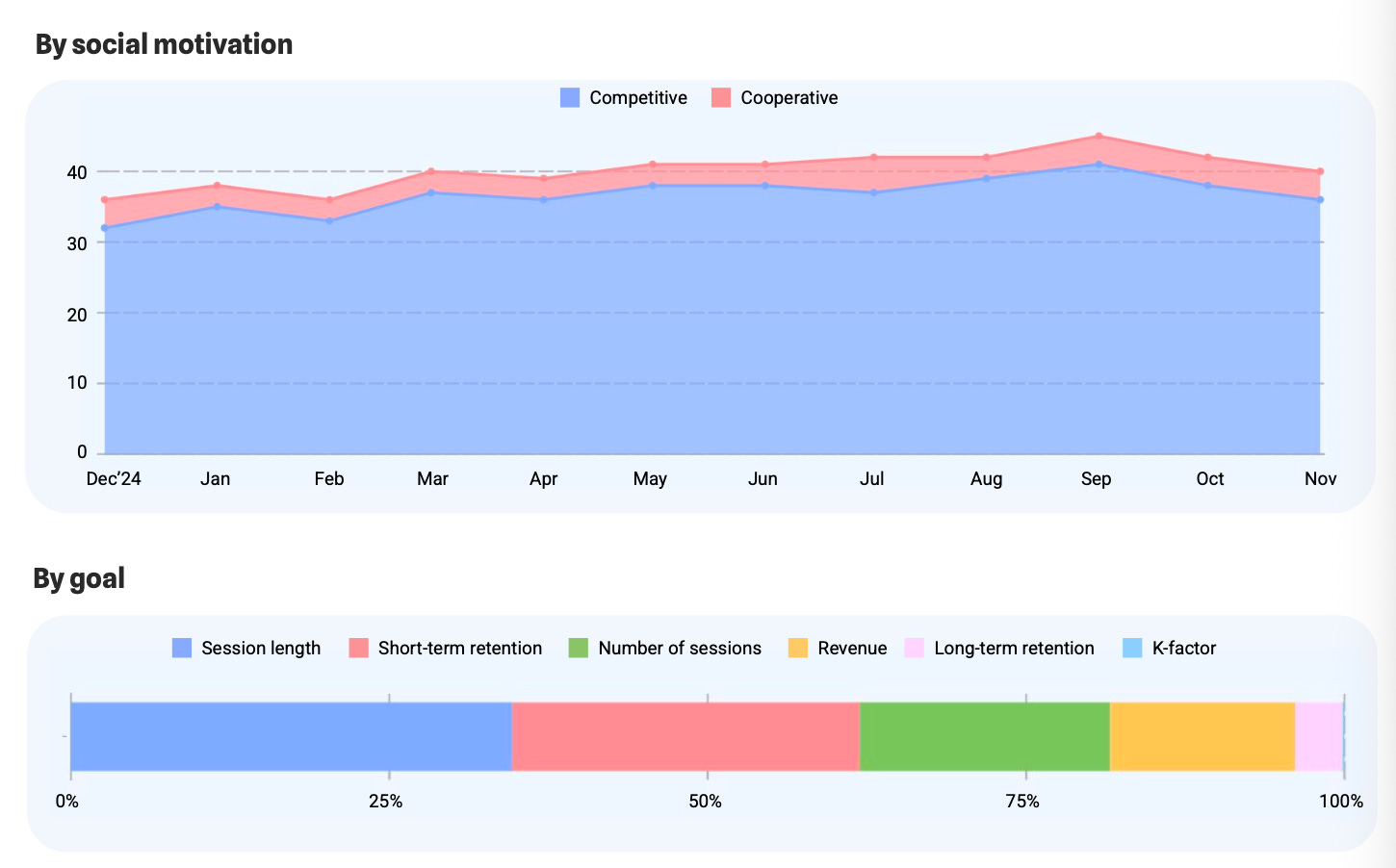
Events are primarily focused on competitive activities.
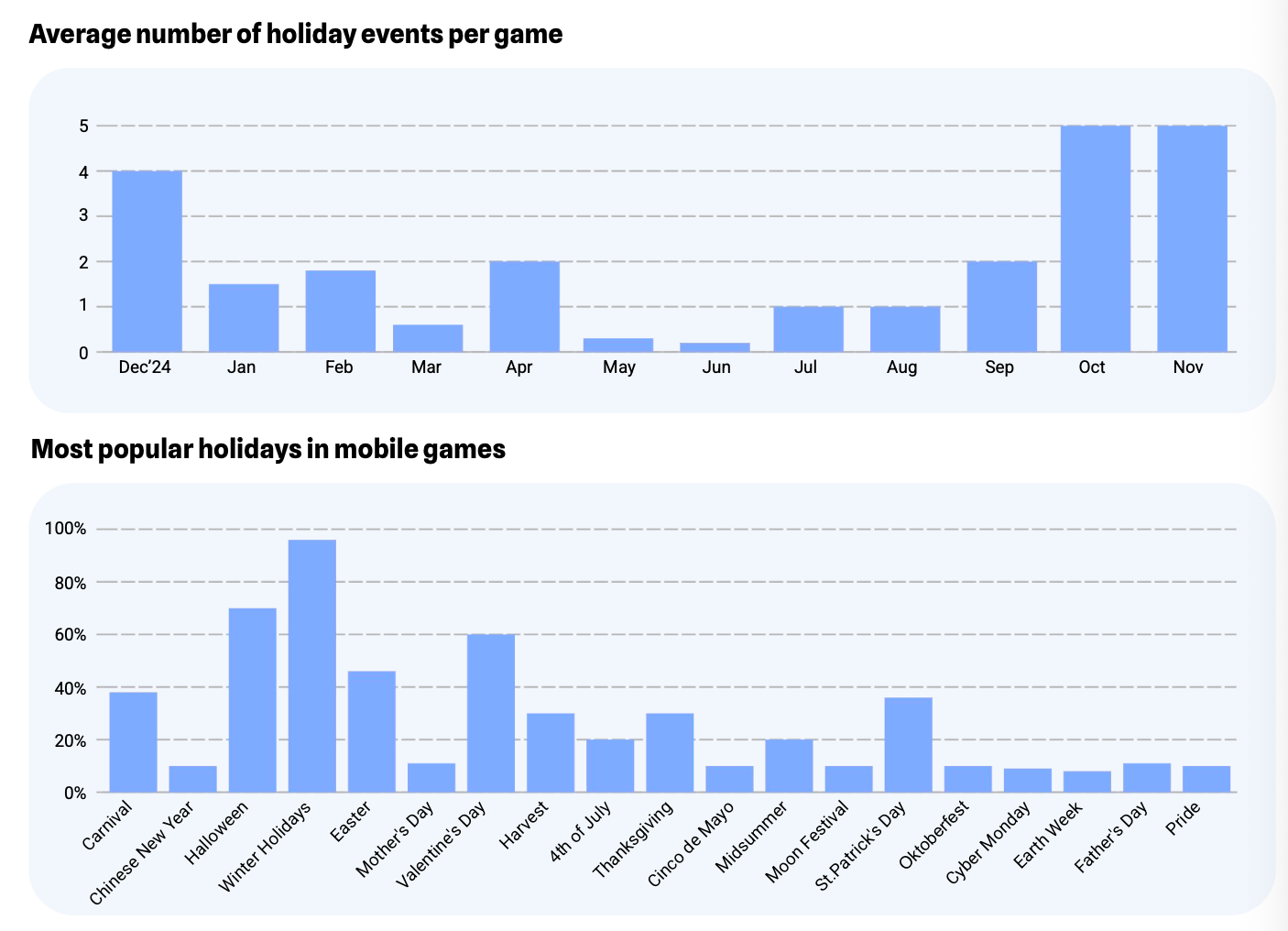
The number of events in hybrid casual and hypercasual games spikes sharply during the holiday months, October through December.
Outside those months, however, and unlike other genres, there is noticeably little attention paid to seasonal holidays throughout the rest of the year.