


Bryter has been publishing its women gamers study for nine years. This year, the company surveyed 1,004 women aged 16-65 in the US and the UK (split evenly between the two countries). Importantly, all respondents already play games. A gamer here is defined as someone who plays on PC or current/previous-generation consoles at least once a month.
❗️In 2024, Newzoo shared that 72% of women in the online population play games (81% for men), and women make up 45% of all players. At the same time, only 36% of women who play consider themselves gamers (recap).
PC and Console Trends Among Women Gamers
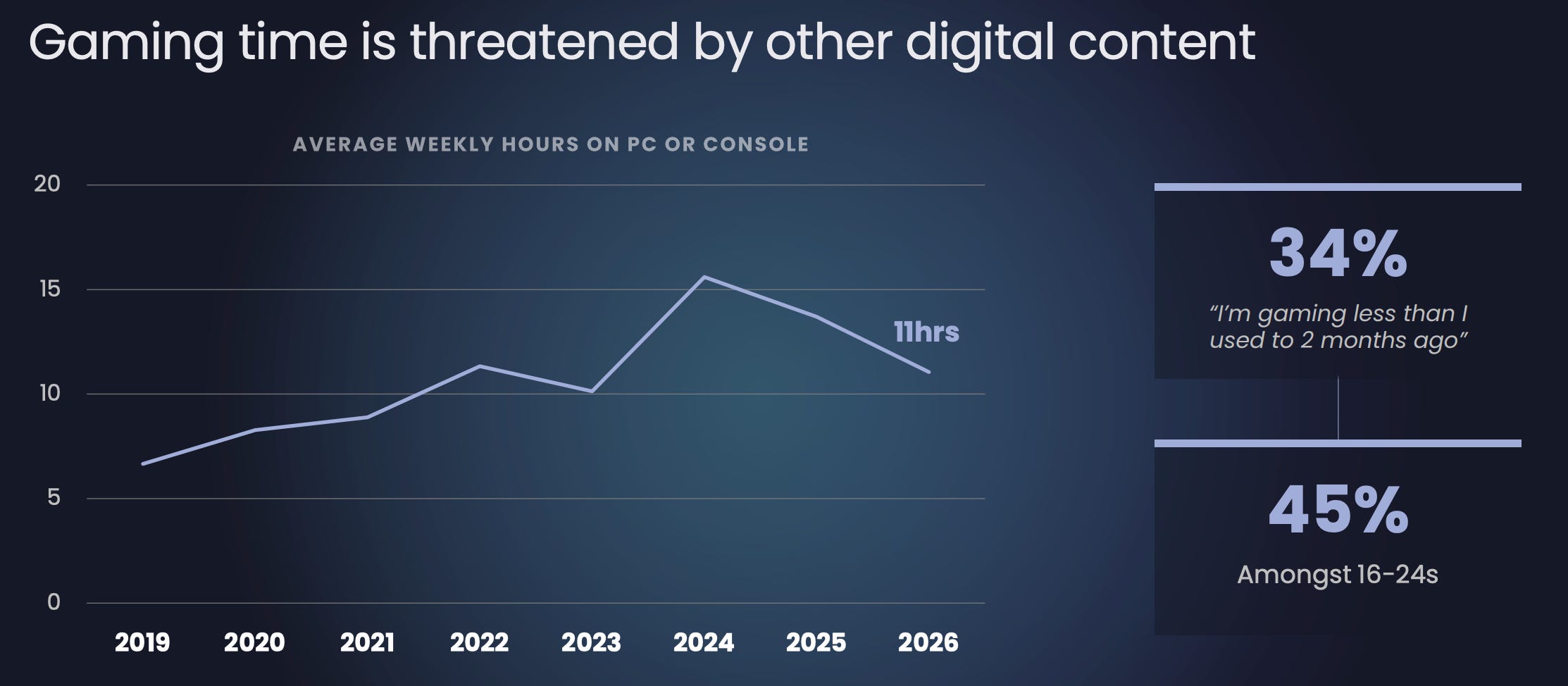
After peaking in 2024, the time women spend playing on PC and consoles has been going down. In 2026, it averages 11 hours a week.

Managing a distributed dev team shouldn’t mean managing a compliance headache. Mellow’s Contractor Management gives you ready-made contracts, IP compliance, and automated payouts for contractors in 150+ countries — for $35/month per contractor.
34% of respondents say they play less than they used to. Among women aged 16-24, it’s 45%. Bryter notes that for younger players, social media takes most of that time, while for women over 25, it’s streaming services.
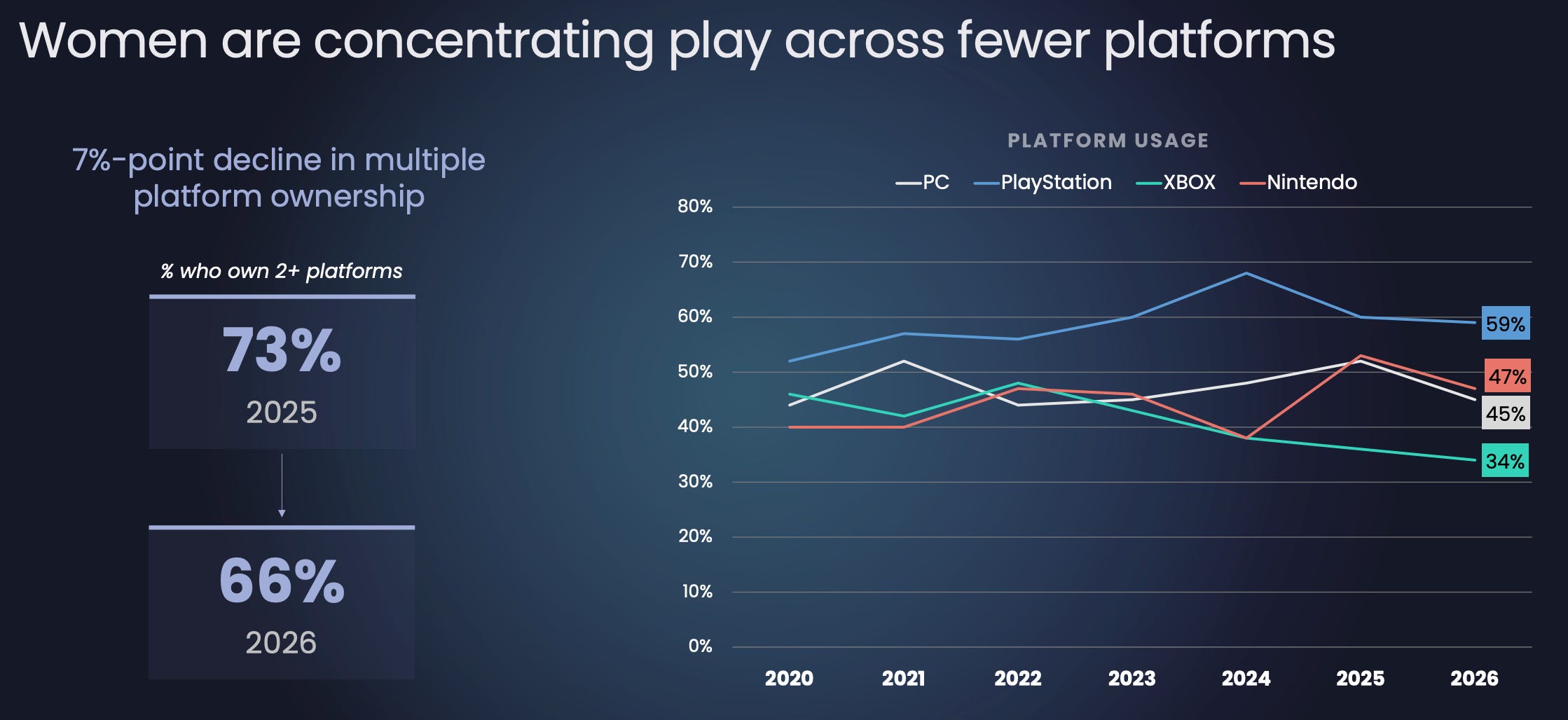
Women play on fewer platforms. The share of those with two or more platforms dropped from 73% in 2025 to 66% in 2026. Bryter links this to rising console prices.
PlayStation is the most popular platform among women (59%). Nintendo (47%), PC (45%), and Xbox (34%) follow. Over the year, the audience shrank on every platform, most of all on PC and Nintendo. Xbox’s share has been declining since 2022.
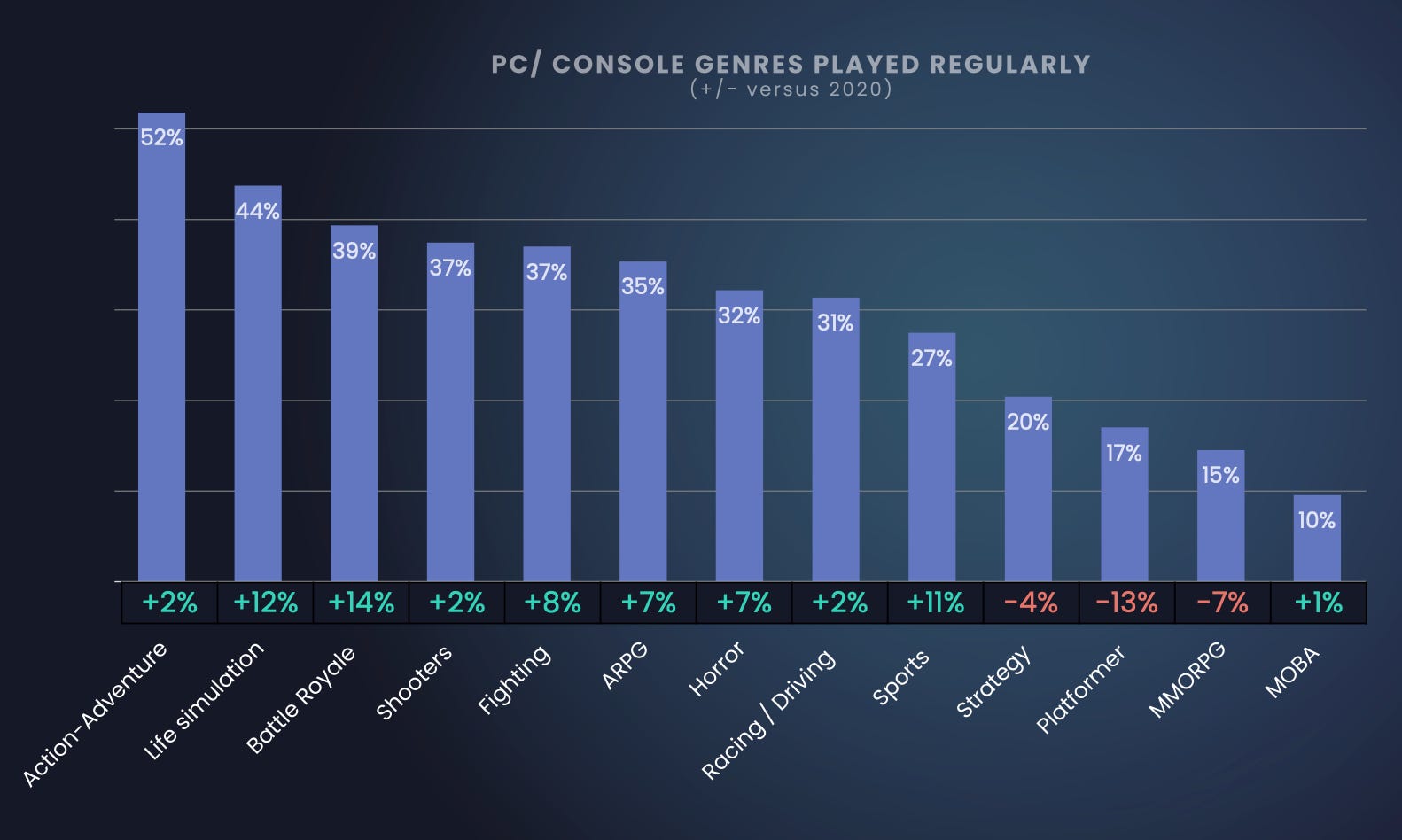
On average, women play 6 genres on PC and consoles. Action-Adventure (52%), Life Simulation (44%), and Battle Royale (39%) lead.
Since 2020, the share of women playing Battle Royale (+14 p.p.), Life Simulation (+12 p.p.), and Sports (+11 p.p.) grew the most. Meanwhile, fewer women play Platformers (-13 p.p.), MMORPGs (-7 p.p.), and Strategy (-4 p.p.).
Among women aged 16-24, Life Simulation (62%) and Horror (45%) are especially popular.
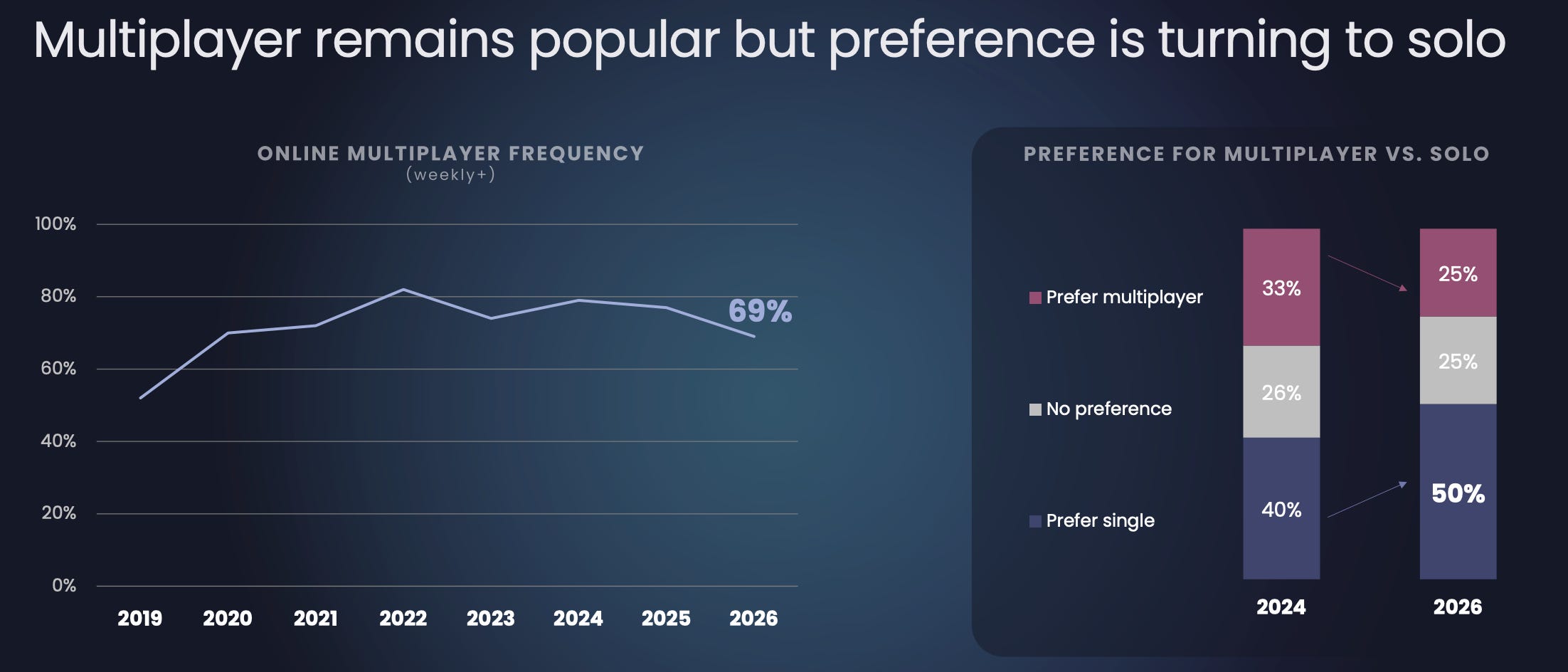
69% of women play online at least once a week. The share peaked in 2022 and has been declining since 2024.
At the same time, more women prefer playing solo. In 2024, it was 40%; in 2026, it’s already 50%. 25% prefer multiplayer (down from 33%).
Women aged 16-24 play multiplayer most: 78% do it weekly or more often. Still, 45% of them prefer playing solo.
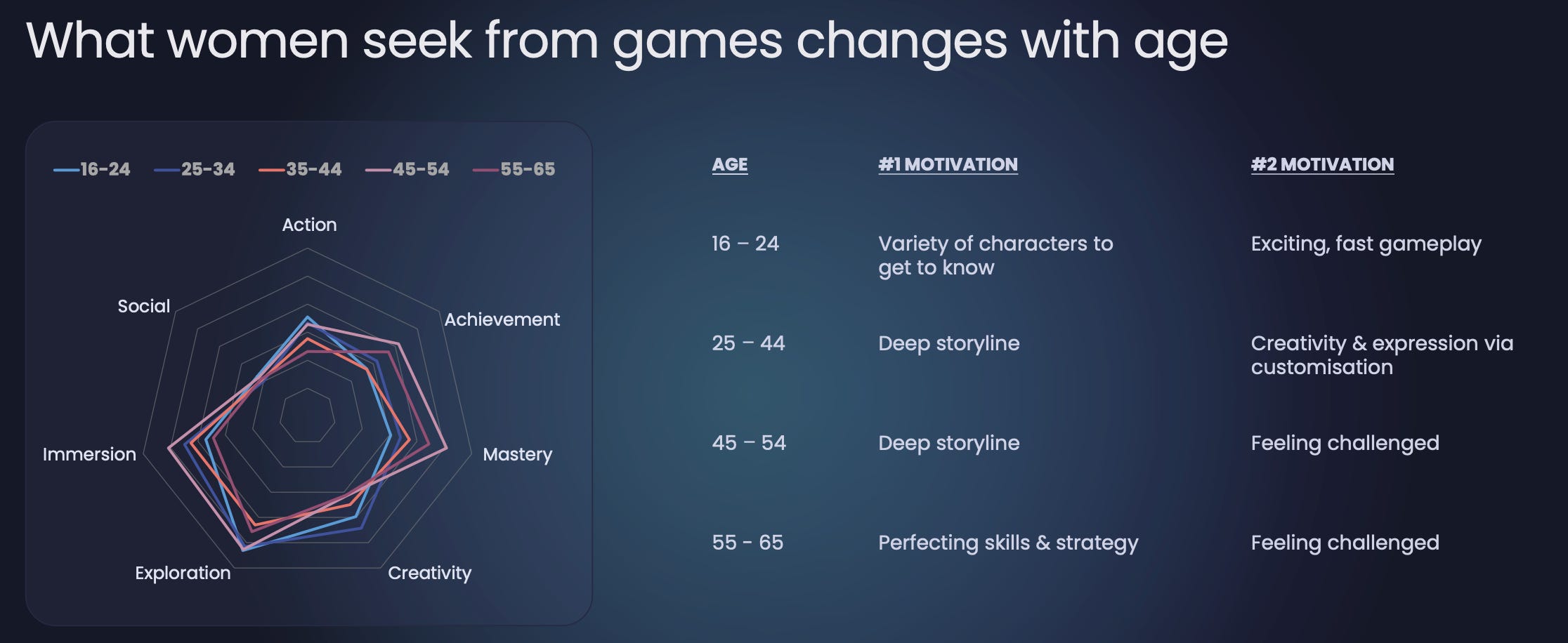
Motivation to play changes with age. Women aged 16-24 value a variety of characters and fast-paced gameplay. For those aged 25-44, a deep storyline and self-expression through customization come first. Women over 45 want games to challenge them, and in the 55-65 group, perfecting skills and strategy comes first.
Game Discovery and Spending
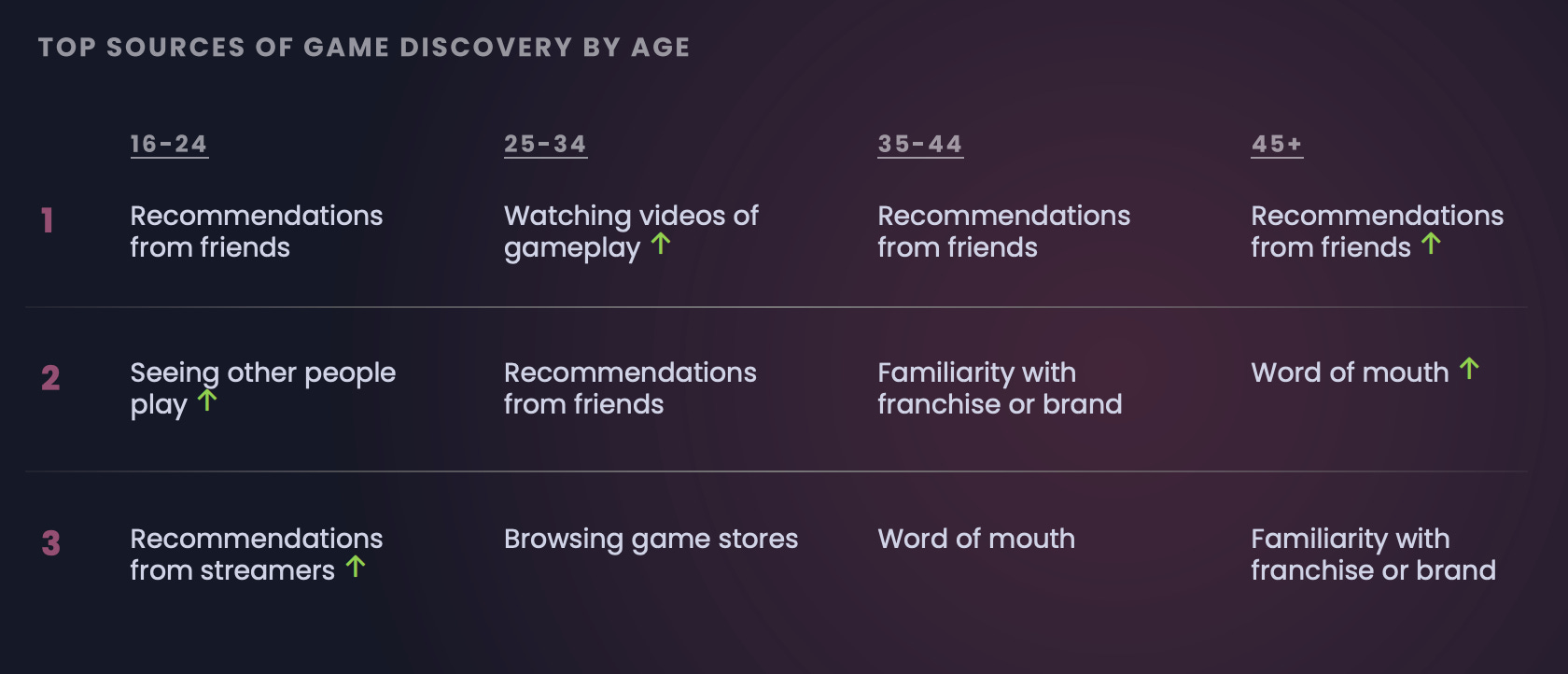
Recommendations from friends are the main way to discover a game. They rank first in every age group except 25-34, where gameplay videos lead.
Women aged 16-24 more often watch what others are playing and listen to streamers. Women over 35 rely more on word of mouth and familiar franchises.
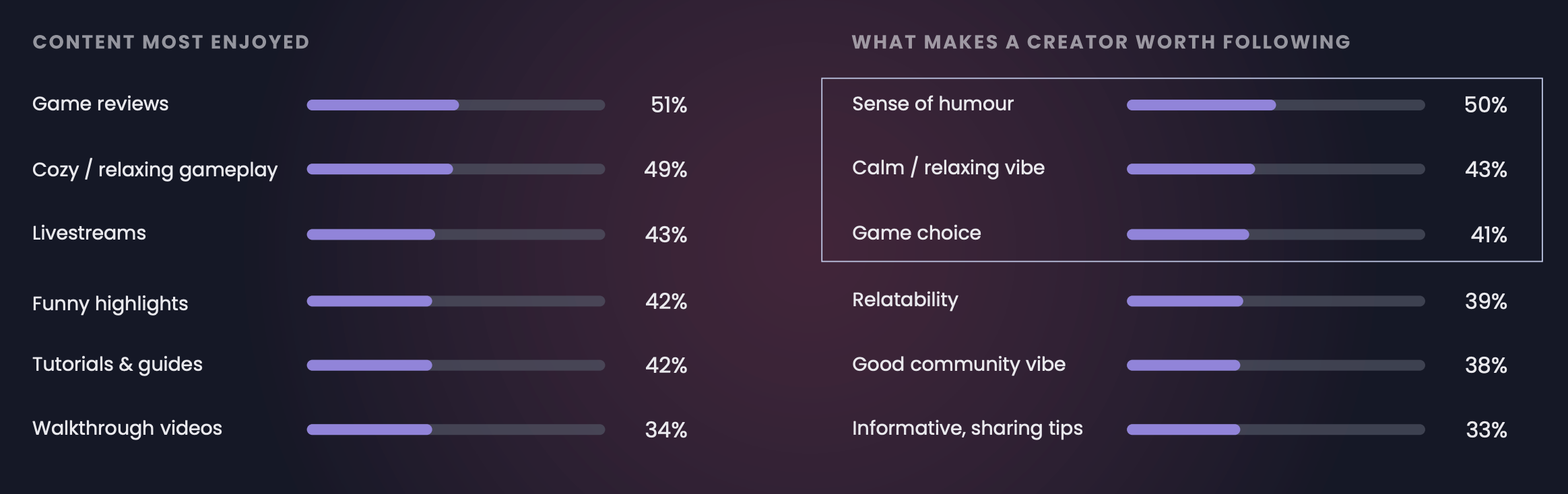
69% of women gamers follow gaming creators or streamers. They enjoy game reviews (51%), cozy, relaxing gameplay (49%), and livestreams (43%) the most.
They follow personalities more than games. The top reasons are a creator’s sense of humor (50%) and a calm atmosphere (43%). Game choice is only third (41%).
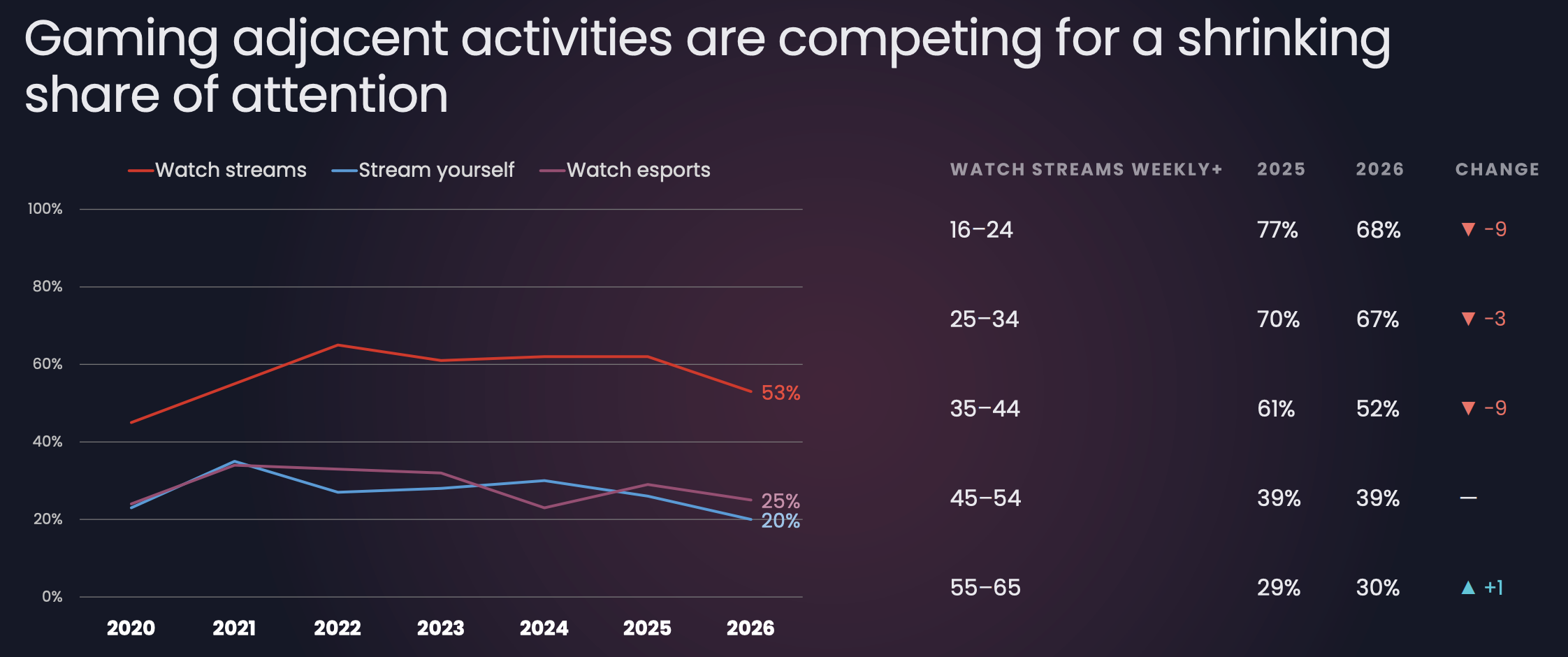
Women watch streams less. 53% watch them weekly or more often, down 9 p.p. from 2025. The biggest drops were in the 16-24 (77% to 68%) and 35-44 (61% to 52%) age segments.
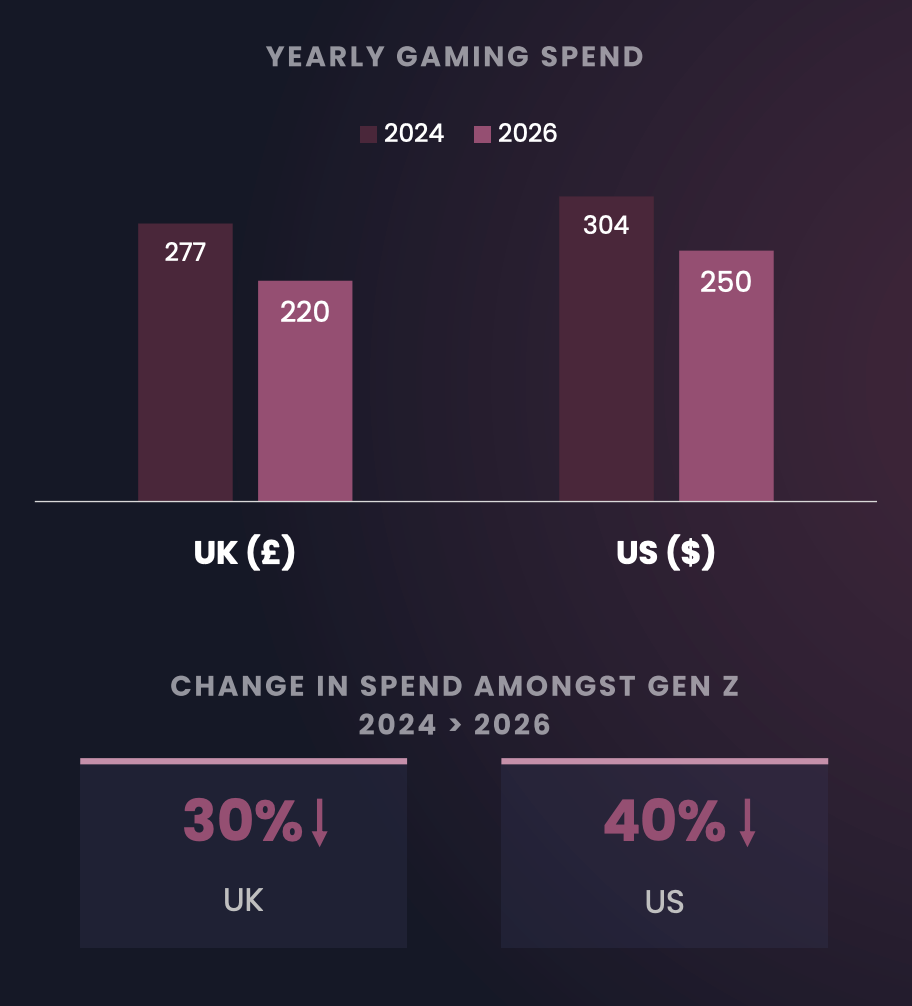
Spending on games is declining. In 2024, women in the UK spent £277 a year on games; in 2026, that number fell to £220. In the US, it’s $304 and $250, respectively.
Women aged 16-24 cut their spending especially sharply: since 2024, by 30% in the UK and by 40% in the US.
At the same time, the number of premium games bought hasn’t changed since 2025: 4 games a year on average. Bryter suggests that women are cutting back on other spending.
For example, on DLC. 58% buy DLC regularly (66% in 2024). 58% of respondents feel that DLC too often includes content that should have been in the base game.
Mobile Games
❗️Bryter’s sample only includes those who play on PC or consoles. So the figures in this section are about women who play both there and on mobile. Mobile-only players aren’t in the sample.
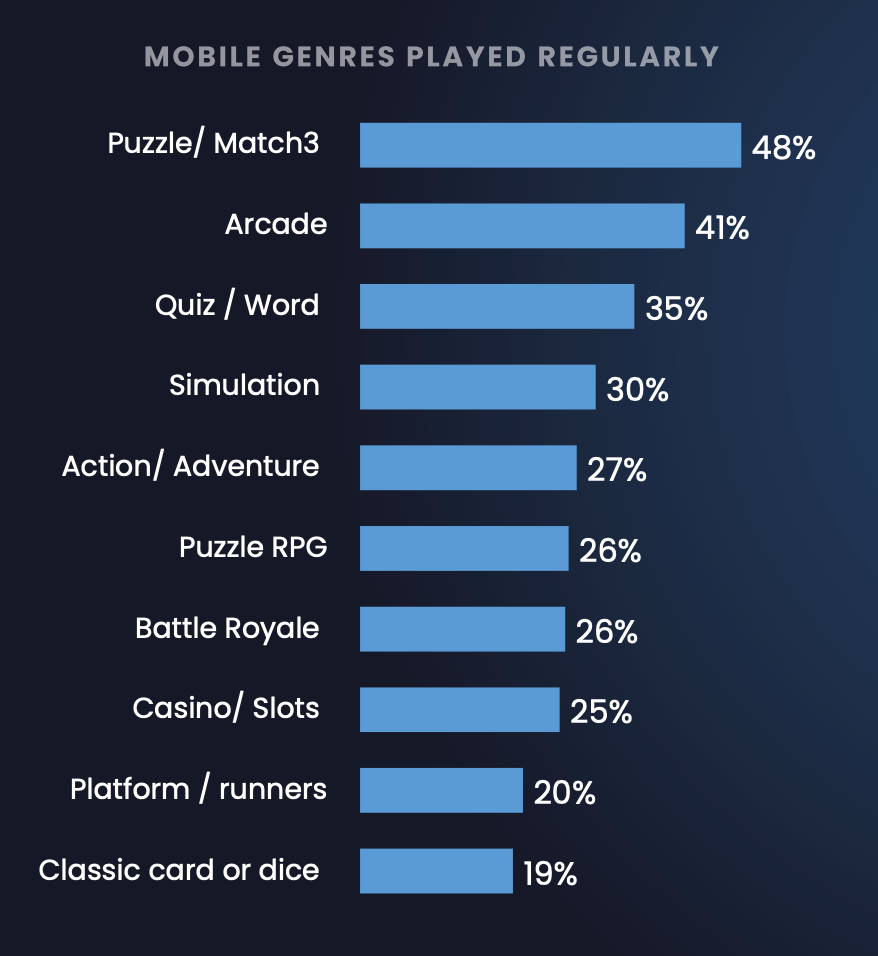
The most popular mobile genres are Puzzle and Match-3 (48%), Arcade (41%), and Quiz and Word games (35%).
On mobile, women under 30 more often play Arcade, Simulation, and Battle Royale. Women over 30 prefer Puzzle and Match-3, Quiz and Word games, and Casino and Slots.
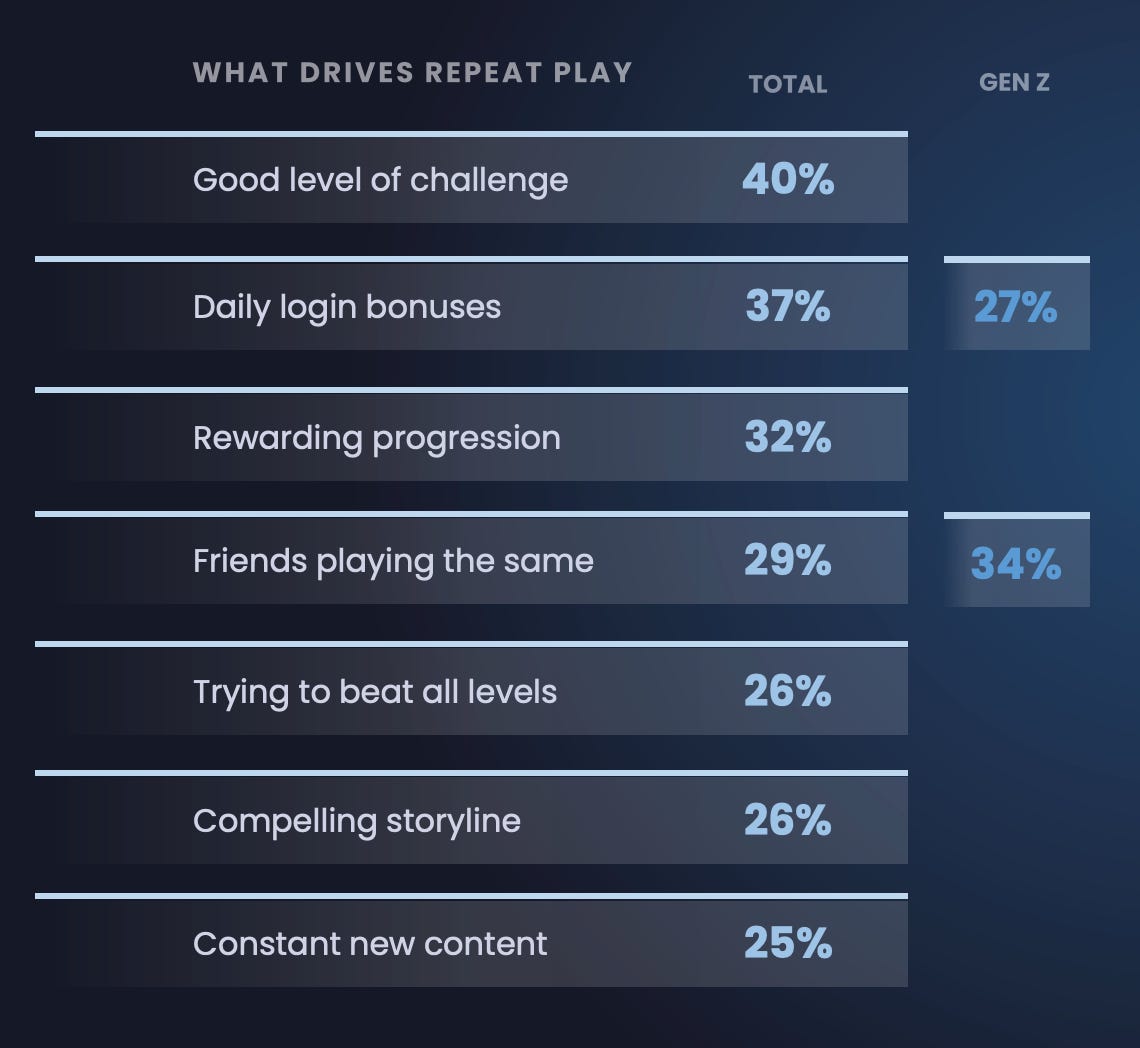
Women return to a game most often because of challenge (40%), daily login bonuses (37%), and progression (32%).
For women aged 16-24, it’s different. Friends playing the same game motivate 34%, while daily bonuses work for only 27%.
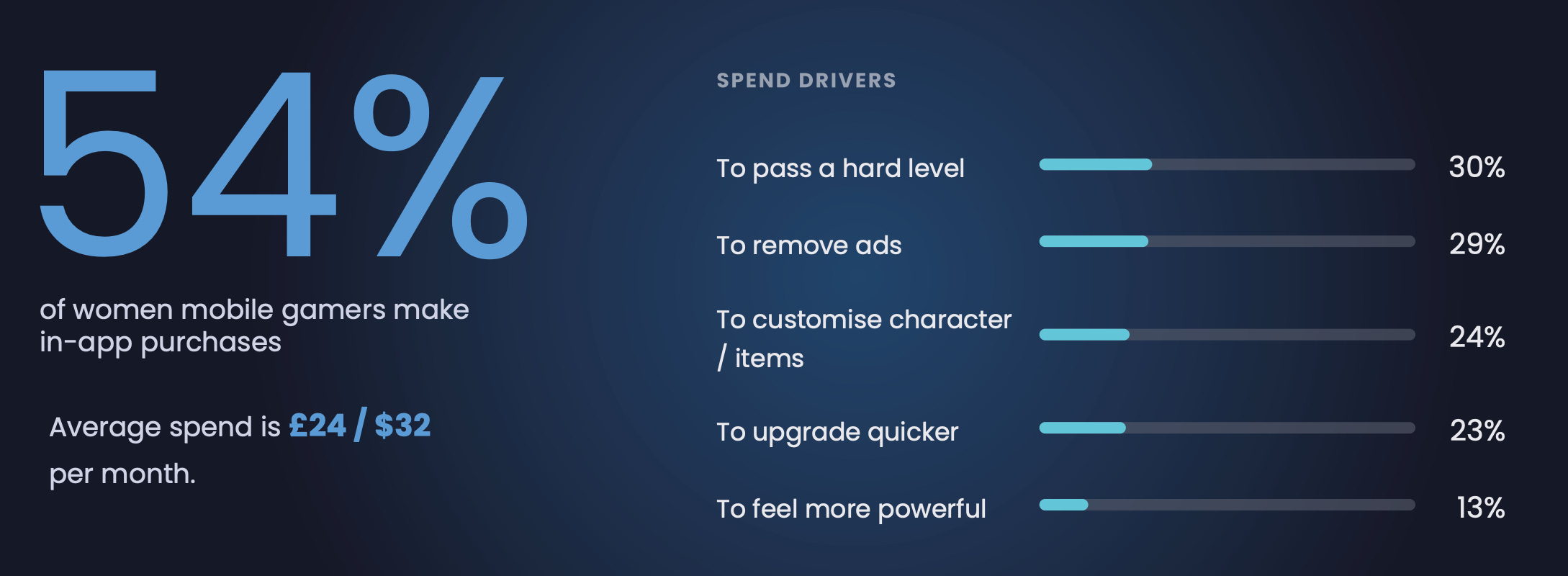
54% of respondents make in-app purchases in mobile games. Average spending is £24 in the UK and $32 in the US per month.
They pay most often to pass a hard level (30%), remove ads (29%), and customize characters or items (24%). Among those who don’t pay yet, 25% are willing to pay to remove ads.
In the US, the most valuable audience is women aged 35-44; in the UK, it’s women aged 25-34.
Toxicity
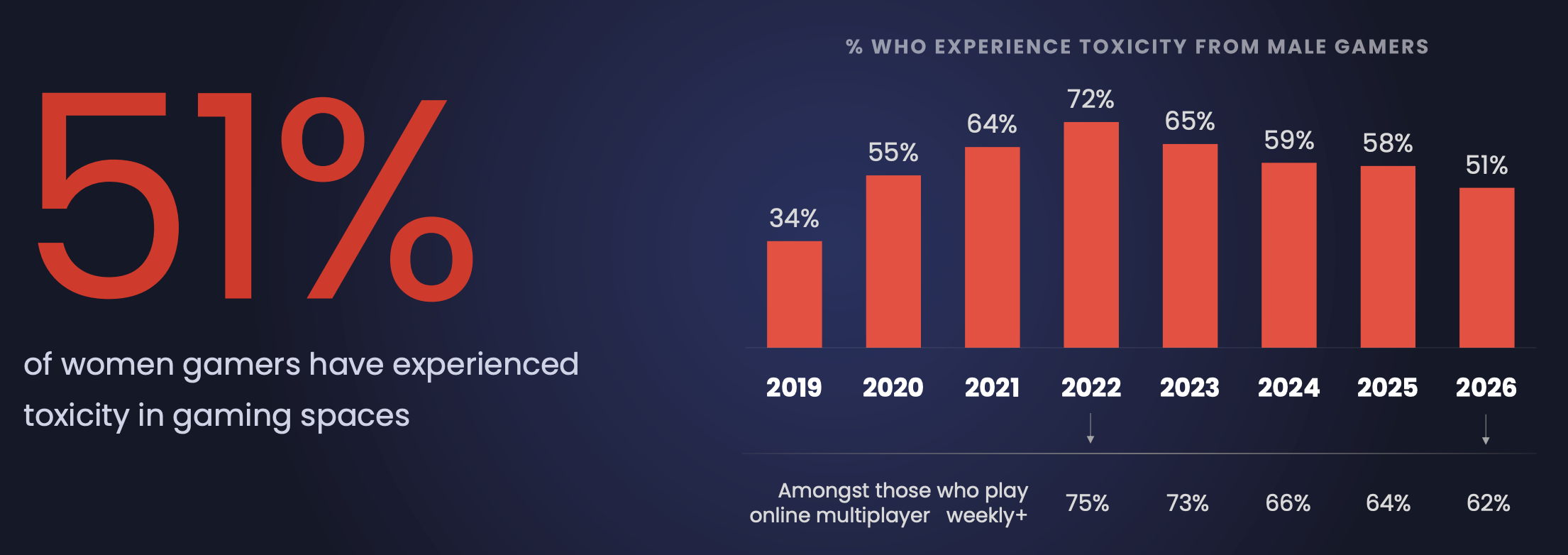
51% of women have experienced toxicity in games. The peak was in 2022 (72%), and the figure has been declining since. In 2025, it was 58%.
Among those who play online multiplayer at least weekly, the share is higher: 62% (75% in 2022). At the same time, 38% of women believe toxicity has gotten worse.
Among women aged 16-24, 79% have experienced toxicity.
Managing a distributed dev team shouldn’t mean managing a compliance headache. Mellow’s Contractor Management gives you ready-made contracts, IP compliance, and automated payouts for contractors in 150+ countries — for $35/month per contractor.
42% of women have been told by male players that they “don’t belong” in games. Among women aged 16-24, that number is 71%. 46% have been told they are “not real gamers.”
29% of respondents don’t call themselves gamers.
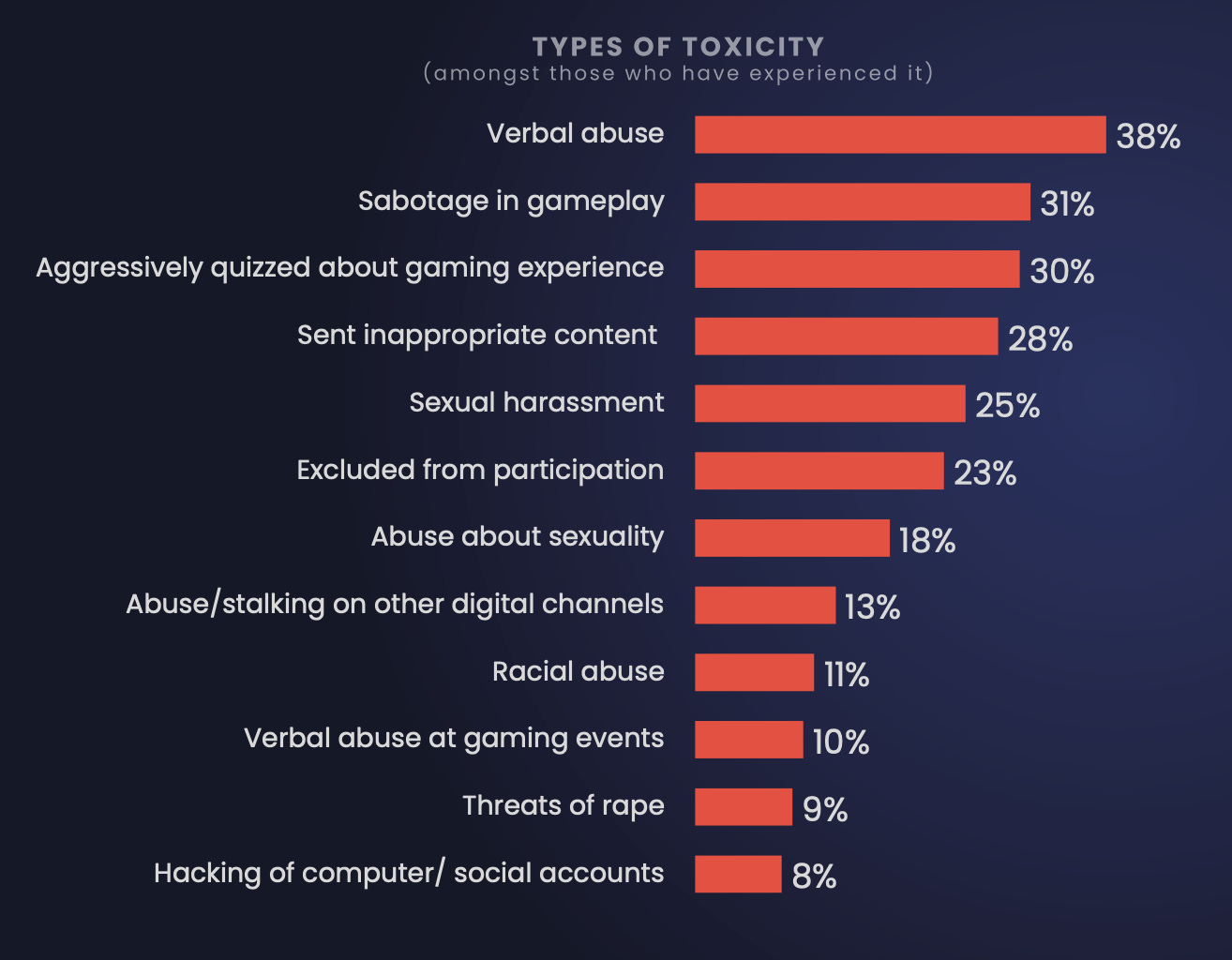
The most common types of toxicity are verbal abuse (38%), gameplay sabotage (31%), and being aggressively “quizzed” about gaming experience (30%). 25% have faced sexual harassment, and 9% have received rape threats.
Toxicity was most often mentioned in Call of Duty, Fortnite, GTA, Roblox, League of Legends, Overwatch, and Minecraft.
Bryter notes that this year, open-ended answers contained more cases of male players writing that women don’t belong in games.
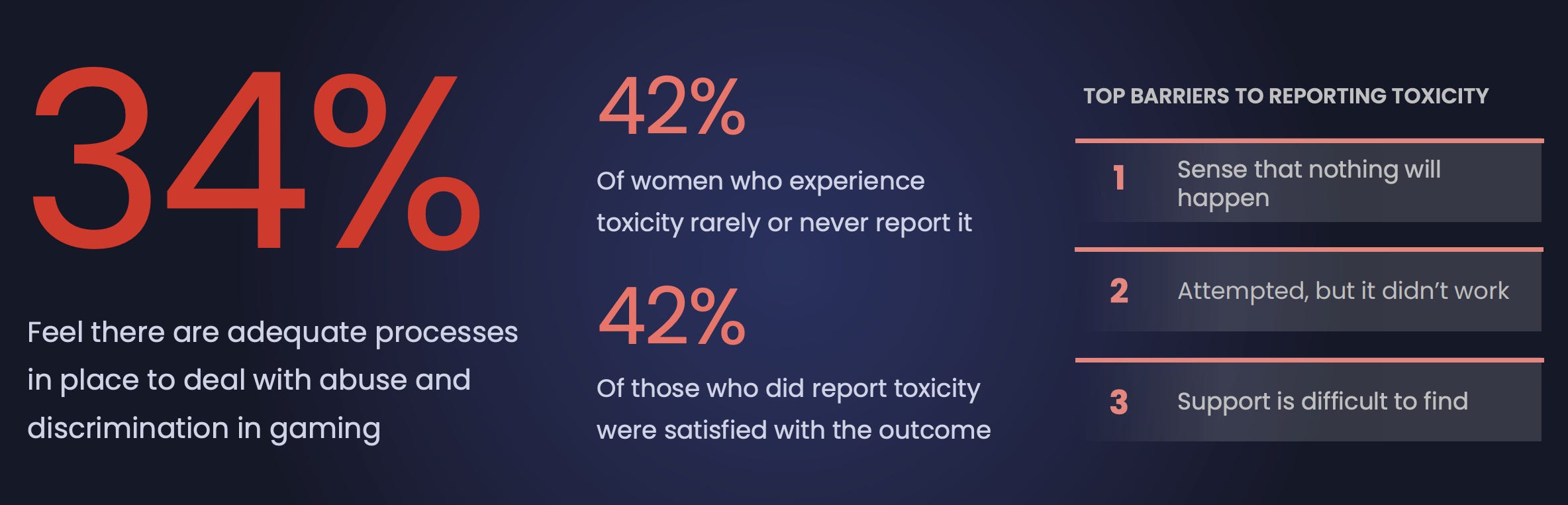
Only 34% of women believe games have adequate processes to deal with abuse and discrimination.
42% of those who experienced toxicity rarely or never report it. The main reason is that they feel nothing will happen. Among those who did report it, 42% were satisfied with the outcome.
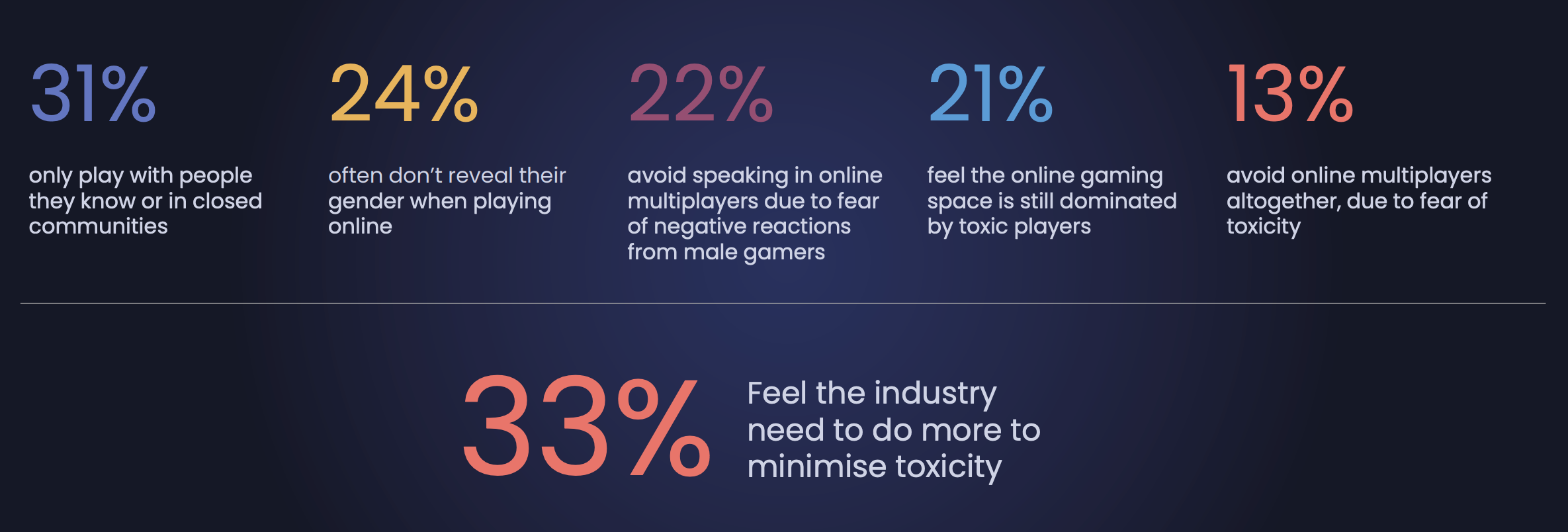
Because of toxicity, women limit how they play. 31% play only with people they know or in closed communities, 24% often hide their gender, and 22% avoid speaking in voice chat. 13% have given up on online multiplayer altogether.
33% believe the industry needs to do more to fight toxicity.