


Omdia and FastSpring surveyed 110 senior executives at game companies in the US and Europe in April-June 2026. Hybrid casual (38%) and midcore (34%) projects make up the largest share of the sample.
❗️All companies in the sample make games for iOS and Android; 91% of them have annual revenue above $10 million, and 92% have more than 100 employees. Keep this in mind when interpreting the answers.
D2C Adoption
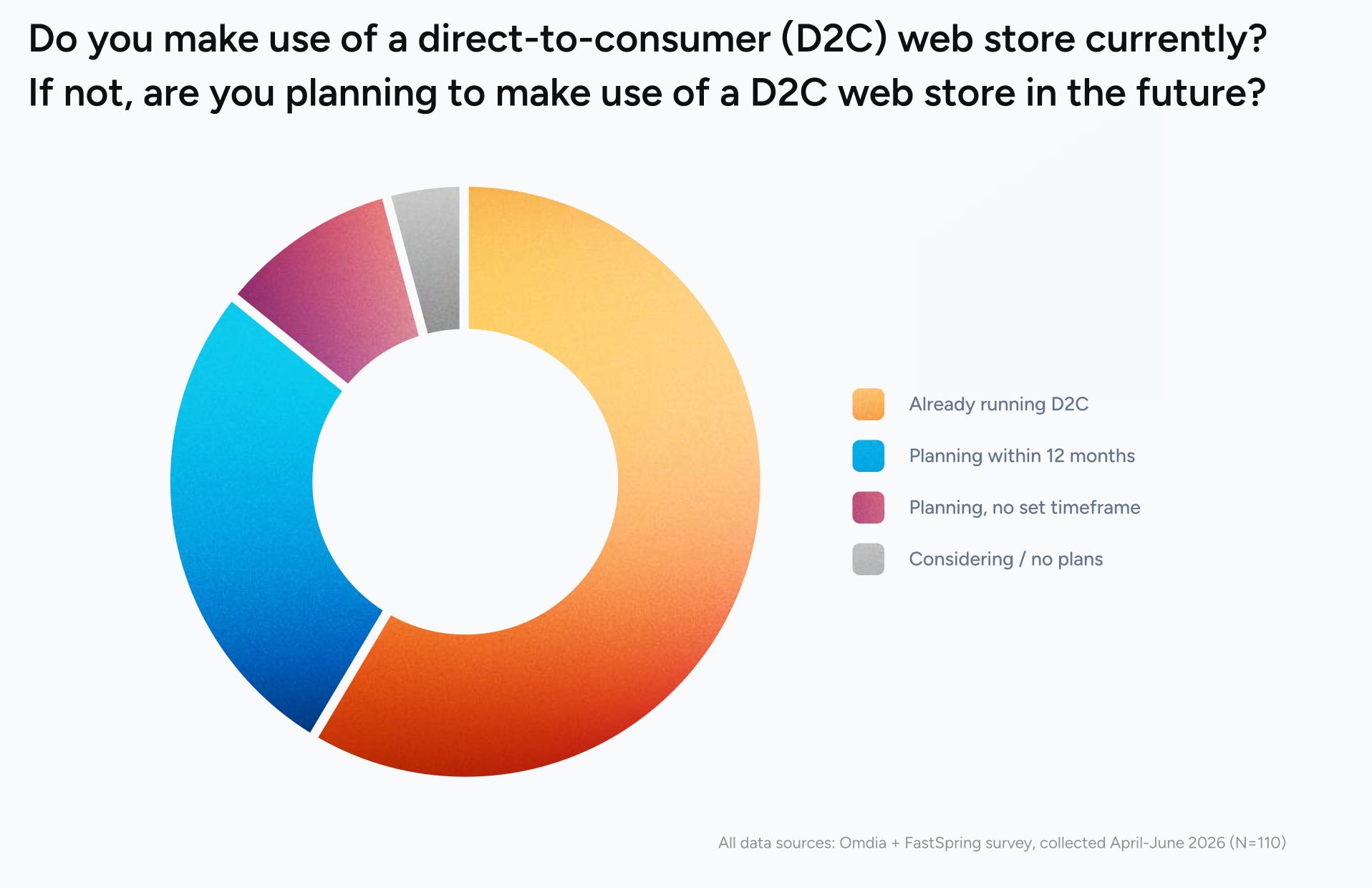
59% of surveyed companies already use a web shop. Last year, it was 57%.

Managing a distributed dev team shouldn’t mean managing a compliance headache. Mellow’s Contractor Management gives you ready-made contracts, IP compliance, and automated payouts for contractors in 150+ countries — for $35/month per contractor.
Of the 41% of companies without a web shop, 91% plan to launch one, and 67% plan to do so within the next 12 months. Fewer than 1% of respondents have ruled it out.
❗️That said, a year ago, 60% of companies without a D2C shop planned to launch one within 12 months. Yet the share of companies with a web shop grew by just 2 percentage points over the year. Respondents in the two surveys likely differ, but plans do not match actions.
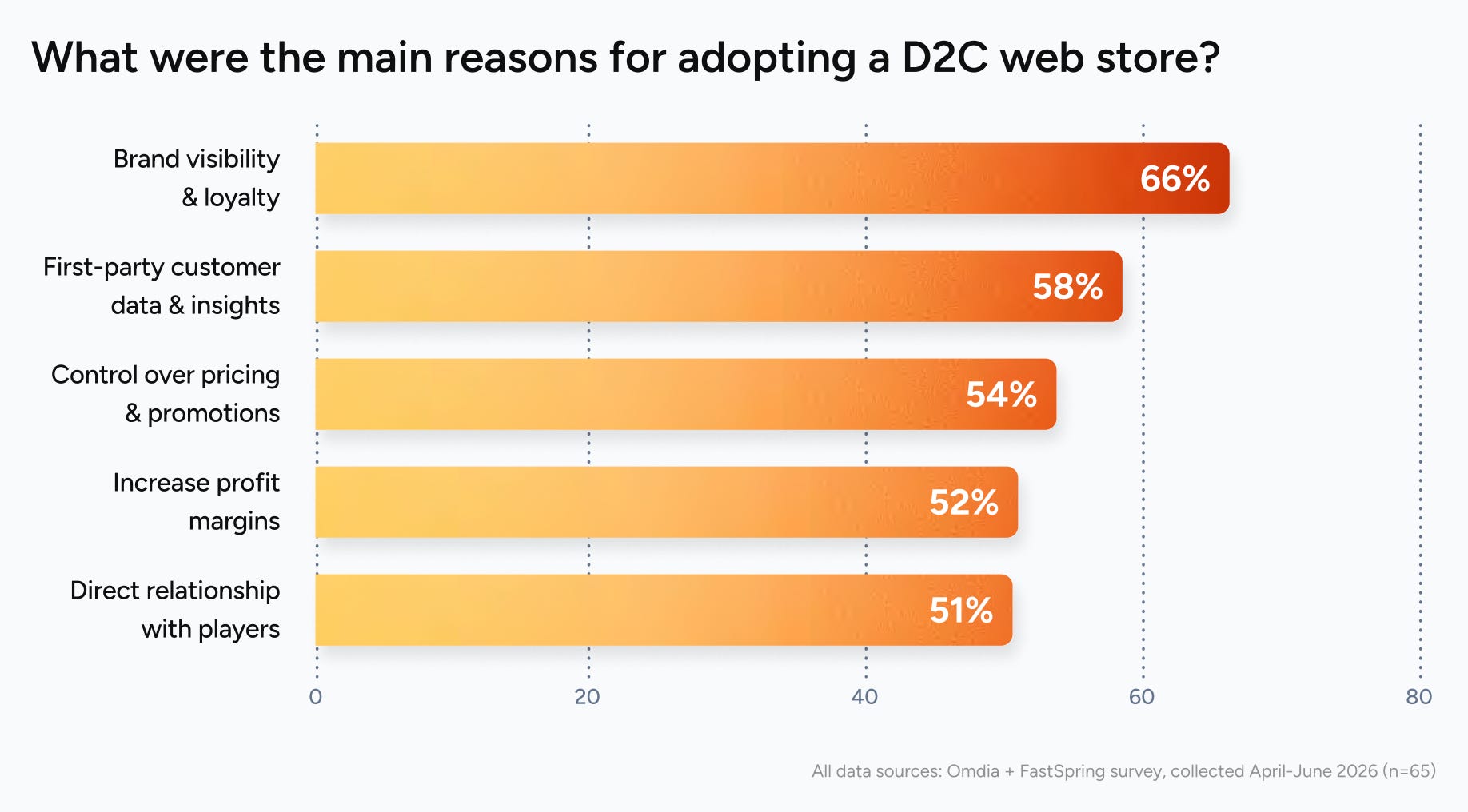
The main reasons for launching a web shop are: brand visibility and player loyalty (66%), access to first-party player data (58%), and control over pricing and promotions (54%). Higher margins are only fourth (52%).
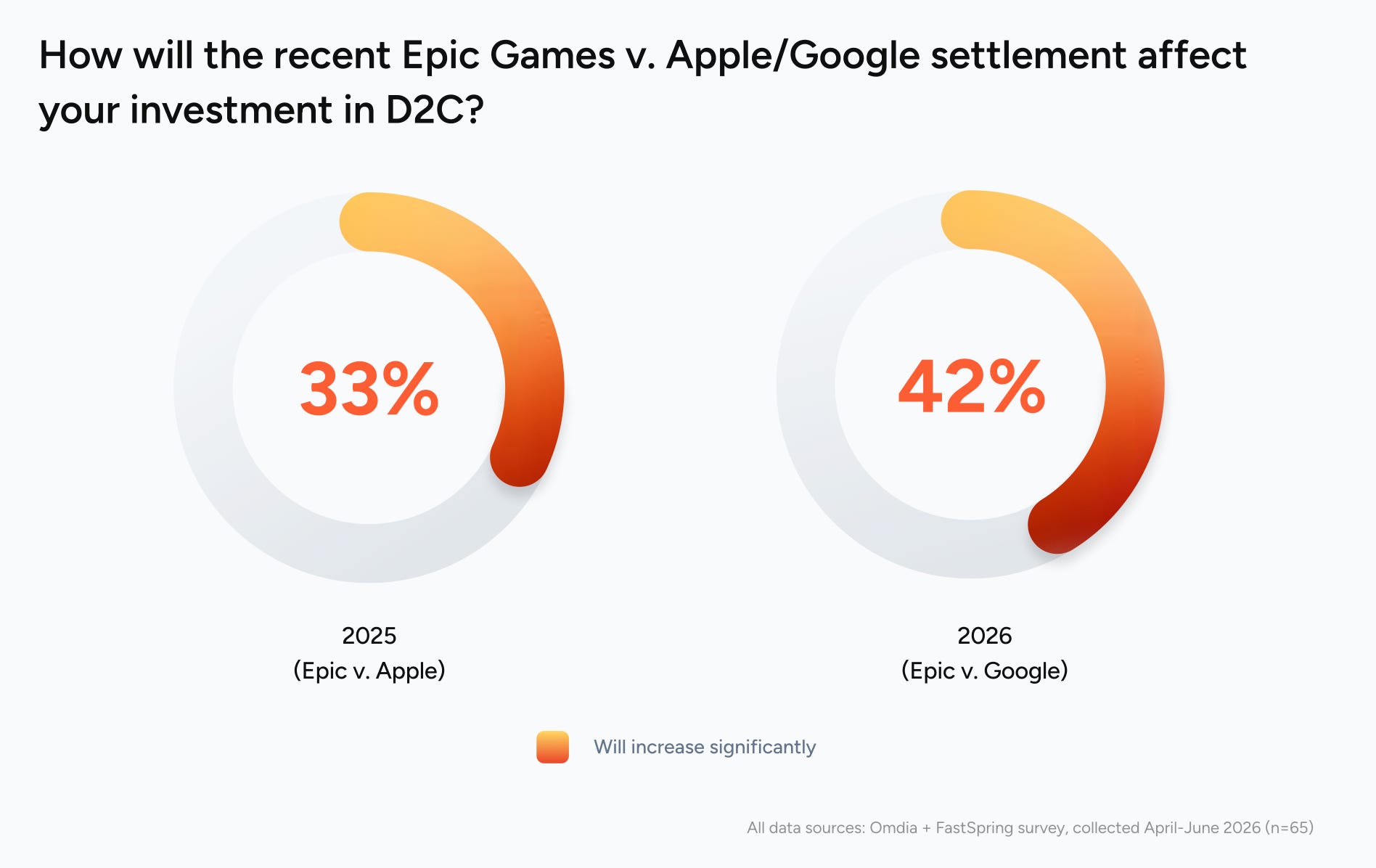
88% of respondents plan to increase their D2C investment in 2026. 42% plan to increase it significantly. Last year, after the Epic v. Apple ruling, it was 33%.
82% of respondents say the recent court decisions have made them more confident in the future of D2C. Among companies without a web shop, 93% said they will most likely launch one in light of the recent court cases.
The main barriers for those without a web shop are: technical complexity (56%), the risk of damaging relationships with Apple and Google (51%), and legal uncertainty (47%). A year ago, 67% of companies cited technical complexity.
Revenue
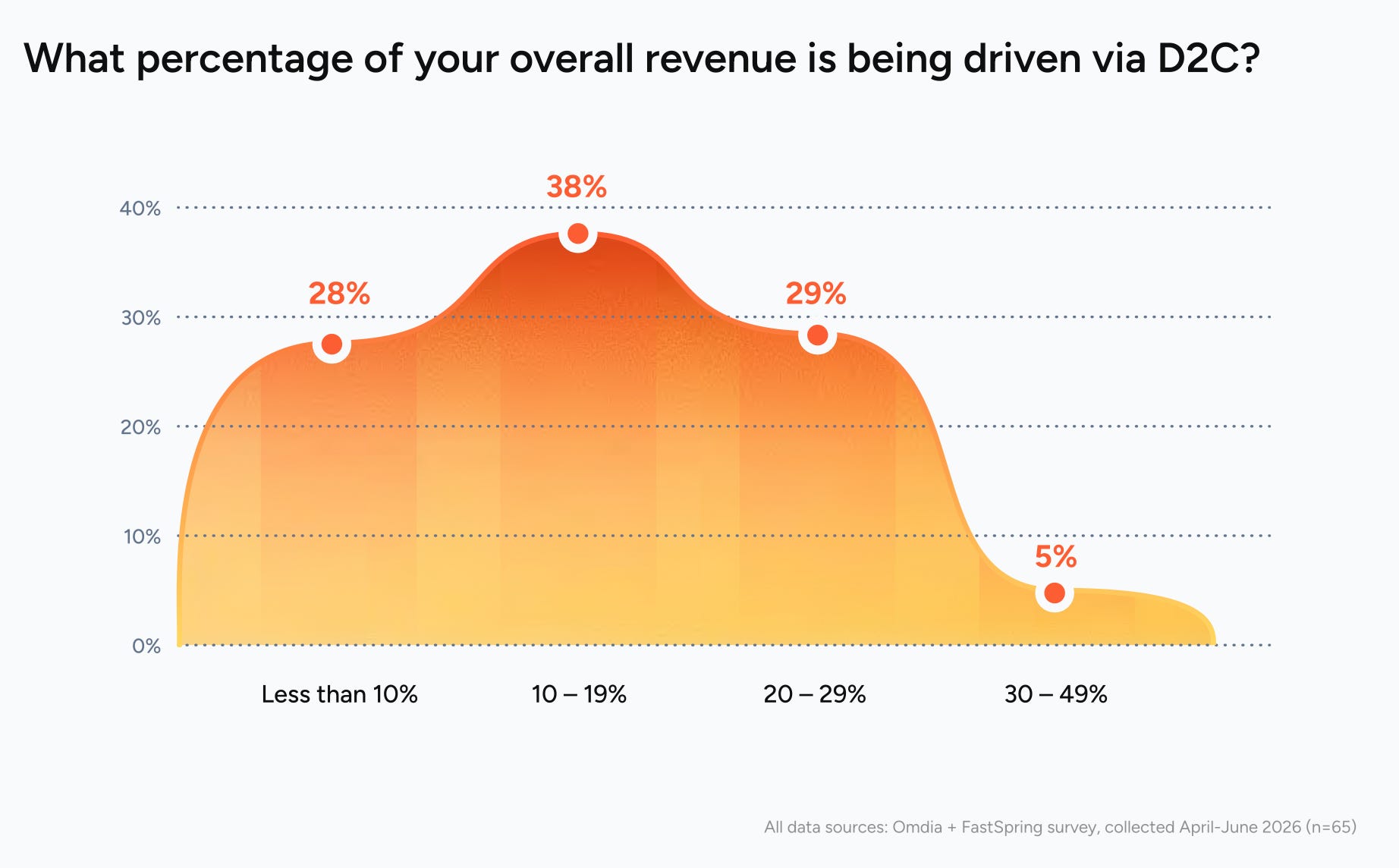
Most companies (38%) get 10-19% of their revenue through D2C. For 28%, it’s less than 10%; for 29%, it’s 20-29%; and only for 5%, it’s 30-49%. No companies in the sample have half or more of their revenue coming through a web shop.
❗️These numbers differ significantly from the Appcharge survey I covered in July. There, 45% of respondents got less than 10% of their revenue from D2C, and 28% got more than half.
75% of companies with a web shop say D2C’s share of their revenue mix grew over the last 12 months.
84% of companies met or exceeded their 2025 D2C revenue target. For 2026, 65% of companies set a higher target.
Omdia and FastSpring cite Two and a Half Gamers’ calculations for public mobile companies. Their D2C revenue barely grew throughout 2024, but surged in the two quarters after the 2025 court rulings. For example, Playtika’s D2C share rose from ~25% to ~39% over four quarters.
There are fewer skeptics, too. A year ago, 49% of companies without a web shop didn’t believe D2C would bring them significant revenue. Now, it’s 38%.
How Companies Run Their Web Shops
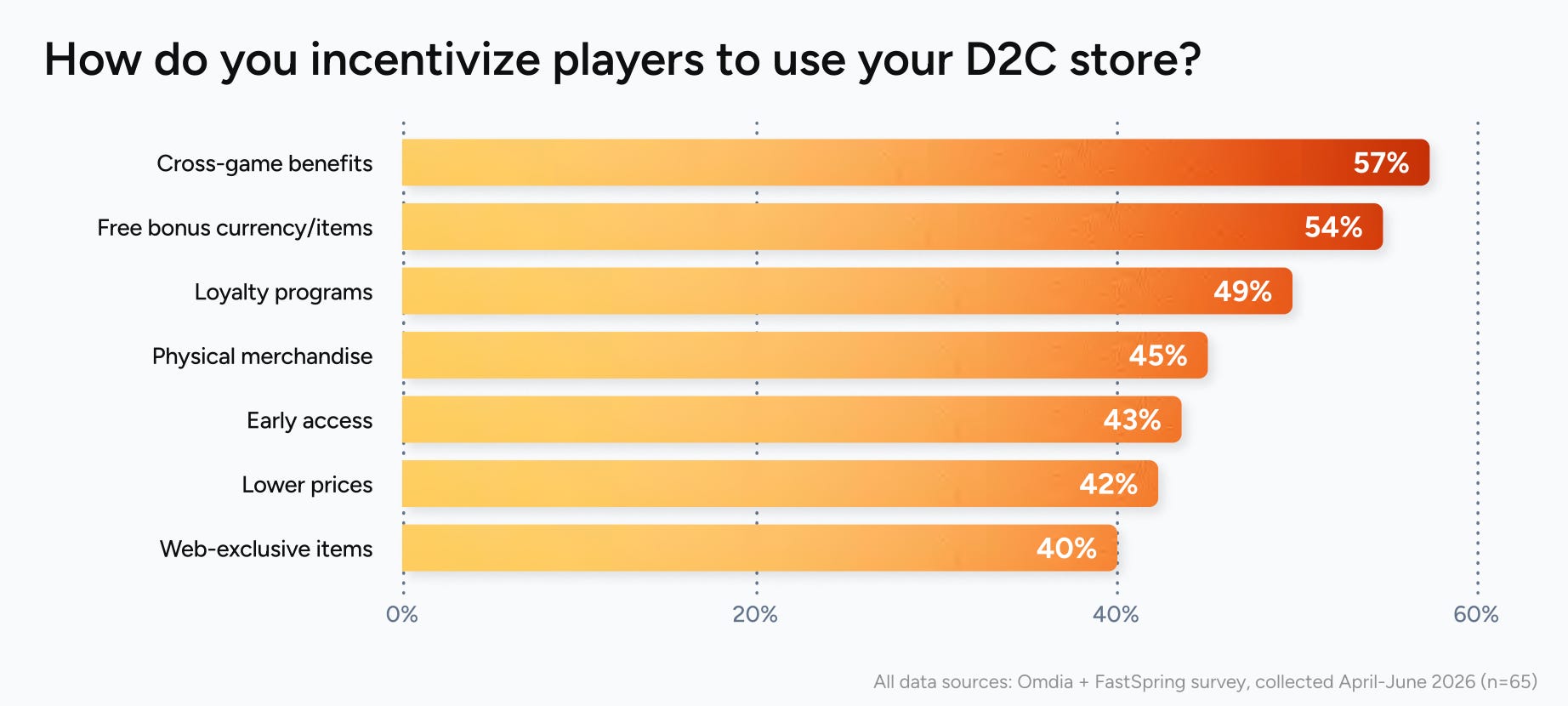
Companies most often encourage players to buy in the web shop with bonuses that work in the company’s other games (57%), free currency or items (54%), and loyalty programs (49%). 42% of companies offer lower prices.
51% of companies with a web shop accept payments both in the web shop itself and through external payment links right from the game.
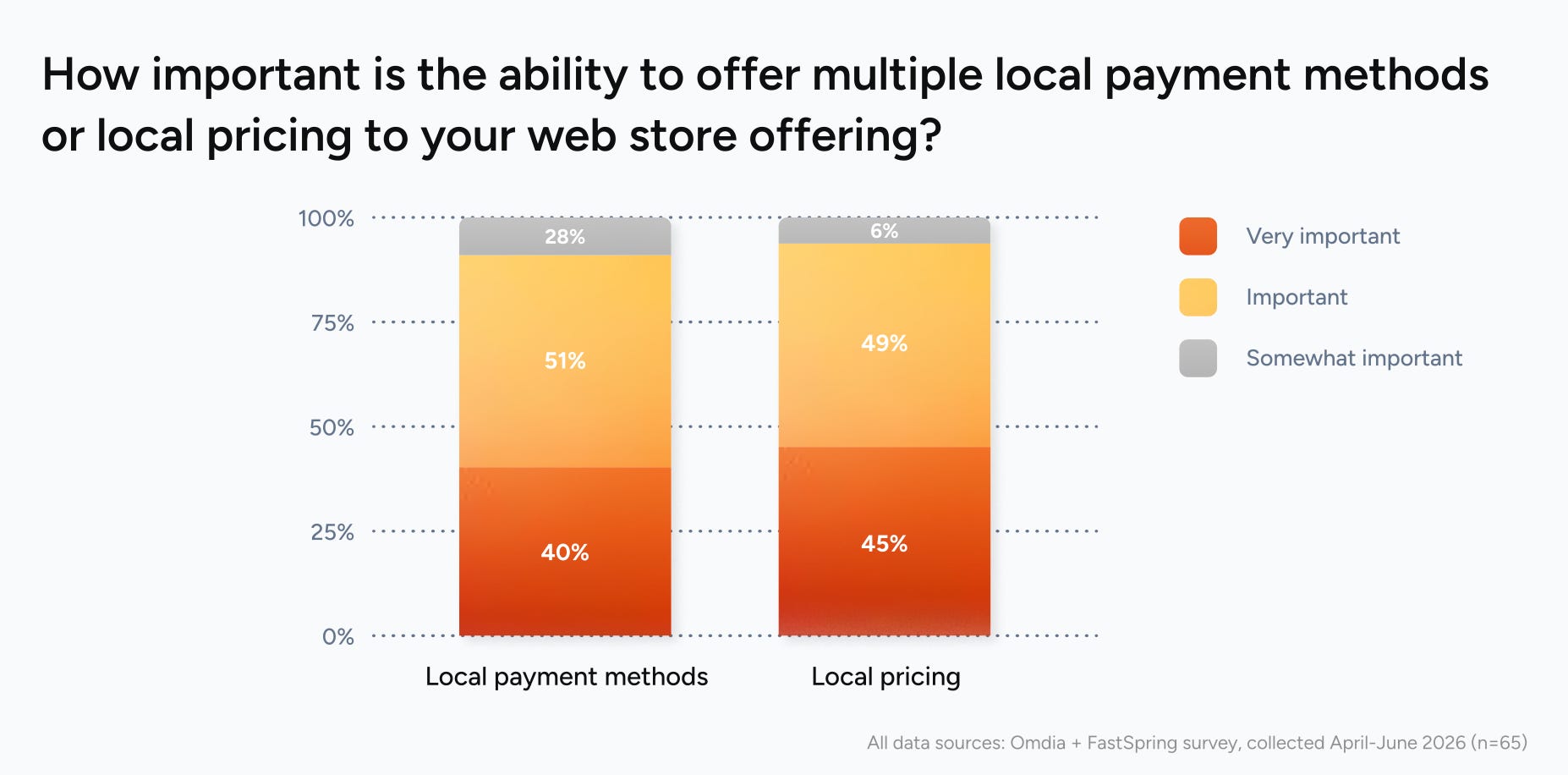
91% of companies consider the ability to offer local payment methods important; 94% say the same about local pricing.
Local payment methods increase player trust (66%) and conversion (55%), and help enter regions where bank cards are rarely used (55%).
72% of companies with a web shop say fraud and chargeback rates are higher on their web shop than for purchases through the app stores.
Over 95% of companies with a web shop have a D2C team of more than one person. Most often, the web shop team sits within IT (37%) or monetization (28%). 85% of companies handle web development in-house.
❗️For comparison, in the Appcharge survey, 54% of companies said they had no dedicated D2C staff at all.
83% of companies with a web shop work with a payment partner that specializes in games.