


The Game Industry of Poland - Report 2025 was published by the Polish Agency for Enterprise Development (PARP). The Game Industry Conference collected the data, and Jakub Marszałkowski of Indie Games Poland led the research. Comments from market participants come from a Bankier.pl article.
The industry
As of October 2025, Poland has 824 active studios and publishers.
At the same time, at least 120 of the studios counted as active in the 2023 report have since closed, halted operations, or stopped making games. That is roughly one in four studios in two years.

Managing a distributed dev team shouldn’t mean managing a compliance headache. Mellow’s Contractor Management gives you ready-made contracts, IP compliance, and automated payouts for contractors in 150+ countries — for $35/month per contractor.
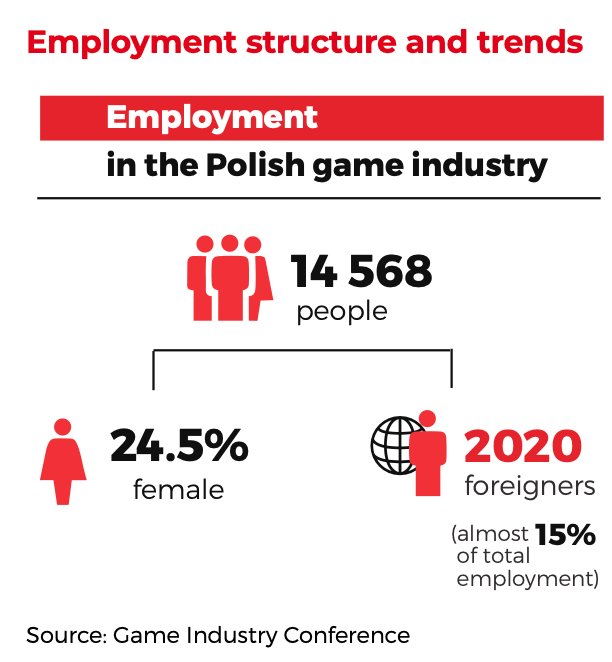
The Polish games industry employs 14,568 people. The previous report had 15,290. Women make up 24.5% of employees, and another 2,020 people (almost 15%) are foreigners. PARP notes that the number of foreign-owned studios in the country is growing. For example, Larian and Activision opened offices in Warsaw over the last two years.
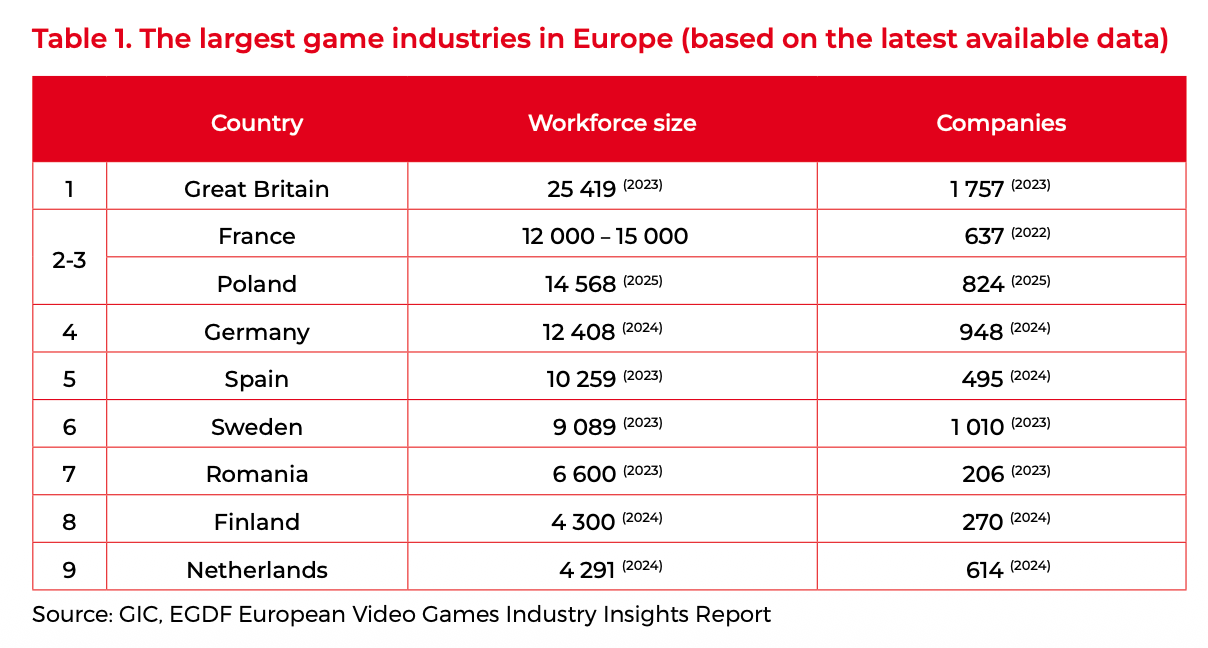
By headcount, Poland shares 2nd-3rd place in Europe with France (12,000 to 15,000 people). The UK leads by a wide margin, with 25,419 people and 1,757 companies. Germany is fourth, with 12,408 people. That said, the comparison uses 2025 data for Poland and older data for the other countries.
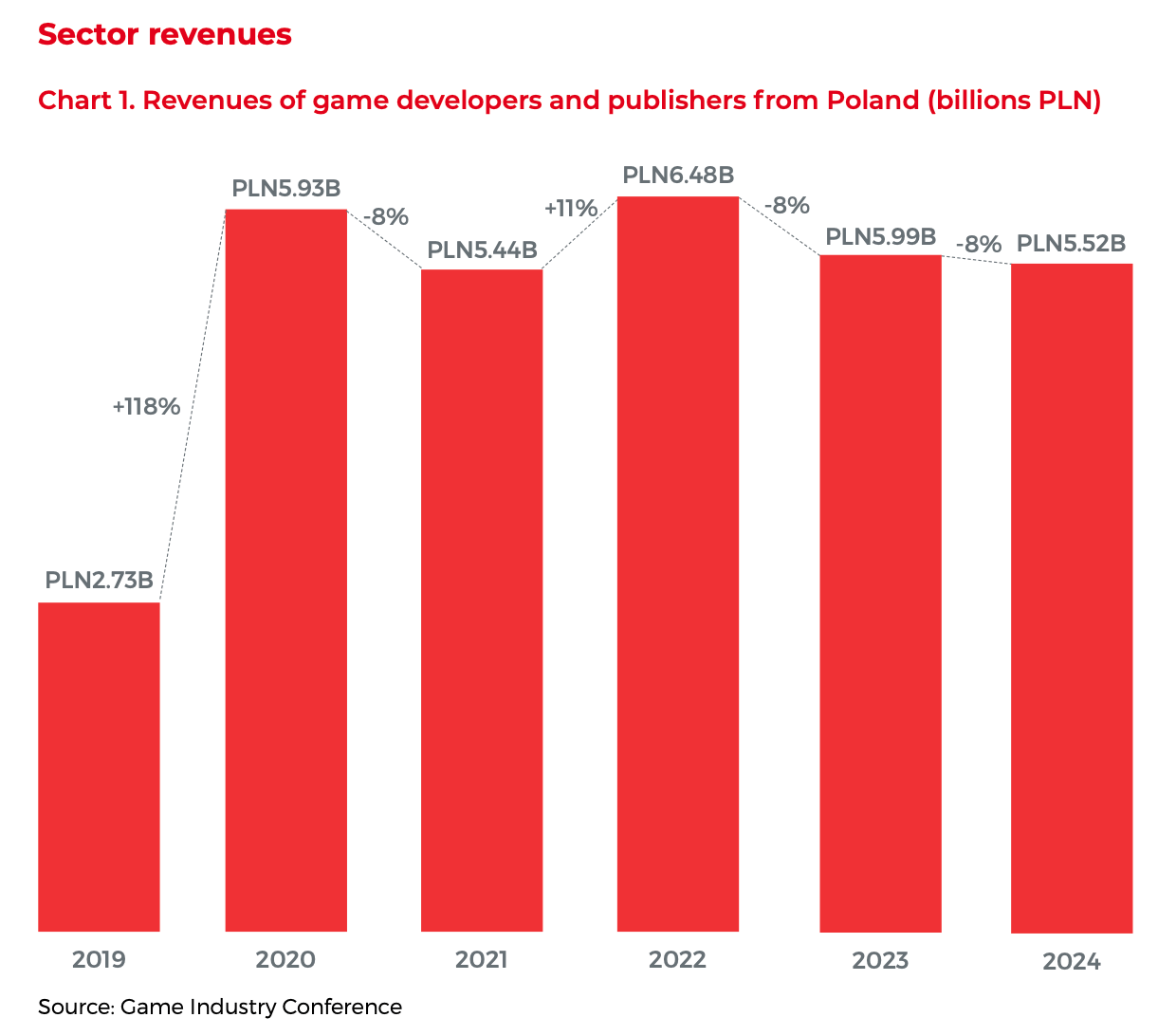
Polish developers and publishers earned PLN 5.52 billion (€1.293 billion; -8% YoY) in 2024. The peak was in 2022, at PLN 6.48 billion.
Large companies depend heavily on release cycles. Techland’s revenue fell 80% in 2023, from PLN 1.12 billion to PLN 229 million, after a record year with Dying Light 2. Excluding the largest studios, the rest of the industry stagnated in 2023 and declined in 2024.
Fewer than a third of Polish studios earn meaningful money regularly. Most are still working on their first commercial release.
97% of Polish games’ revenue comes from sales outside the country. North America, Europe, and Asia each account for 20% to 40% of sales, depending on the game. The top market is most often the US or China. Among European countries, the UK, Germany, and France usually make the top 3.
In 2025, 24 game companies were listed on the main market of the Warsaw Stock Exchange, and another 71 on NewConnect. The median revenue of main-market companies is €6.8 million. NewConnect looks worse: 5 companies have had their operations suspended, 6 have had no meaningful revenue for a long time, and another 13 earned less than €250 thousand in the last fiscal year.
Jakub Marszałkowski believes the stock exchange has become more of a burden for the industry. Companies spend significant resources on it and get almost nothing in return.
Platforms and business models
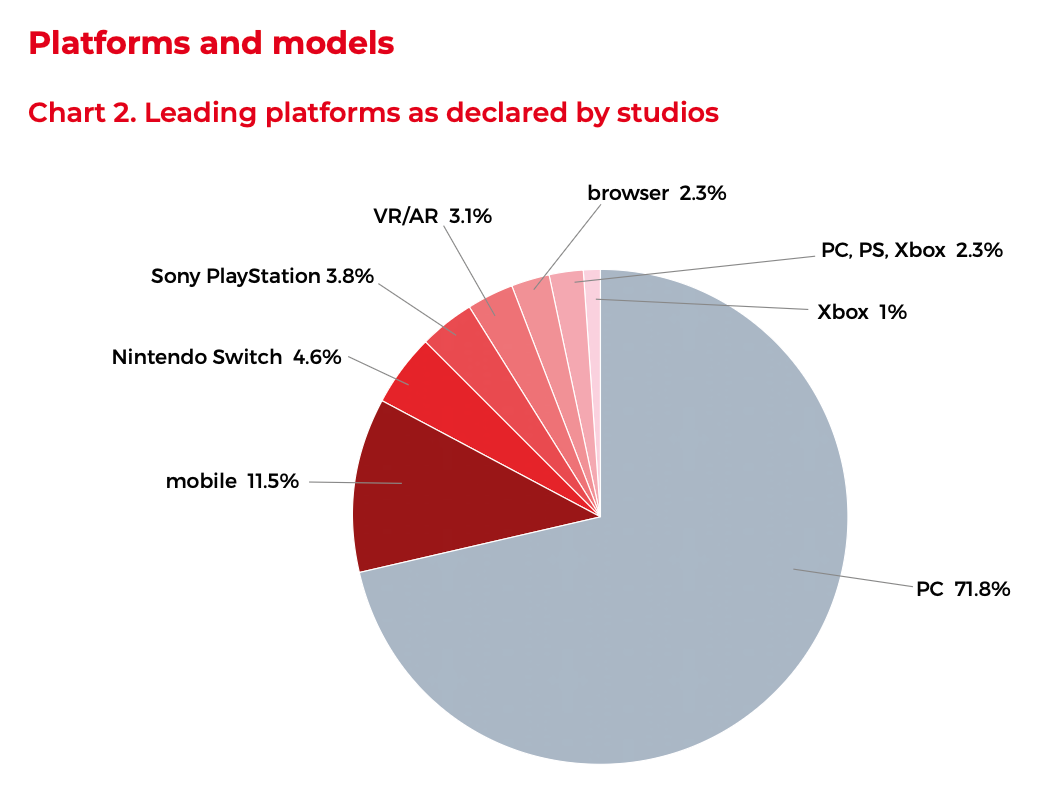
71.8% of Polish studios name PC as their main platform. Mobile accounts for 11.5%, Nintendo Switch for 4.6%, and PlayStation for 3.8%. The share of studios focused primarily on VR/AR more than halved, to 3.1%.
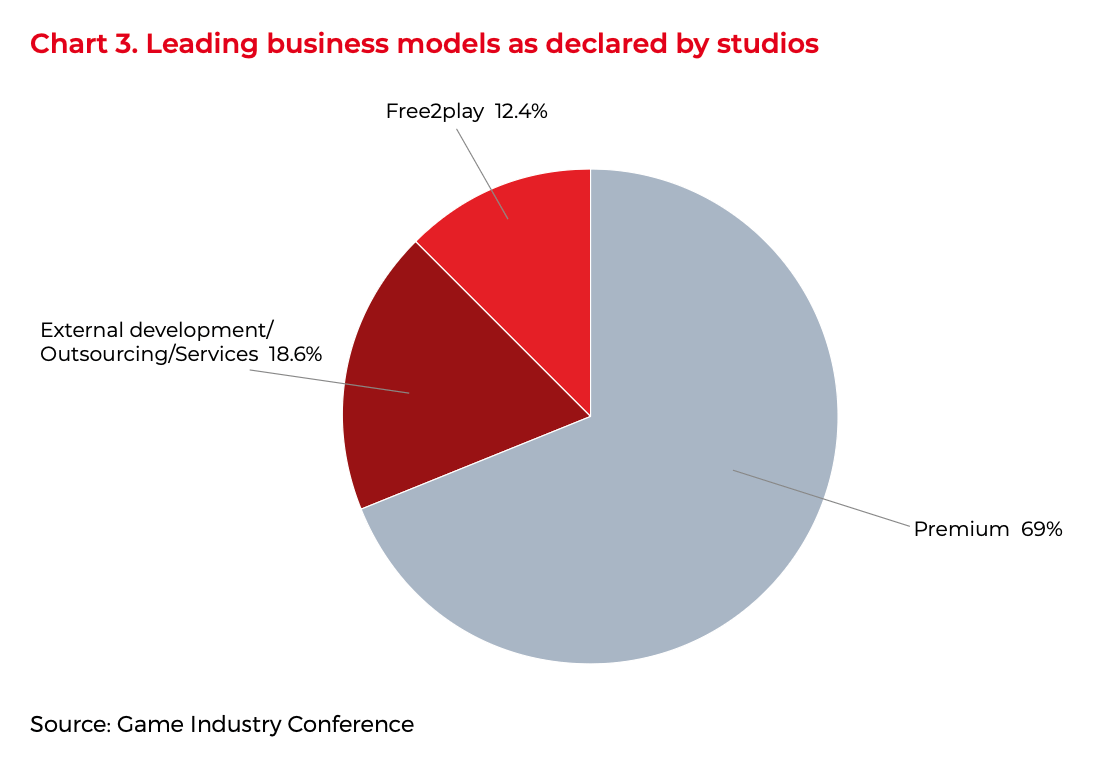
69% of studios make premium games, 18.6% work in outsourcing, and 12.4% make F2P games.
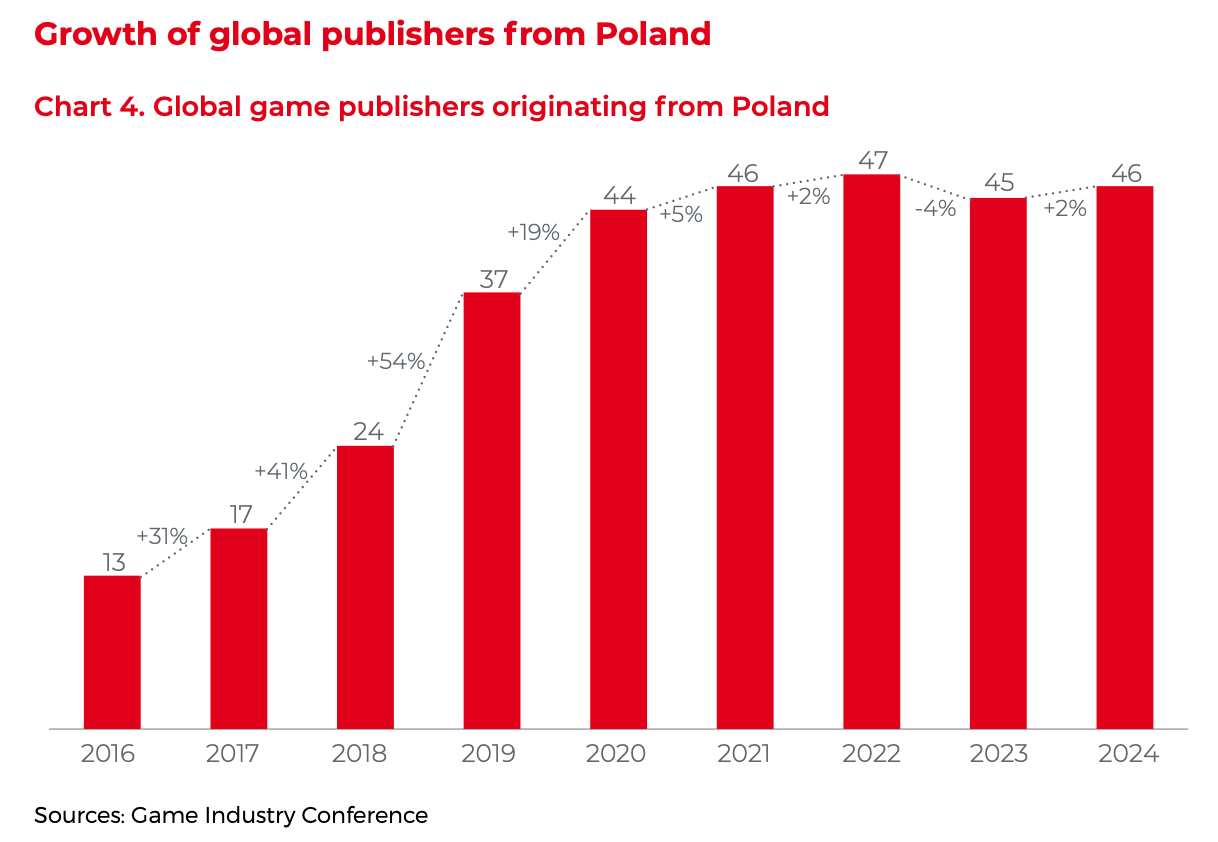
In 2024, 46 publishers in Poland released games globally. In 2016, there were 13. Since 2021, the number has hovered between 45 and 47.
Polish studios release more than 450 games every year. Over the last two years, releases declined slightly, mostly because of the mobile segment and VR.
Since 2014, 41 games from Polish developers have sold more than a million copies. 15 new IPs have joined this club since the previous report. Only a quarter of them are AAA projects.
Funding and competition
Until recently, Polish game development grew by more than 20% a year. According to Marszałkowski, the main reason for the downturn is funding. Investors have become more cautious, publishers have pulled out, and access to capital has been missing for the third year in a row.
PARP notes that the crisis among international publishers hit Poland hard: payment delays, budget cuts, and project cancellations. Polish studios are also forced to release games too early because development money runs out.
All state support programs for games in Poland ended in December 2023. The only one still running is a small video game support program at the Creative Industries Institute. For comparison, Germany has a support program worth €125 million a year.
In early 2026, Poland’s Ministry of Culture and National Heritage promised to start work on a development strategy for the games industry.
Adrian Jabłonka (Madnetic Games) says budgets have been cut across the industry. Small studios don’t have the resources to hire and train newcomers, and some experienced specialists are leaving game development. Madnetic Games itself has moved to smaller projects, and its main goal now is to finish what it has already started.
Meanwhile, competition keeps growing. Almost 20,000 games are released on Steam every year, and even a good project struggles to reach players.
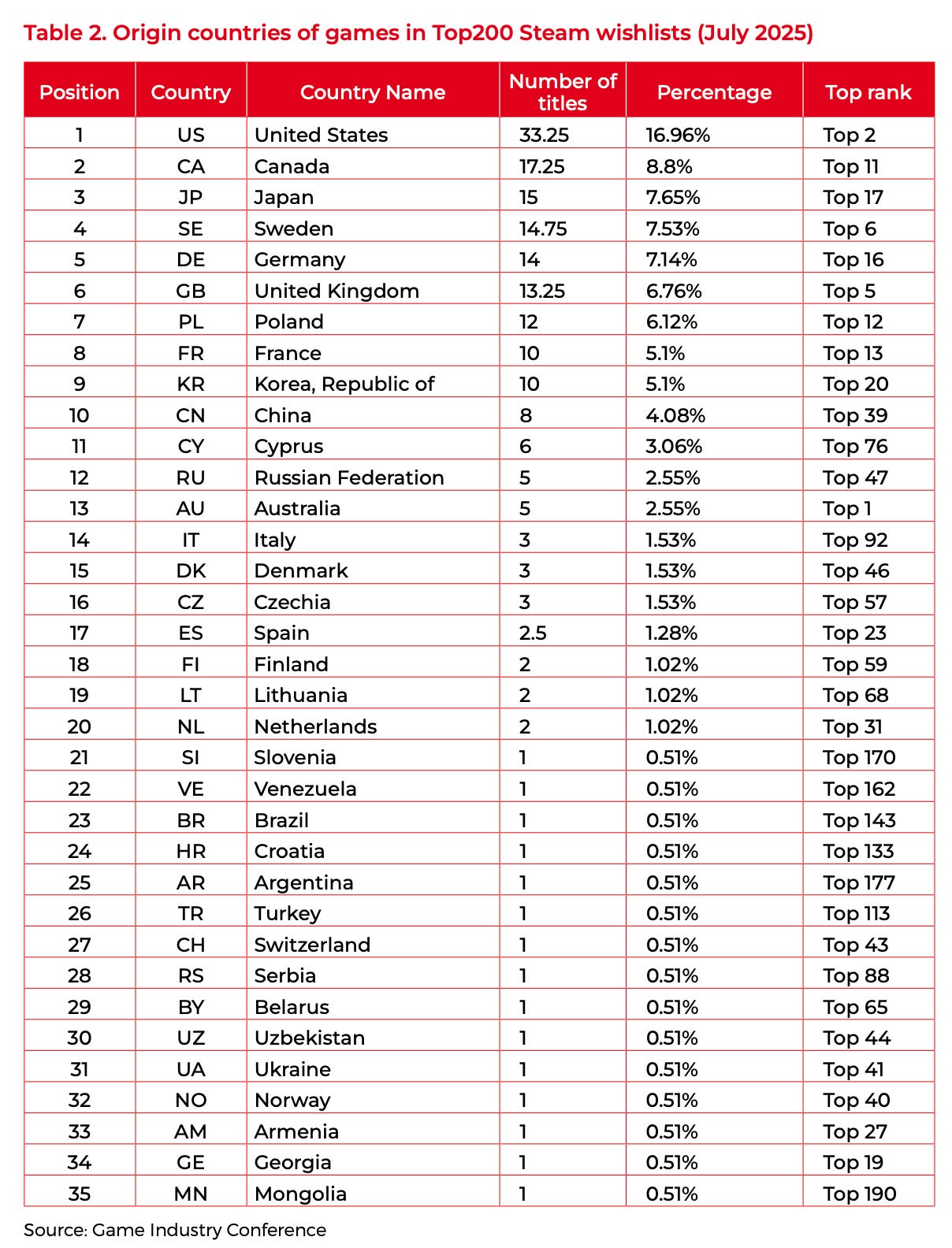
Steam’s list of the most anticipated games shows this well. In 2021, Poland led the Top 200 by wishlists, with 38 games. In July 2025, 12 Polish games entered the list (6.12%), and the country ranked 7th. The current leaders are the US (33.25 games), Canada (17.25), and Japan (15).
Managing a distributed dev team shouldn’t mean managing a compliance headache. Mellow’s Contractor Management gives you ready-made contracts, IP compliance, and automated payouts for contractors in 150+ countries — for $35/month per contractor.
PARP partly attributes this to large Polish studios currently working on new projects. But the main reason, according to the report’s authors, is the end of the support programs. For comparison, Germany has improved its result in this ranking by 466% since 2021.
Market participants don’t expect a quick recovery. Jabłonka (Madnetic Games) talks about a period of stagnation and correction. PARP sees cautious reasons for optimism: investors and publishers from Japan and South Korea are increasingly interested in Polish developers, and Chinese partners are coming back.
Large companies
Large companies, meanwhile, are doing well. CD Projekt earned PLN 867 million in 2025, with a net profit of PLN 595 million. The Witcher 3: Wild Hunt has sold more than 65 million copies, and Cyberpunk 2077 with the Phantom Liberty expansion is also selling well.
11 bit studios had record revenue of PLN 141 million in 2025. Operating profit was PLN 21.9 million, and net profit PLN 6.94 million.
Bloober Team’s Silent Hill 2 sold more than 2 million copies. In June 2026, the studio reported that revenue from Cronos: The New Dawn had exceeded its development costs.