


The data comes from the Big Games Industry Employment Survey, now in its tenth edition, with 1,800 respondents from 90 countries. The material covers Europe, which is split into EU countries (plus the UK and Switzerland) and the rest of Europe. Tanja Loktionova added several figures from the InGame Job job board and from open sources. This is a press preview; the full report will be released in November 2026 and will be free to download.
A word from our sponsor

Game studios run on contractors — artists, composers, QA testers, translators — often spread across a dozen countries. That’s a lot of contracts, tax rules, and IP clauses to track. Mellow handles all of it: compliant contracts, automated payments, and IP protection built in, for contractors in 150+ countries.
Loyalty and Sentiment
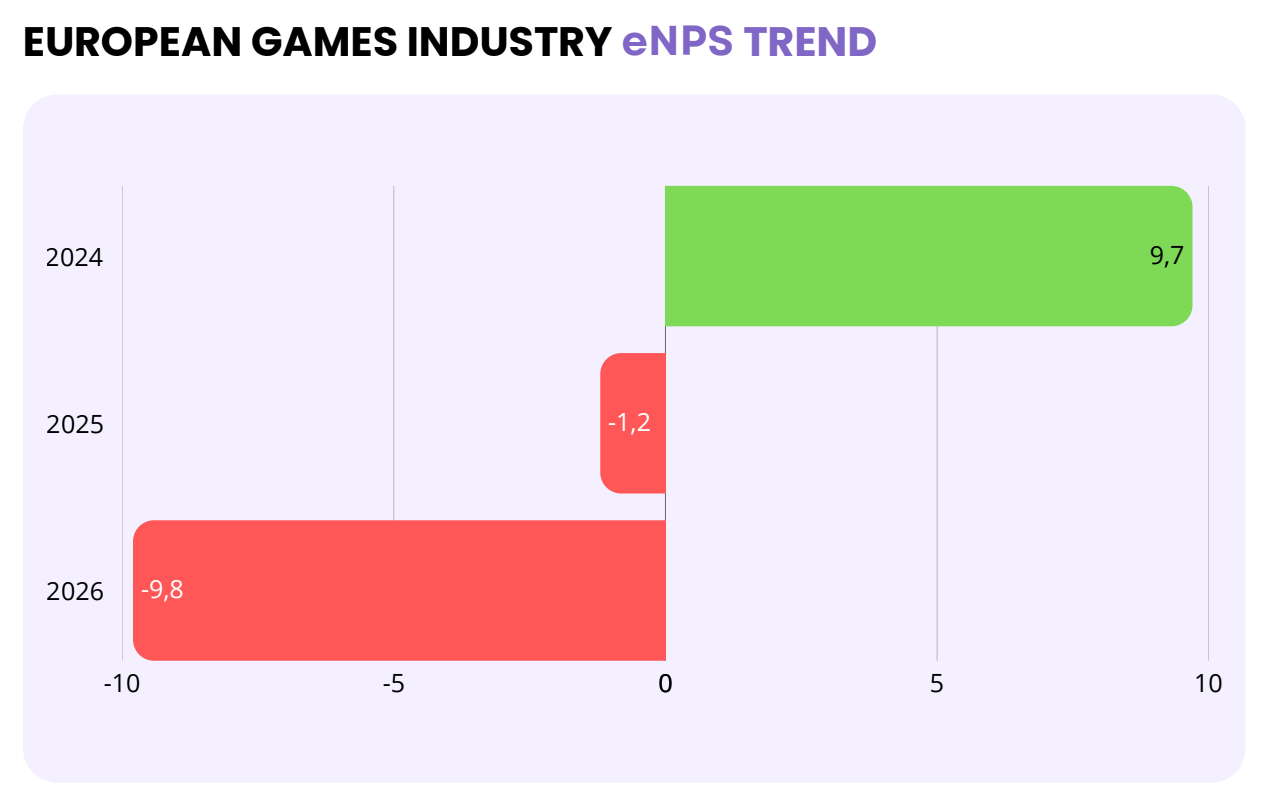
eNPS in the European games industry in 2026 is -9.8. In 2024 it was 9.7, and in 2025 it was -1.2. It stood at +30 in 2017, and it has been falling without a break since 2022.
❗️eNPS is the employee Net Promoter Score, a measure of employee loyalty. It is built on a single question: “How likely are you to recommend this company as a place to work?” on a scale from 0 to 10. Answers split into three groups: 9-10 are promoters, 7-8 are passives, and 0-6 are detractors. The share of detractors is then subtracted from the share of promoters, and passives are ignored. The scale runs from -100 to +100, and zero means there are as many promoters as detractors.
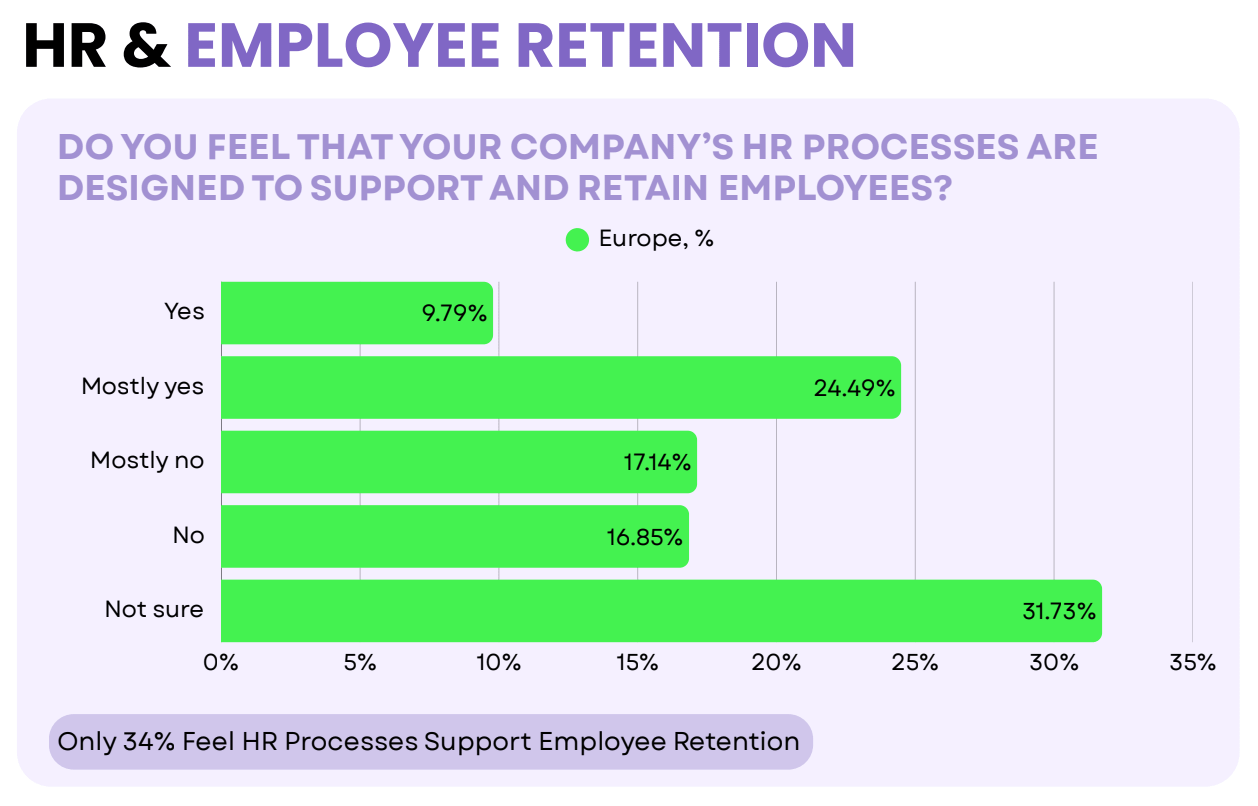
Only 34% of employees believe their company’s HR processes are built to retain people. Another 31.7% could not answer the question.
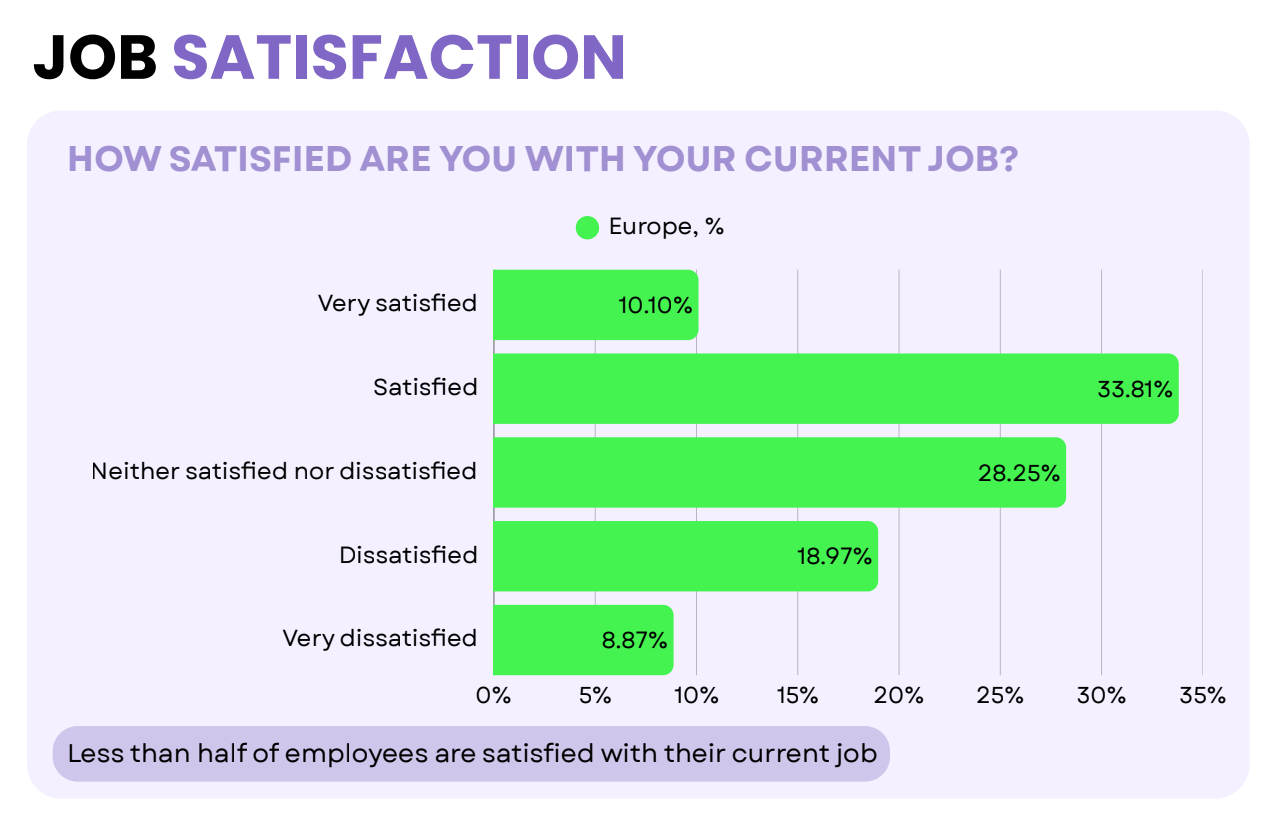
In Europe, 43.9% of respondents are satisfied with their job, and 27.8% are dissatisfied.
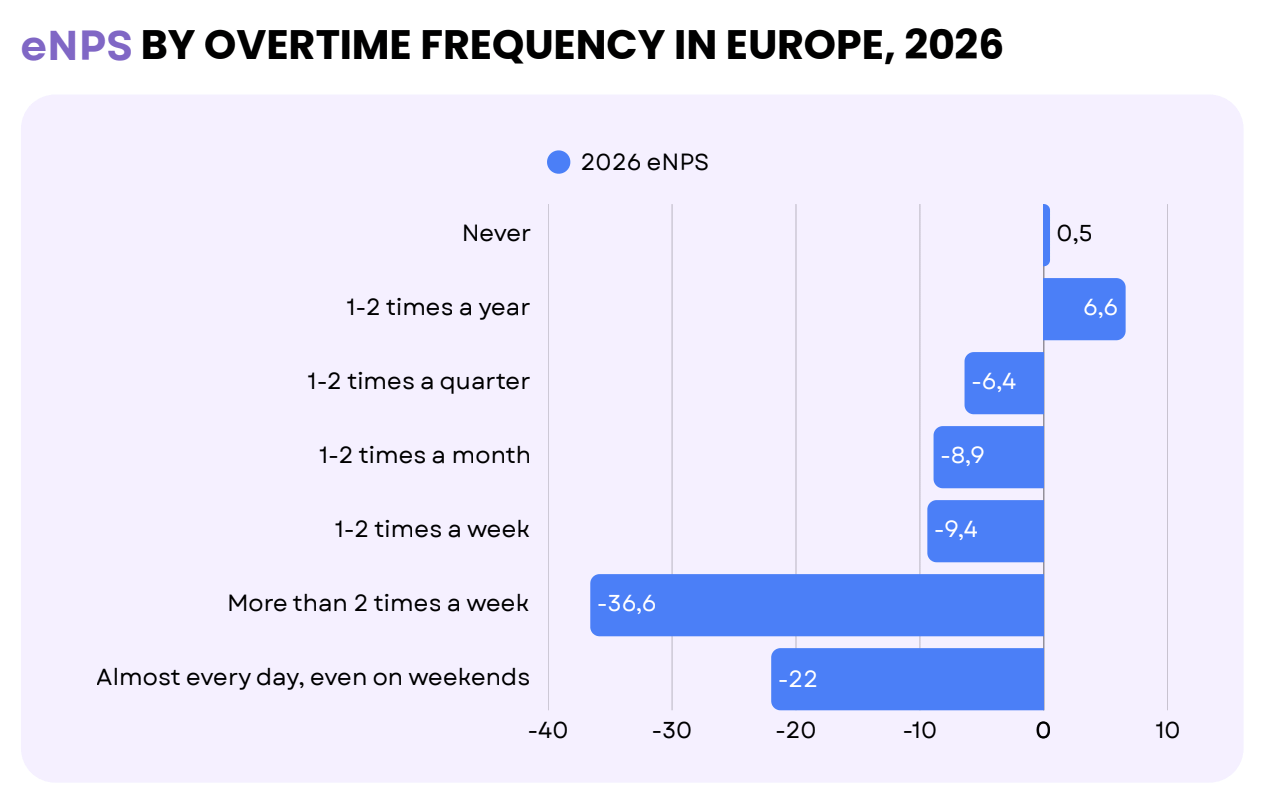
By overtime frequency, the people who feel the worst are those working overtime more than twice a week: their eNPS is -36.6. Surprisingly, for those working overtime almost every day, including weekends, the figure is higher at -22.
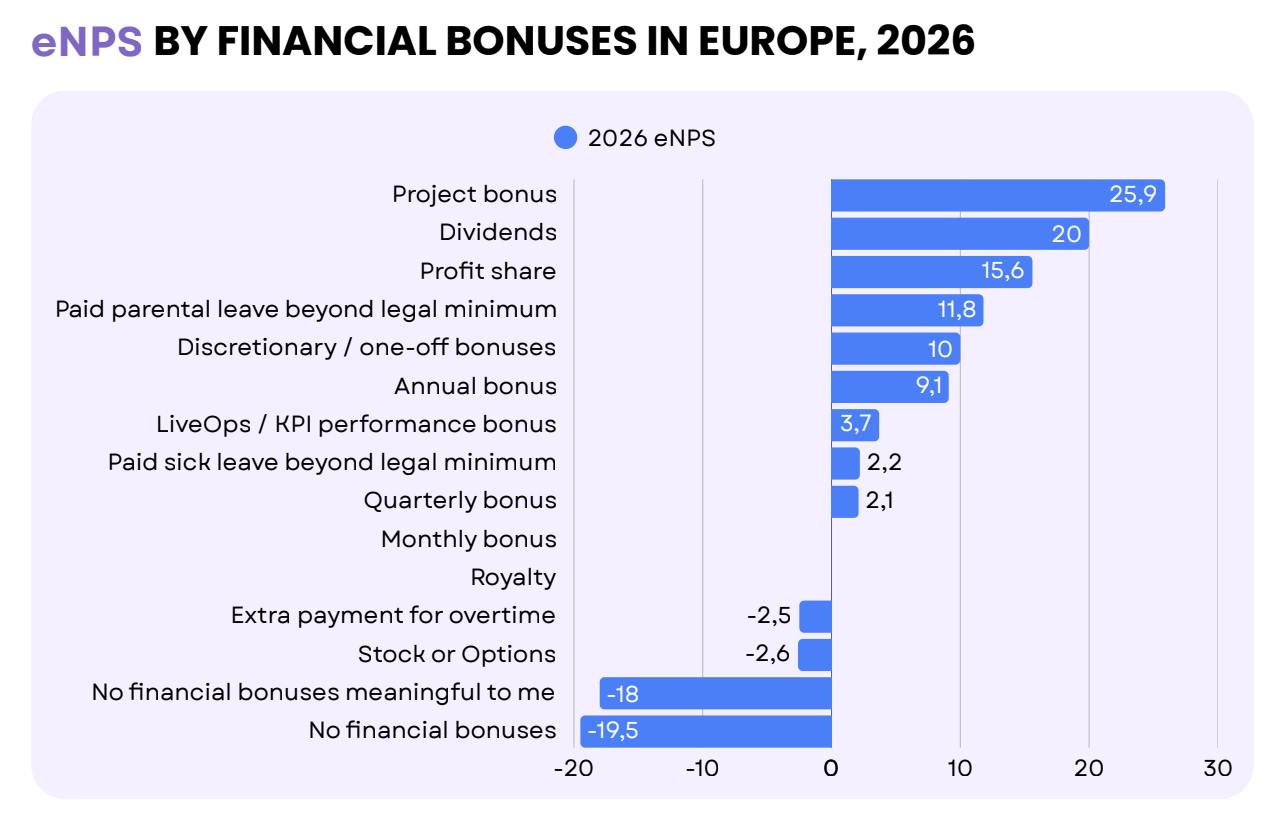
Loyalty is highest among employees who get project bonuses, dividends, or a share of profit. In short, there is a direct correlation between the ability to earn more than just a salary and an employee’s loyalty.
People rate their sense of security in the industry at 2 out of 5. 40% rate it 0 or 1.
The bigger hit to that sense of security comes not from being laid off yourself, but from your team shrinking. People whose team shrank noticeably rate their security at 1.17 out of 5, versus 2.61 for those on growing teams. Being laid off personally barely affects career optimism.
Job security feels lowest in North America, even though median salaries there are the highest in the world.
30% of respondents lost their job in the past 12 months.
Only 26% feel they are growing professionally. 36% report stagnation or a slowdown, and 55% received no training last year.
Half of respondents rate the likelihood of changing jobs in the next six months at 4 or 5 out of 5.
In Europe, only 1 in 8 employees received a full inflation adjustment last year.
AI and Hiring
78% say AI changed the way they work over the past year: 33% significantly, and 45% somewhat. 22% saw no change.
What worries people most is the pressure to work faster and produce more, cited by 61%. 53% point to a decline in work quality, and 46% to how much harder it has become to judge real skills. 35% named job loss or reduced demand for their role, and 29% named ethical concerns. 12% have no concerns at all.
35% of founders decided not to hire someone because AI tools cover the work. 60% deliberately keep their team small, and 48% say their company is currently operating at a loss.
New roles are emerging: AI Strategy, AI Ownership, and AI Management. AI fluency is no longer a nice addition to a resume; it's a required hard skill.
The report gives two unnamed examples. One match-3 giant plans to cut headcount from 3,000 to 500. The founders of another company, according to the report, vibecoded a game with 200% D0 ROAS in their own genre.
Job searches are dragging out. Six months to land a new role is now the norm, and a senior opening on LinkedIn draws more than 100 applications within 24 hours. A Senior Game Designer opening on InGame Job collected 296 applications and 5,141 views in two days.
Salaries
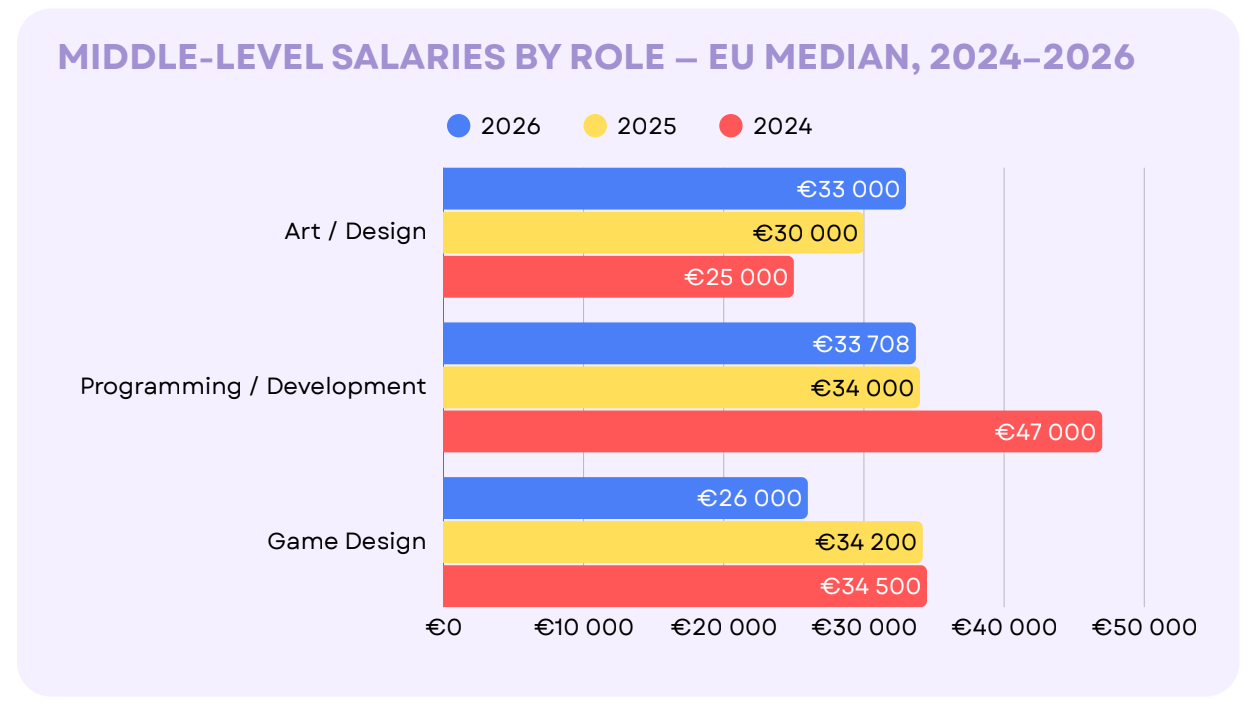
The median for mid-level artists and designers in 2026 is €33,000. In 2025 it was €30,000, and in 2024 it was €25,000.
For mid-level programmers, though, the median fell from €47,000 in 2024 to €33,708 in 2026. For mid-level game designers, it fell from €34,500 to €26,000.
❗️The 2024 and 2025 figures come from earlier editions of the same survey, so some of the movement may reflect changes in the sample.
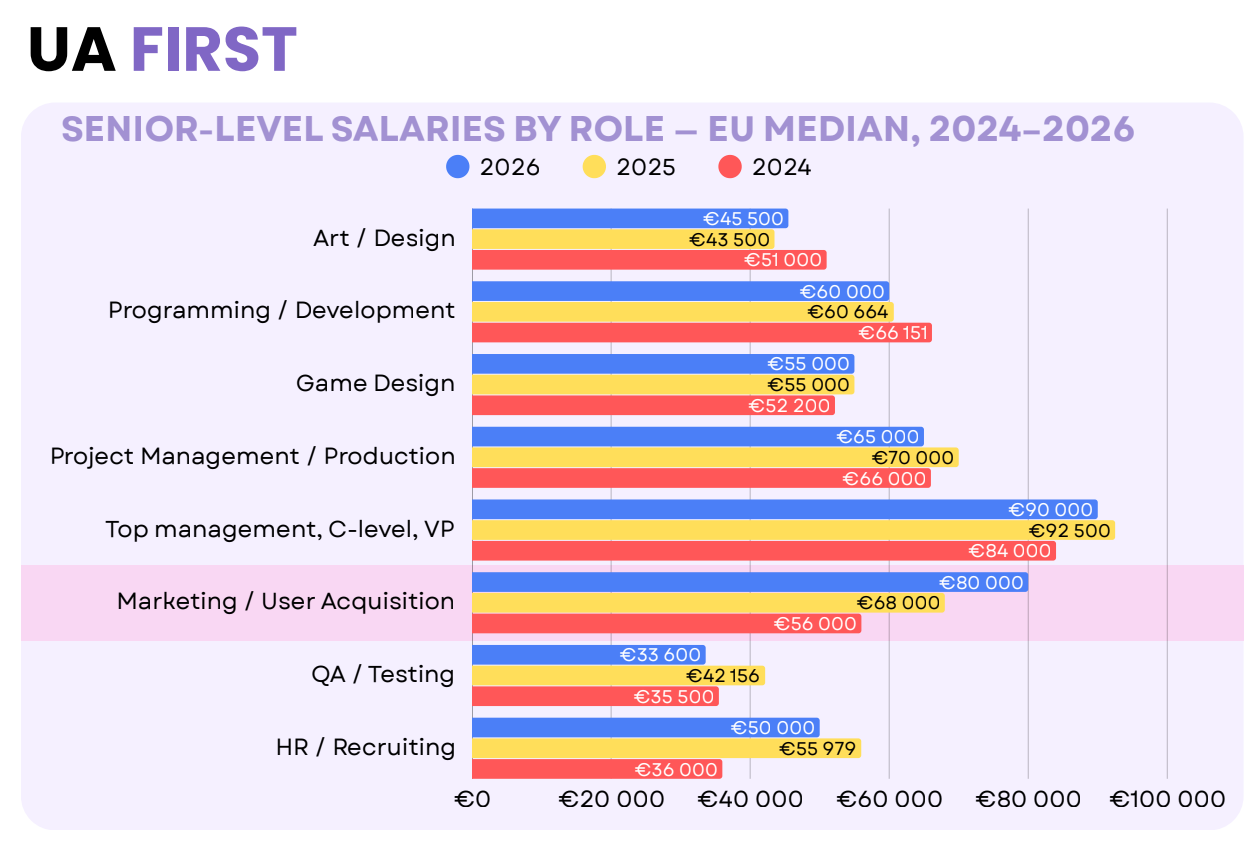
At the senior level, median salaries are growing only in marketing and UA: €56,000 in 2024, €68,000 in 2025, and €80,000 in 2026. That is the second-highest median after top management and C-level (€90,000).
The rest of the senior roles are either plateauing or declining. For programmers, the median fell from €66,151 in 2024 to €60,000 in 2026; for QA, from €42,156 in 2025 to €33,600; and for HR, from €55,979 to €50,000. For game designers, the median salary is €55,000 for the second year in a row.
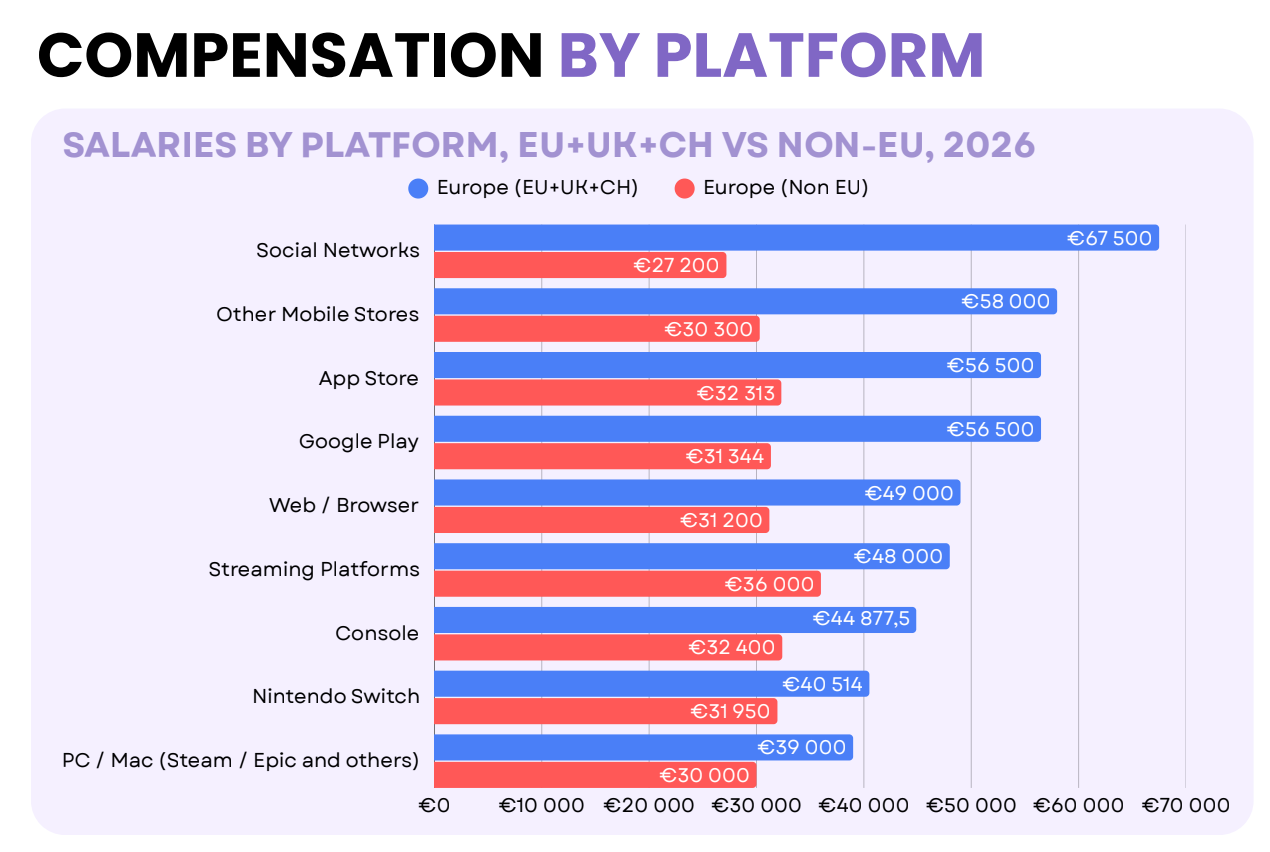
In the EU, the highest pay goes to people working on social network games: €67,500. The lowest goes to those making games for PC and Mac: €39,000. Outside the EU, the spread is much narrower: from €27,200 to €36,000.
In Europe, women earn less than men in almost every discipline. For programmers, the median is €43,000 for men and €33,408 for women; for game designers, €40,000 and €34,300; and for QA, €27,200 and €21,805. The gap is largest among founders: €72,000 against €46,000.
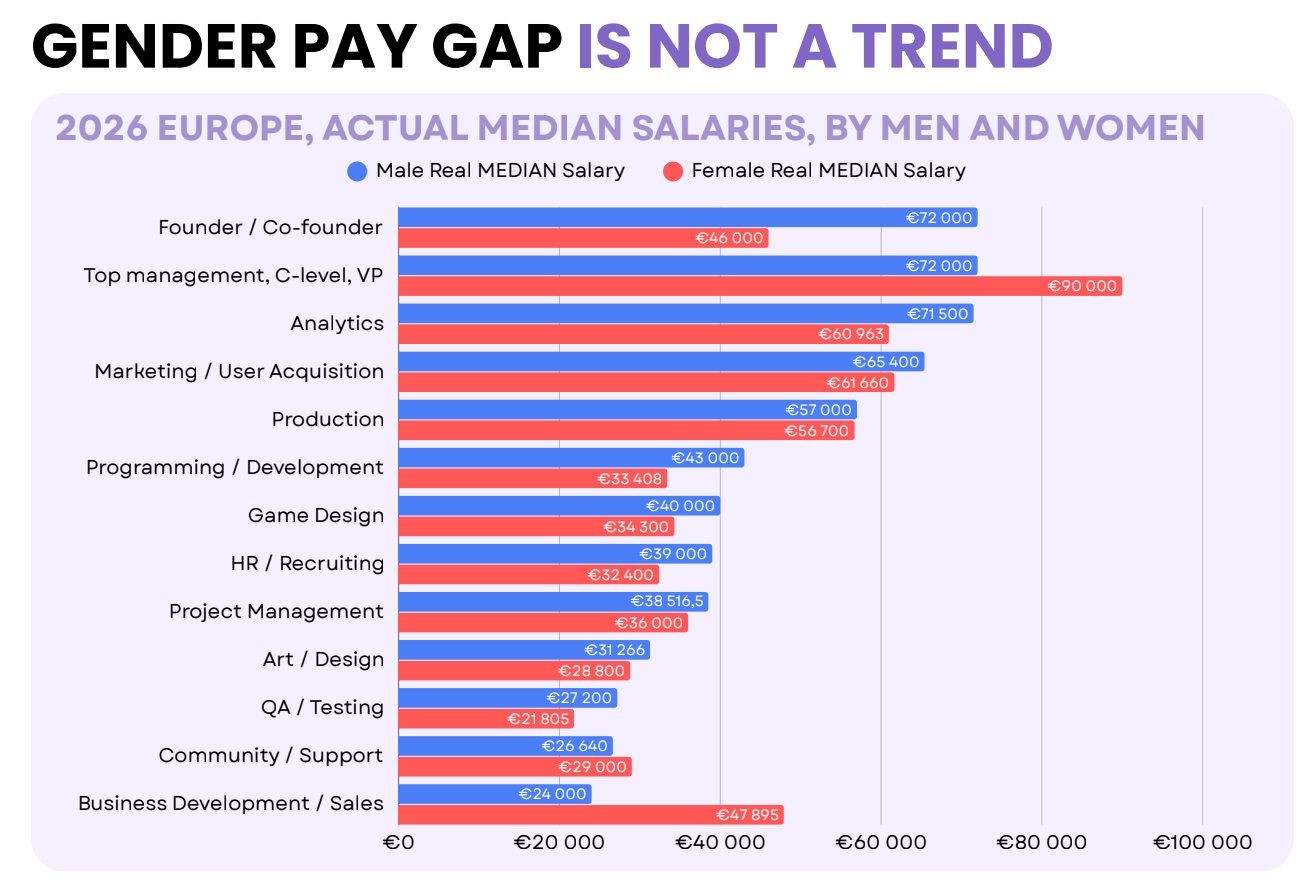
There are exceptions, though. At C-level, the median salary for women is €90,000, compared with €72,000 for men. In business development and sales, it is €47,895 against €24,000. In community and support, it is €29,000 against €26,640.
❗️A difference like that may also come down to the sample structure of this particular report.
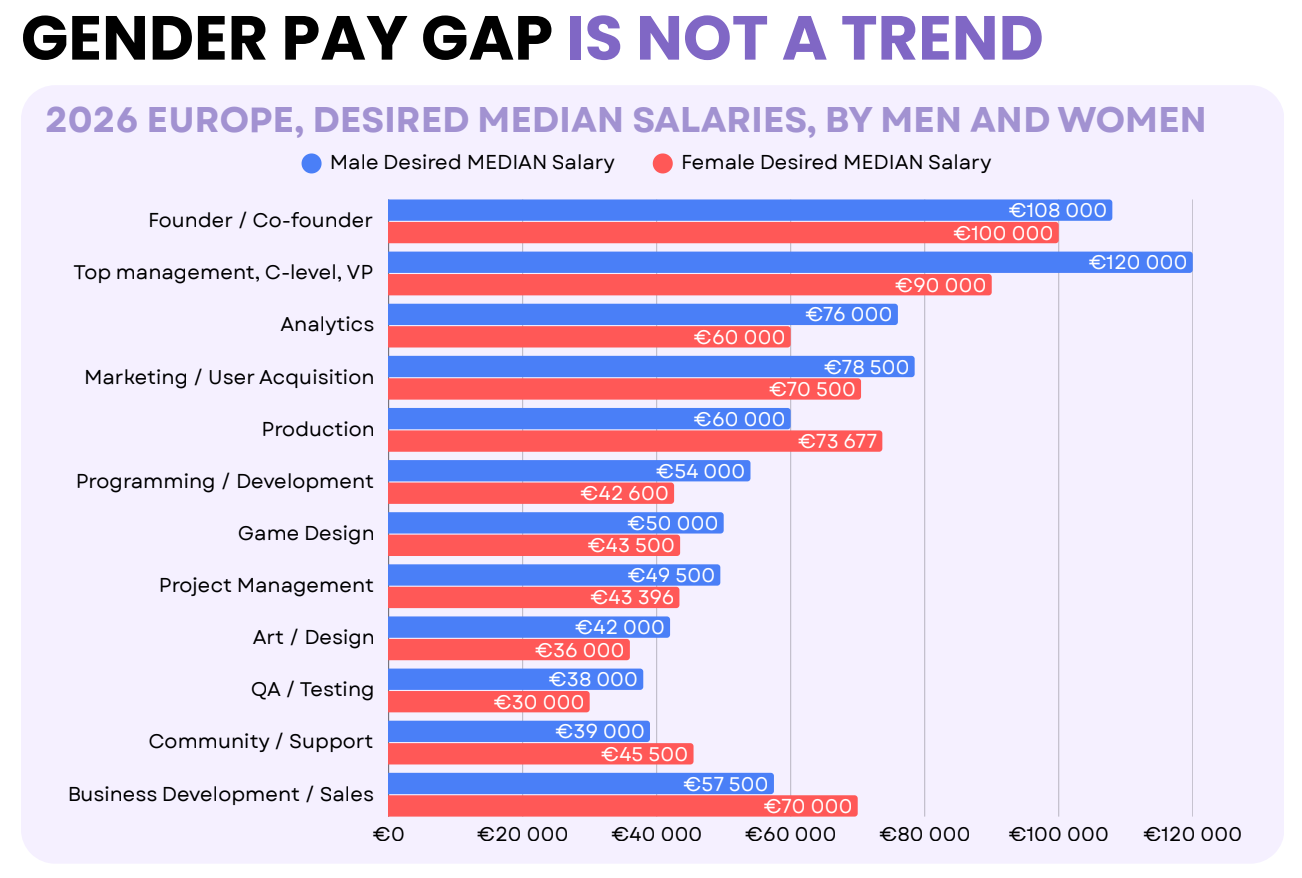
Desired salaries show the opposite picture. Women at C-level want €90,000, and men want €120,000. Founders ask for €100,000 and €108,000. Women applying for business development roles ask for €70,000, and men ask for €57,500.
Freelance and Team Structure
European studio spending on external talent grew 63% in 2025 versus 2024. Globally, the growth was 55%.
The number of freelancers working with European studios grew 24%, and the average freelancer’s monthly income worldwide grew 19%. The average European studio works with 10 contractors.
A word from our sponsor
Game studios run on contractors — artists, composers, QA testers, translators — often spread across a dozen countries. That’s a lot of contracts, tax rules, and IP clauses to track. Mellow handles all of it: compliant contracts, automated payments, and IP protection built in, for contractors in 150+ countries.
But there isn't enough work to go around. 62.8% of freelancers complain about unstable income, and 54.1% about how hard it is to find suitable projects.
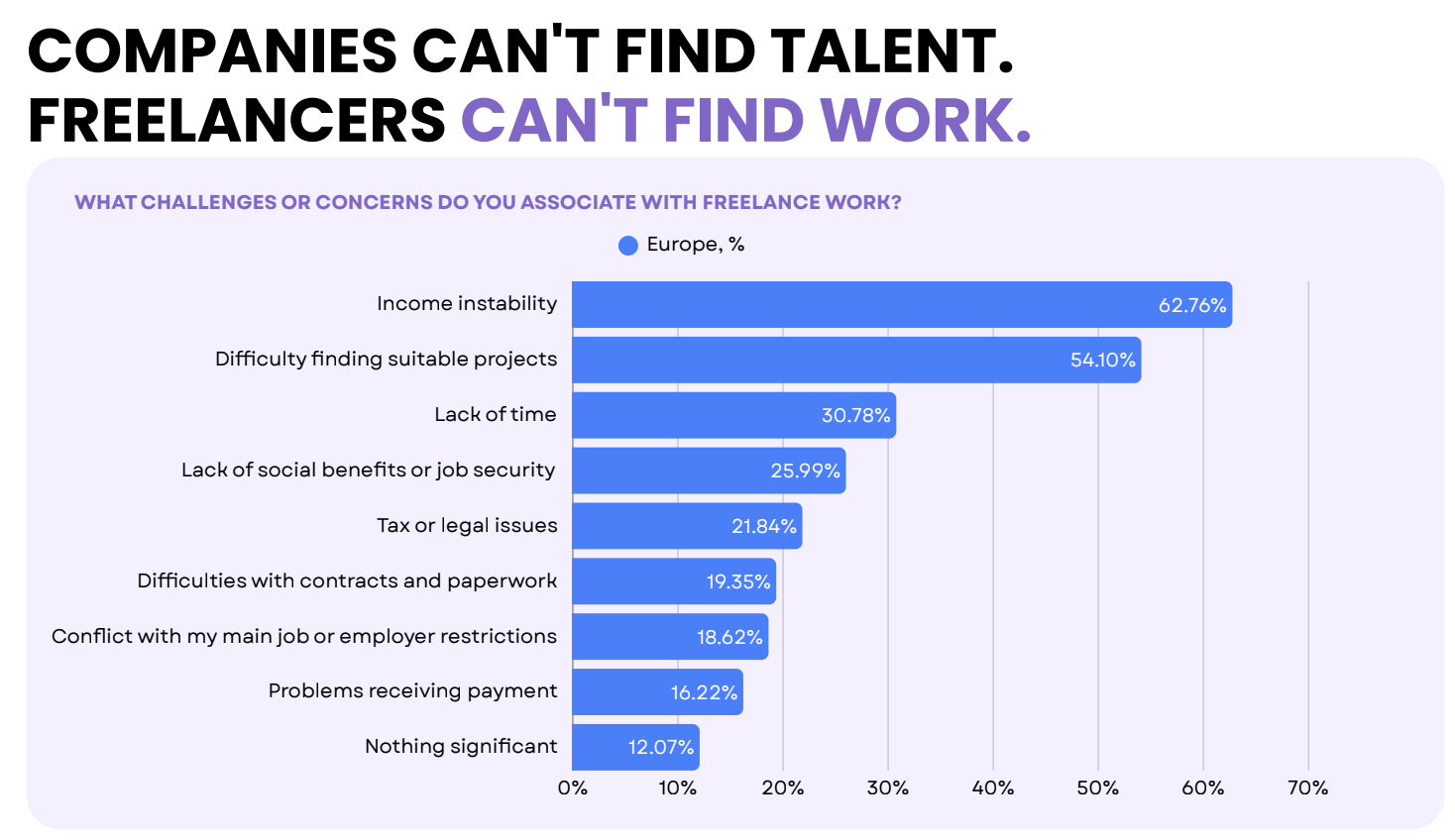
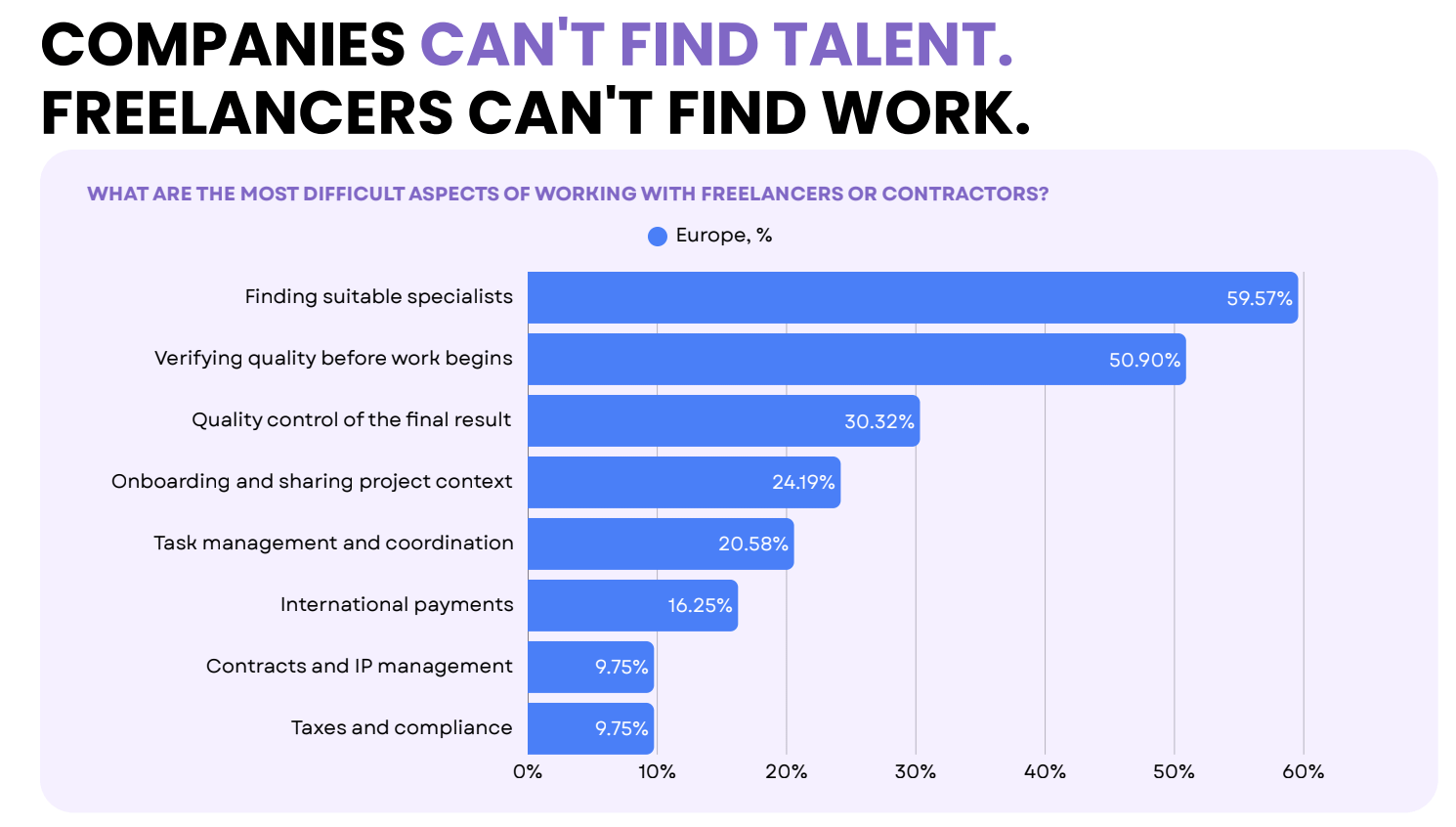
On the studio side, the main difficulty is exactly the same: 59.6% name finding suitable specialists as the hardest part, and another 50.9% name verifying quality before the work begins.
The report’s author notes a change in how work is structured. A small core stays on staff (directors and lead specialists) with options, insurance, and bonuses. Everyone else is hired for a specific sprint or development phase and leaves the moment it ends. In her words, full-time work in the industry is shifting from the default to a privilege.