


Ipsos collected the data on behalf of Video Games Europe. The report draws on GameTrack (39,371 respondents aged 6-75), actual GSD sales (physical and digital copies, as reported by publishers), and the EGDF industry report.
❗️In 2025, Video Games Europe expanded its coverage from five markets (EU5: the UK, France, Germany, Spain, and Italy) to sixteen (EU16). Some figures in the report cover only the EU5 and others only the EU16, so a direct comparison with last year’s numbers is not always meaningful.
The market
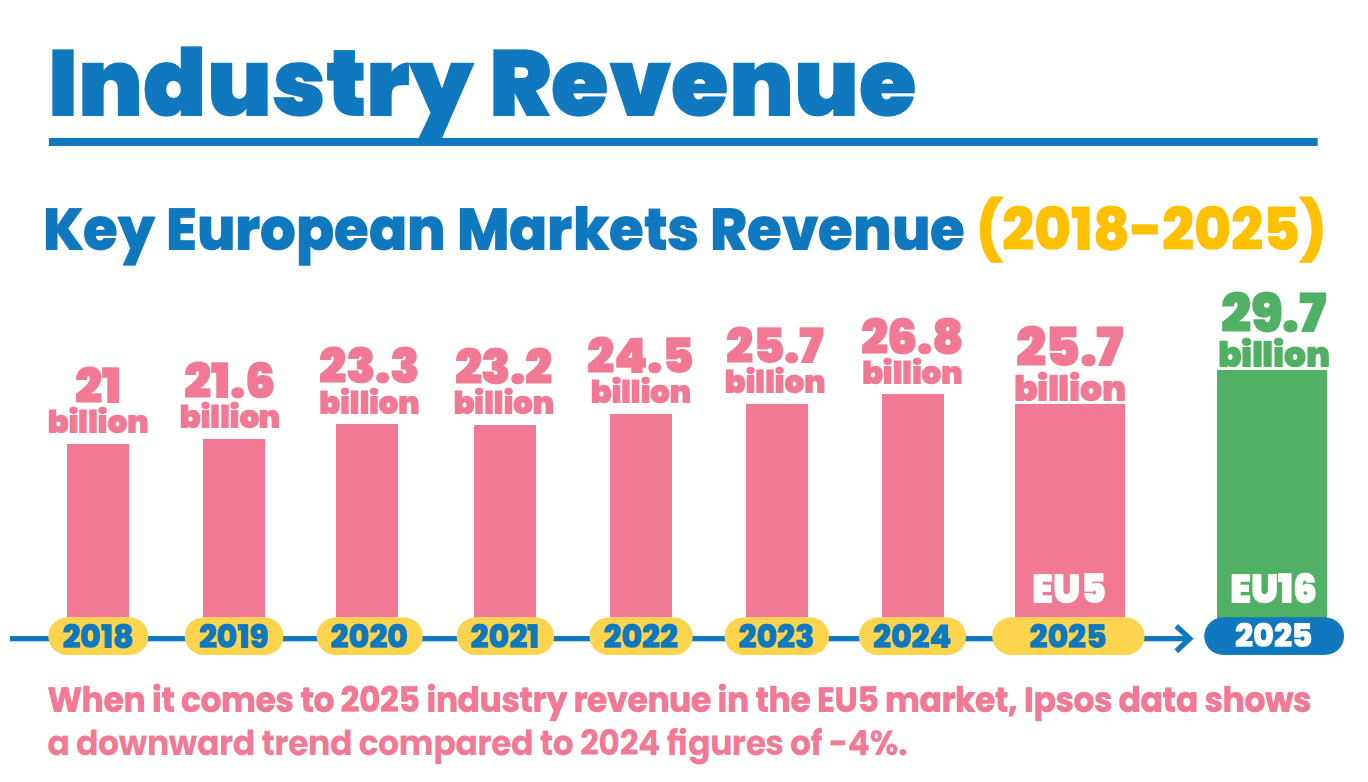
Sixteen European markets earned 29.7 billion euros in 2025.
A word from our sponsor

Need a freelance 3D artist, composer, or QA tester fast? Mellow’s AI Scout finds qualified talent in under 48 hours — free to try, no commitment. Describe the role, get a shortlist, hire when you’re ready.
The picture is worse for the five largest countries, which have been tracked since 2018. In 2025, the EU5 earned 25.7 billion euros (-4% YoY). That is the first meaningful decline in eight years of tracking, and a return to the 2023 level.
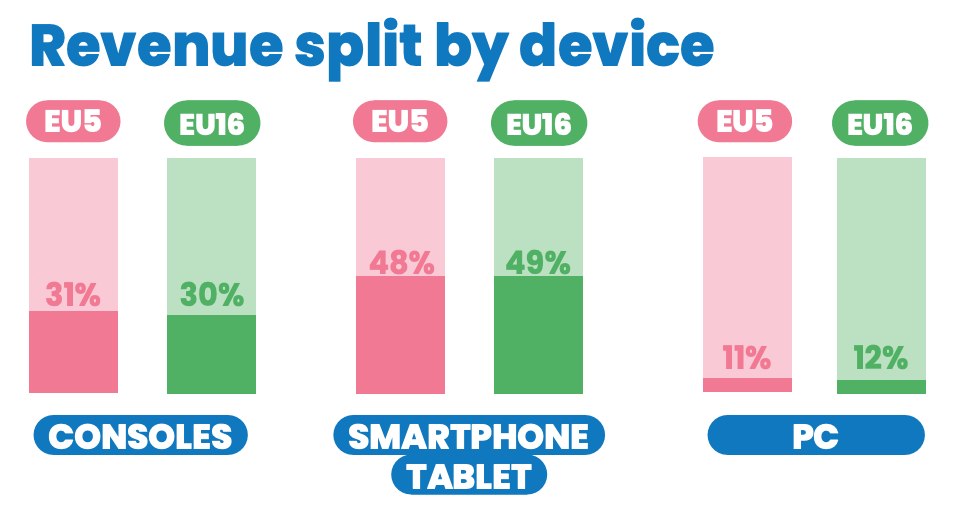
By device, smartphones and tablets account for 49% of EU16 revenue, consoles for 30%, and PC for 12%. The EU5 figures are similar.
❗️A year ago, consoles accounted for 38% of EU5 revenue and mobile for 44%. So in a single year, the console segment in Europe declined significantly. The 4% revenue drop across the EU5 is largely down to exactly that.
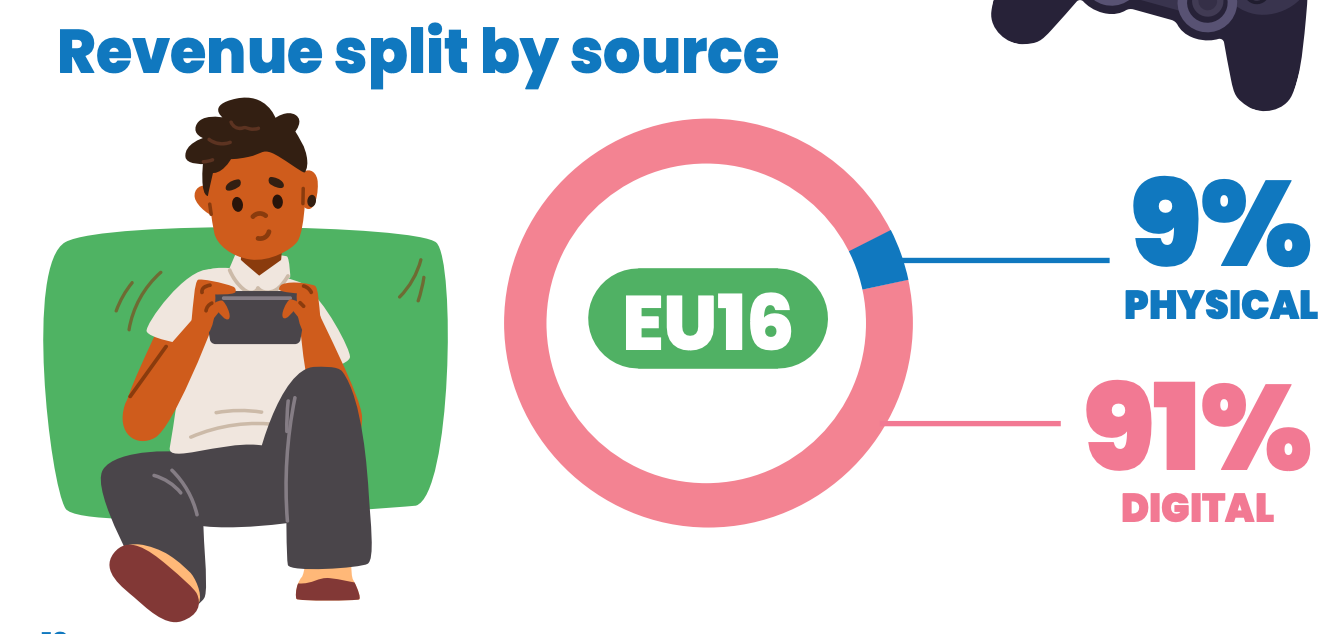
Digital distribution accounts for 91% of revenue, and physical copies for 9%. A year ago, the split was 90% and 10%.
The top three console releases of 2025 in Europe: EA SPORTS FC 26, EA SPORTS FC 25, and Battlefield 6. On PC, the best sellers are Battlefield 6, Red Dead Redemption II, and GTA V. On mobile, the top earners are Coin Master, Royal Match, and Candy Crush Saga.
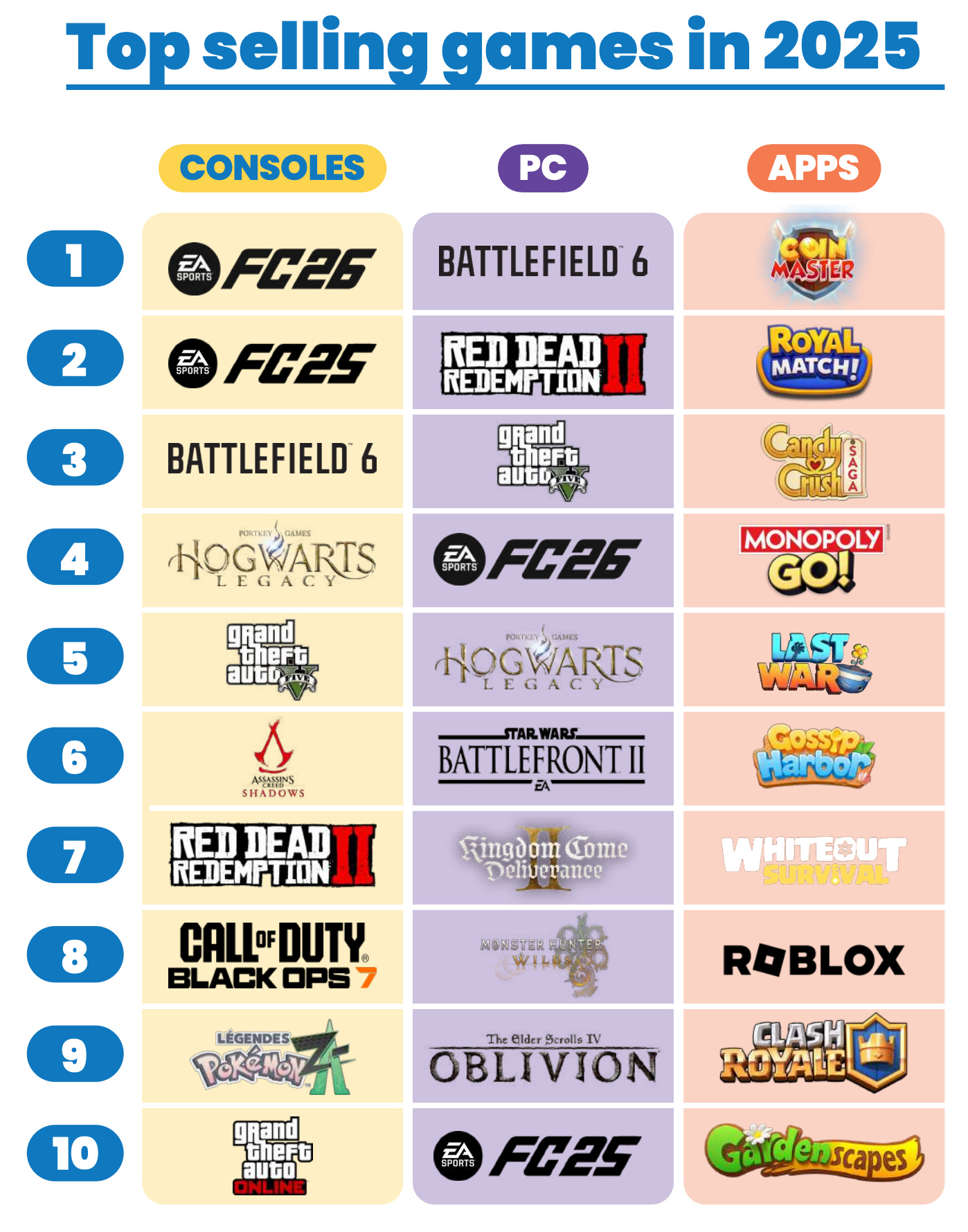
❗️The GSD charts only count publishers that submit their data. That is why the lists are missing Clair Obscur: Expedition 33, ARC Raiders, and Hollow Knight: Silksong.
Coin Master and Royal Match hold the top two spots in the European mobile chart for the second year running. Last year, Brawl Stars was third; Candy Crush Saga has taken its place.
❗️Forecasts for the direction of the European market differ sharply. Newzoo, in its latest forecast, expects the European market to reach 38.5 billion dollars in 2026 and grow 6.1%, while Ipsos reports a decline. Methodology matters, though, because Newzoo covers all of Europe and approximates the data, while Video Games Europe counts sixteen countries using actual figures (meaning VGE has more blind spots when sizing the market, but has higher precision).
The audience
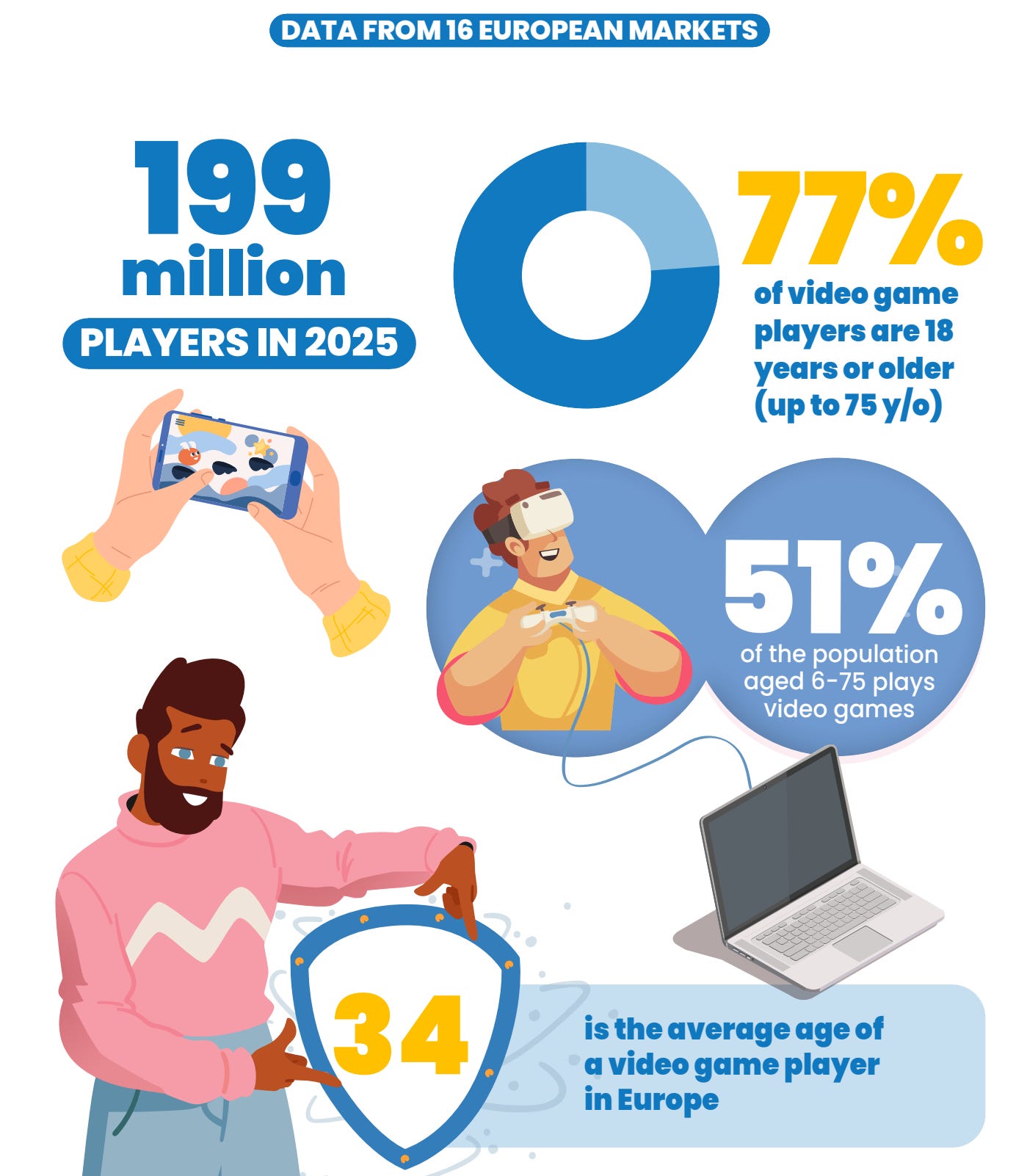
199 million people who play games live across the sixteen European countries. That is 51% of the population aged 6 to 75.
The average player in Europe is 34, and 77% of players are over 18.
Women make up 46% of European players, or roughly 91.5 million people. The average female gamer is 35, and women play 7 hours a week.
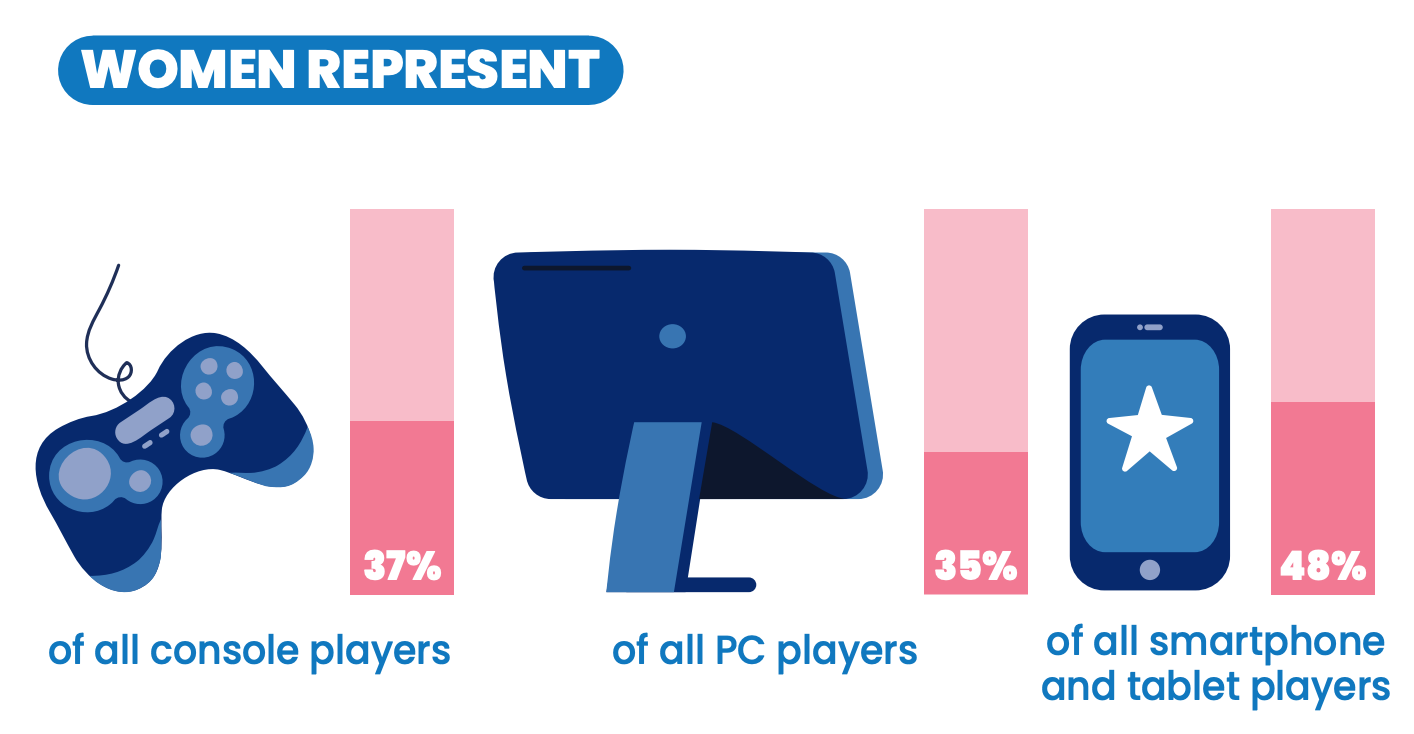
Women make up 48% of all mobile players, 37% of console players, and 35% of PC players.
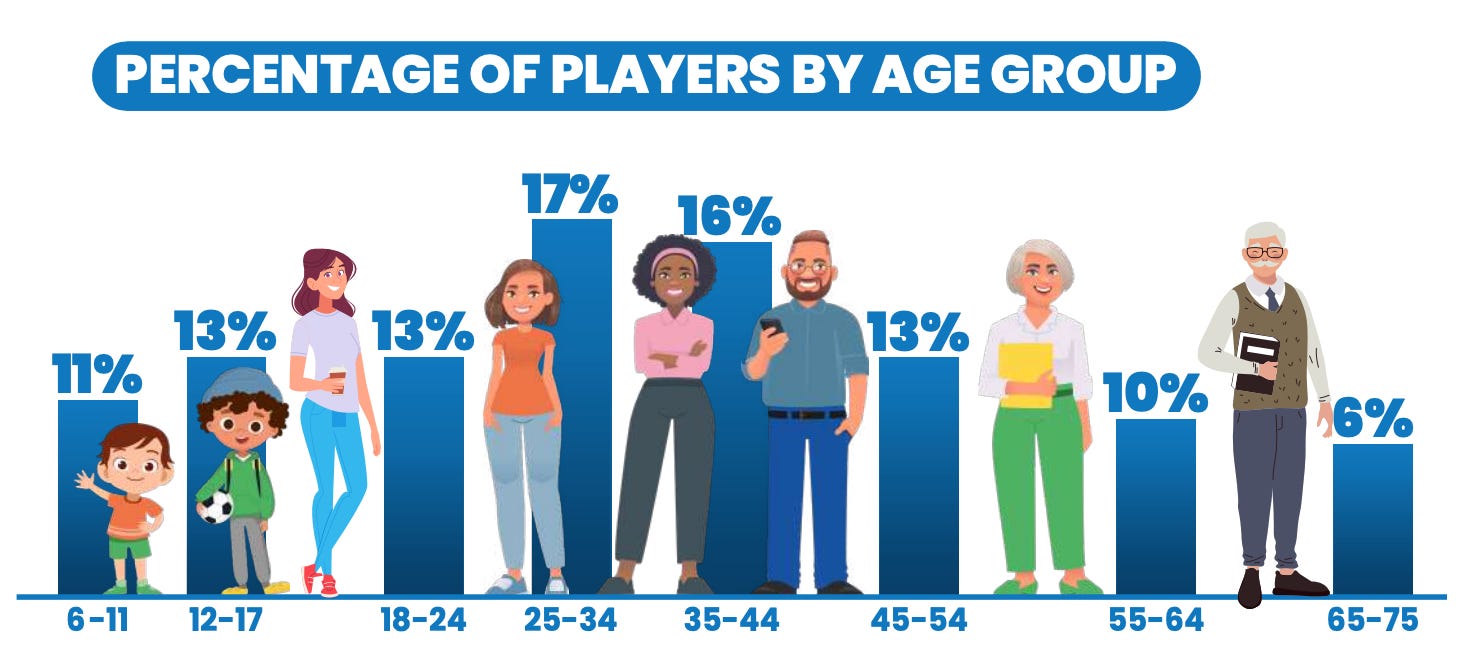
The audience is spread fairly evenly by age. The largest group is 25-34 (17% of all players), followed by 35-44 (16%). People aged 65-75 account for 6%.
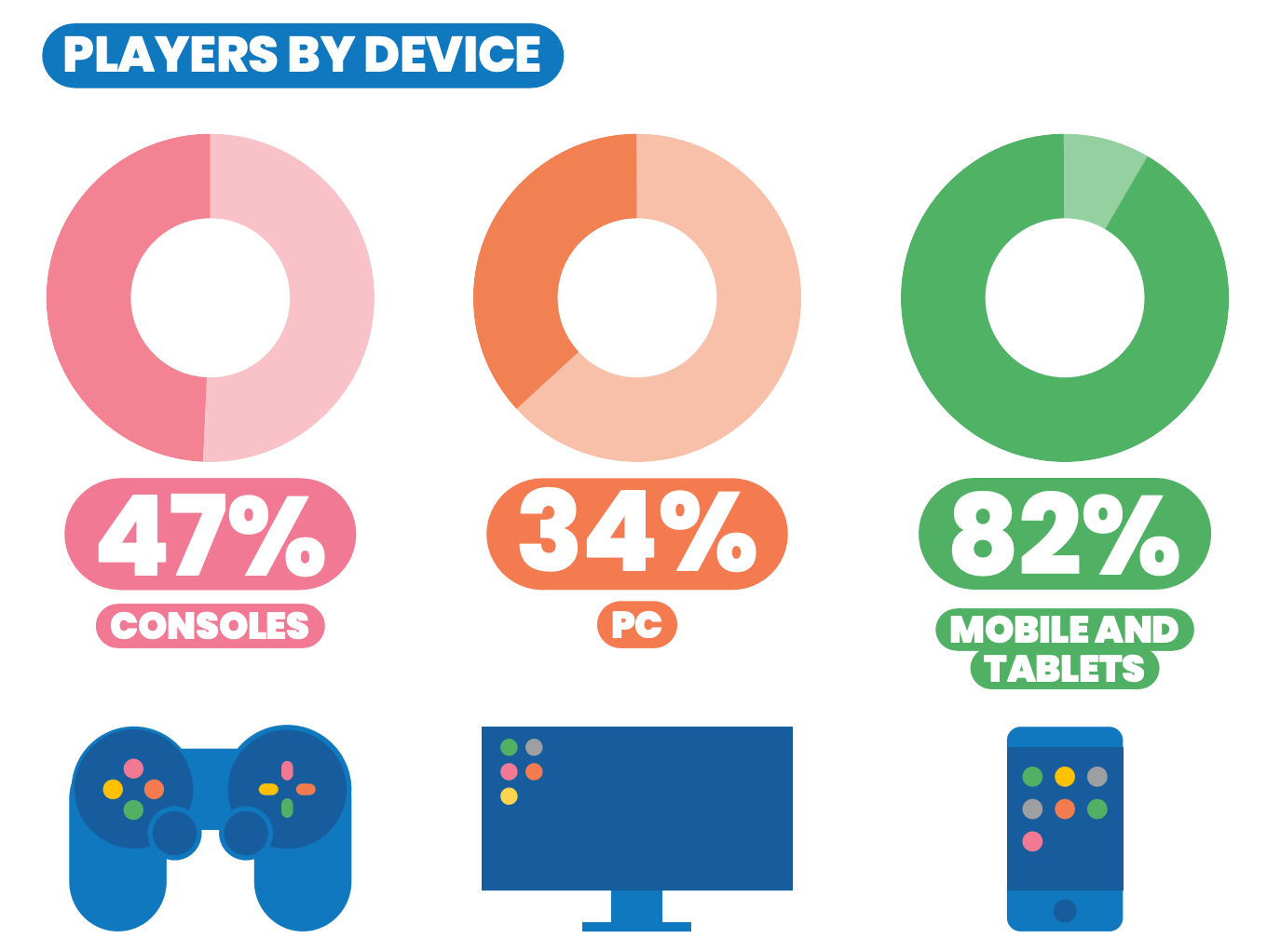
82% of players play on smartphones and tablets, 47% on consoles, and 34% on PC.
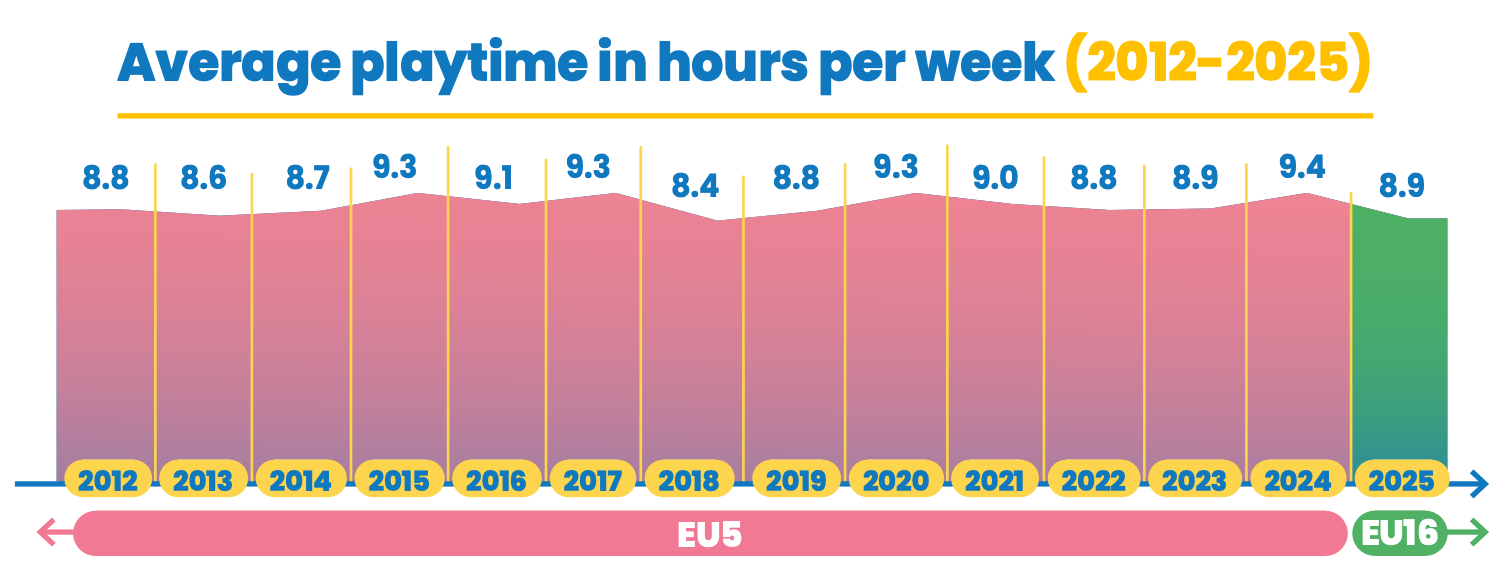
Europeans play an average of 8.9 hours a week. Last year’s report put the figure at 9.4 hours across five countries, a record since 2012. The figure now covers more countries.
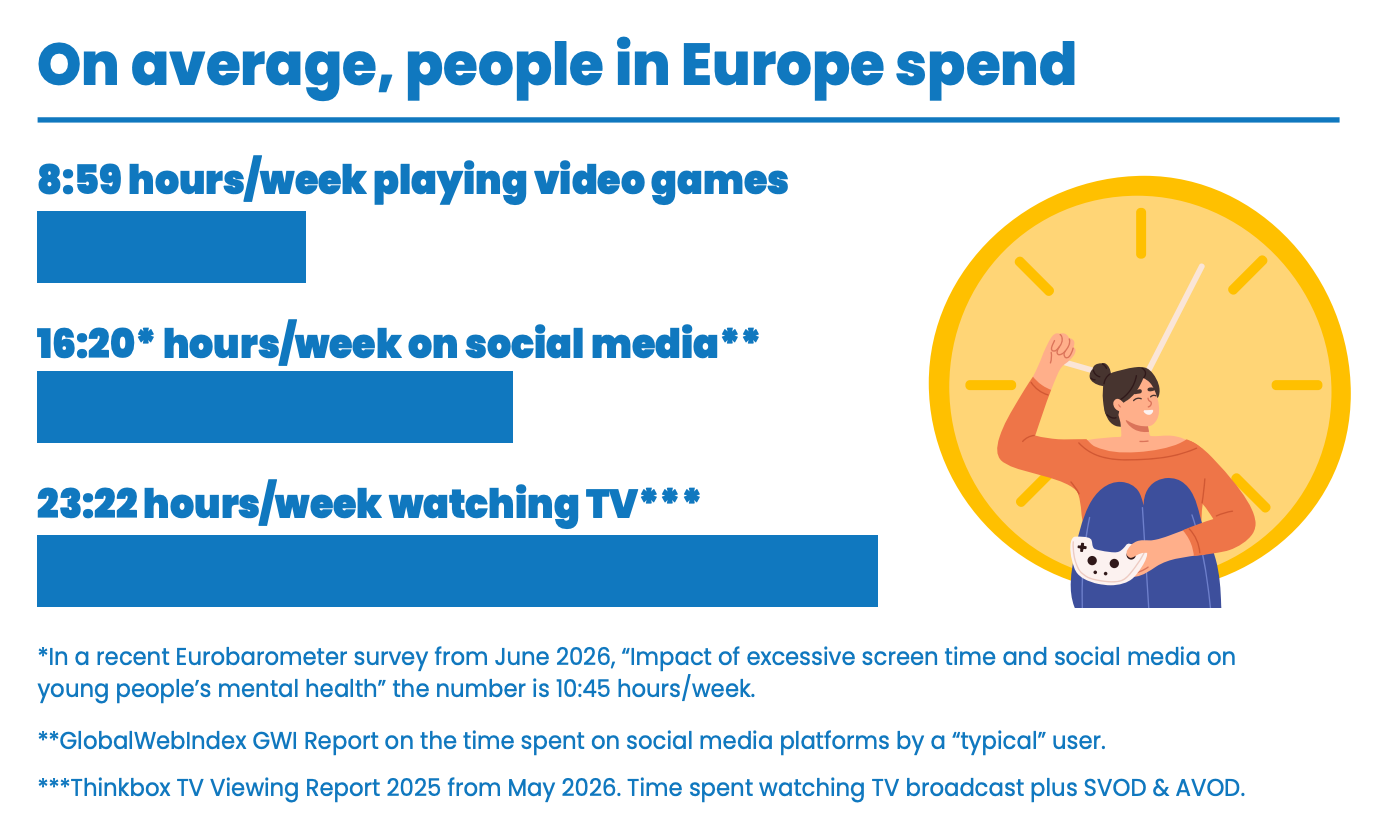
Games still trail other media in the time people spend on them. Europeans spend 16 hours 20 minutes a week on social media and 23 hours 22 minutes on television (including SVOD and AVOD).
Penetration is highest in Austria (78% of the population aged 6-75), Switzerland (74%), and the Netherlands (64%). It is lowest in Italy (29%) and the UK (44%).
❗️The UK is nonetheless Europe’s second-largest market, at 5.5 billion euros in revenue. Fewer than half its population plays, but that half spends noticeably more than its neighbors.
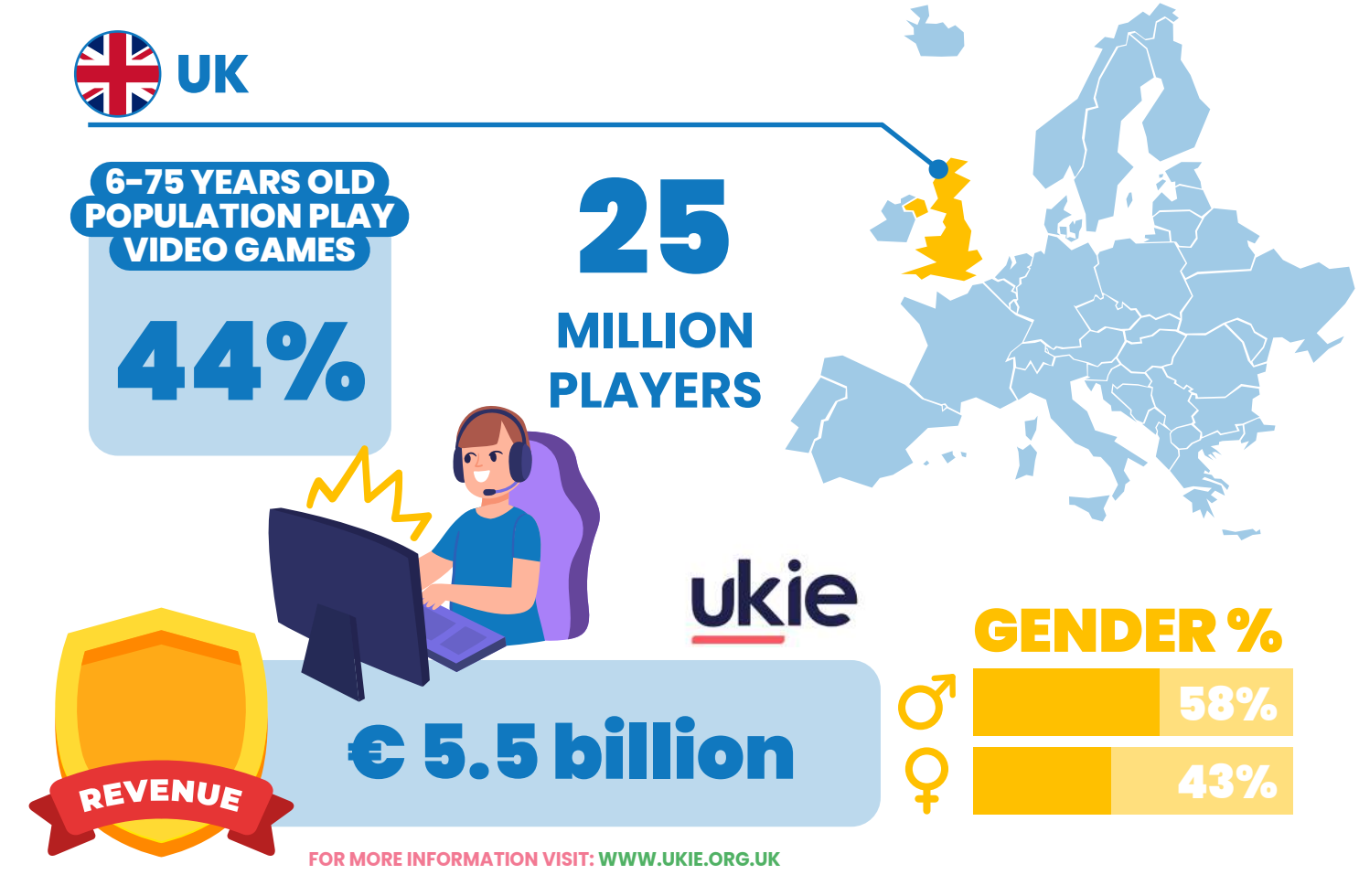
Germany leads on player count (37.7 million), followed by France (31.5 million) and the UK (25 million).
Revenue lines up as follows: Germany is first (6.5 billion euros), the UK second (5.5 billion euros), and France third (3.8 billion euros). Spain (2.29 billion euros) and Italy (1.8 billion euros) come next.
❗️The German association game, in its own report, counted 41.2 million players in the country and a market of 9.382 billion euros. The audience gap may come from different age brackets (6-69 versus 6-75) and counting methodology, while the revenue gap comes from the game also counting hardware, which is absent from the Video Games Europe figures.
The industry and employment
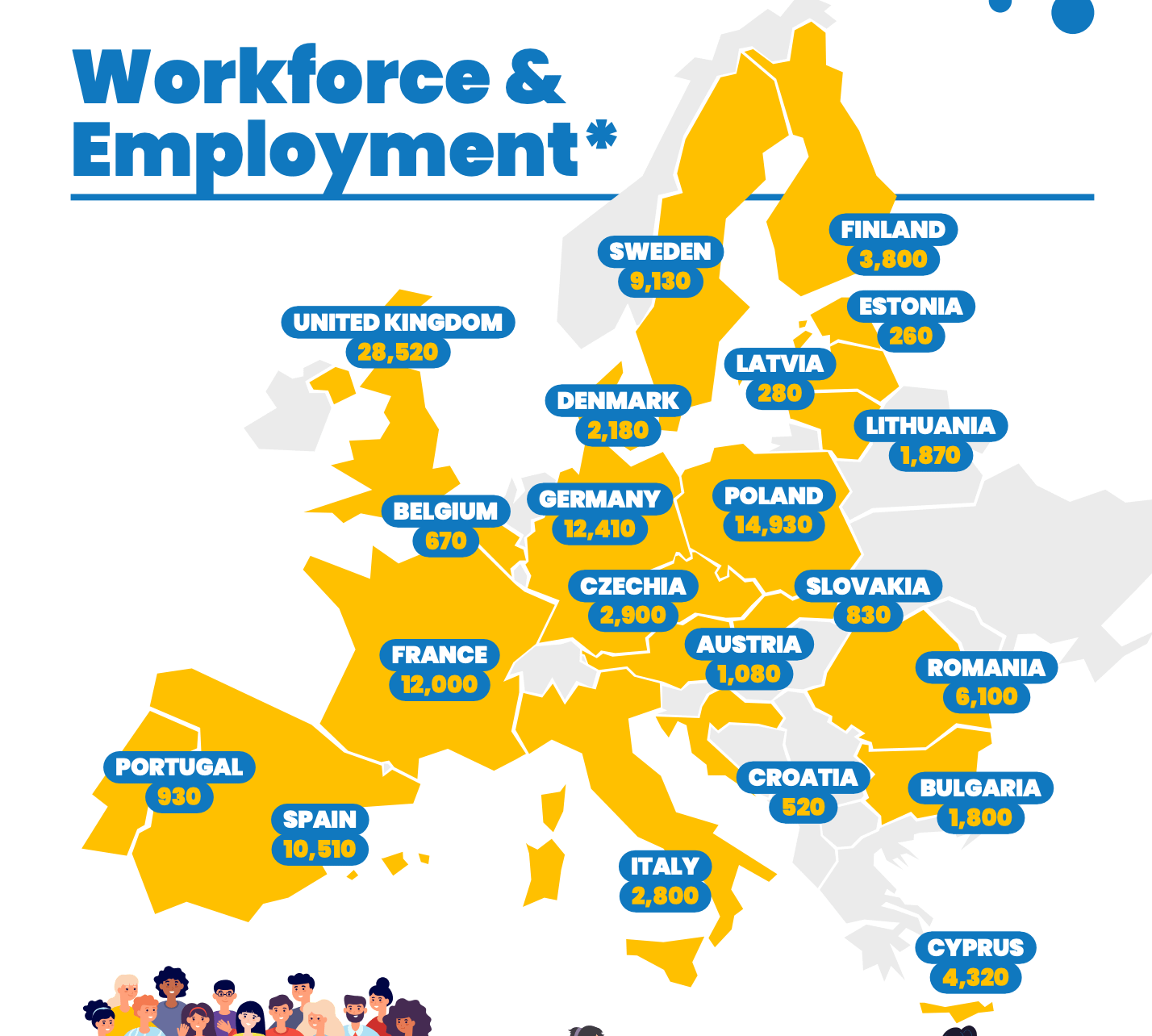
123,000 people work in the European games industry across 8,700 studios. Women make up 24% of them.
The largest workforces are in the UK (28,520 people), Poland (14,930), and Germany (12,410).
A word from our sponsor
Need a freelance 3D artist, composer, or QA tester fast? Mellow’s AI Scout finds qualified talent in under 48 hours — free to try, no commitment. Describe the role, get a shortlist, hire when you’re ready.
Last year’s report listed 116,419 people. This time, though, the sample added data from Cyprus (4,320 people), France (12,000 people), and Bulgaria (1,800 people). So the number of people employed in the games industry has fallen significantly over the past year.
Cyprus, with a population of about a million, accounts for 4,320 jobs in the industry. That is more than Finland (3,800), Italy (2,800), or Denmark (2,180).
PEGI: the biggest change since 2003
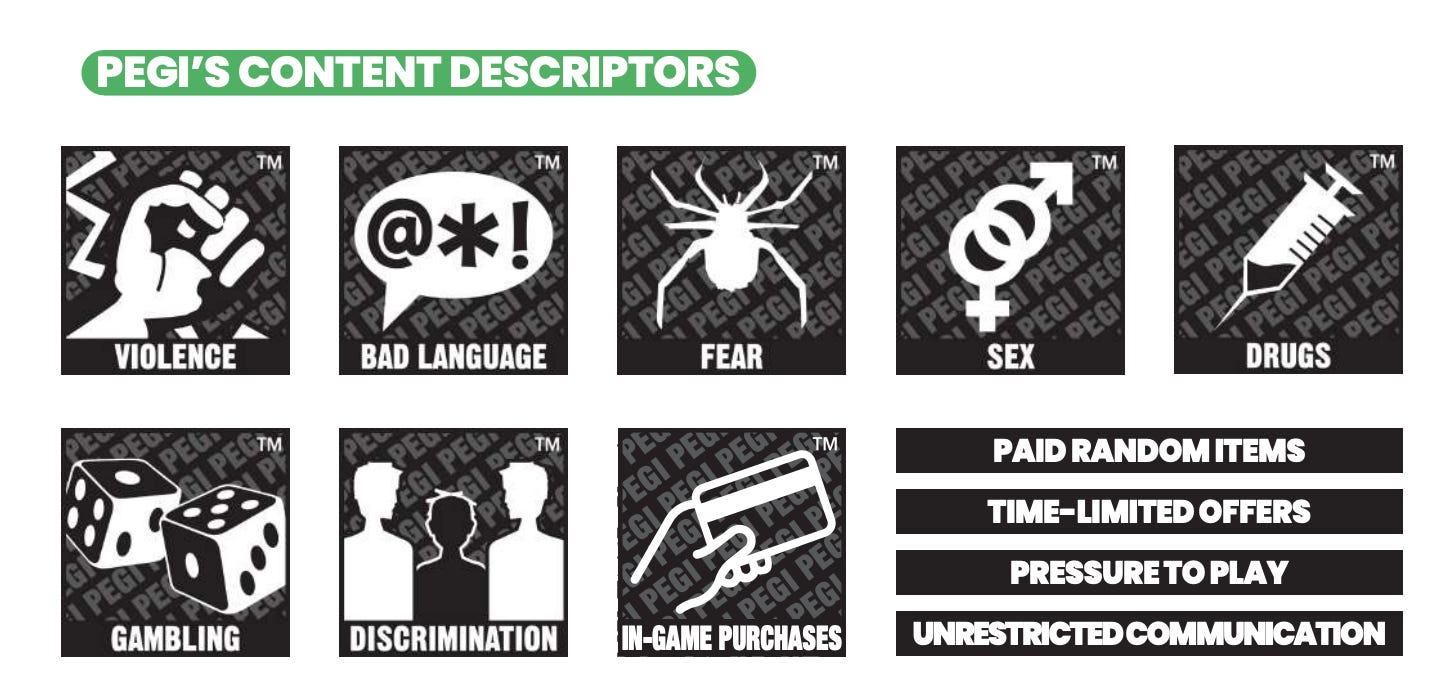
Starting in June 2026, PEGI classifies games by functionality as well as by content. The criteria now include in-game content purchases, paid random items, unrestricted communication, and mechanics that incentivize players to keep playing.
Games with paid random items get PEGI 16 by default, and PEGI 18 in some cases.
Games with time-limited or quantity-limited offers get PEGI 12. Games with NFT or blockchain mechanics get PEGI 18.
Mechanics that penalize a player for not returning (losing content or progress) get PEGI 12. Mechanics that simply reward engagement (daily quests) get PEGI 7.
Games with unrestricted communication, with no blocking or muting, get PEGI 18.
The rules are mandatory for new games from June 2026, and already-released titles have to comply by October.
❗️The new criteria cover practically every F2P project: loot boxes, time-limited offers, and daily quests are almost everywhere. PEGI itself calls this the biggest reform of the system since it was created in 2003.
There are new descriptors, too: Paid Random Items, Time-Limited Offers, Pressure to Play, and Unrestricted Communication.
Violating the PEGI Code of Conduct carries a fine of 5,000 to 500,000 euros, repackaging, or a product recall.
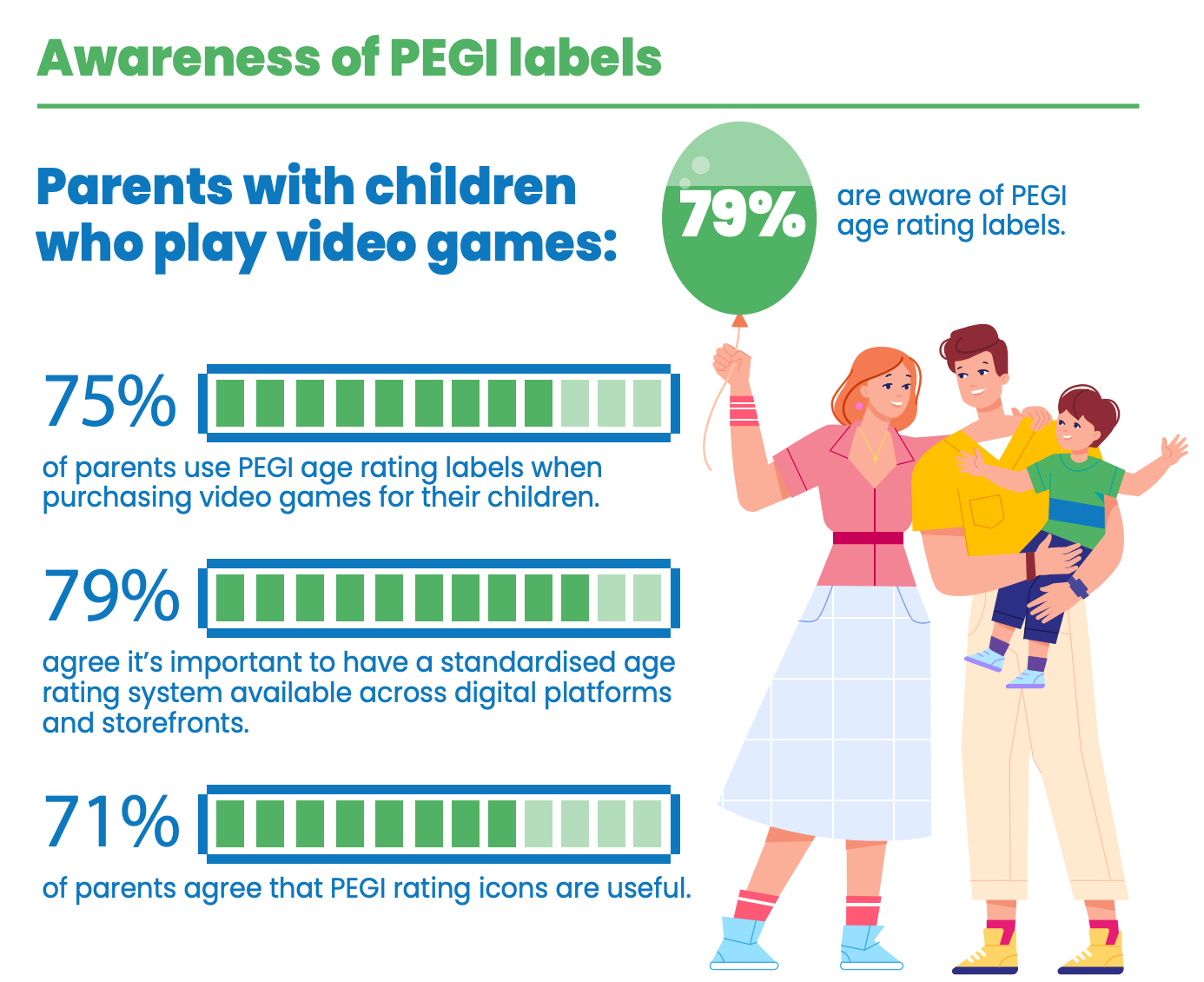
79% of parents with children know about PEGI ratings, and 75% use them when buying games for their children.
Children and parents
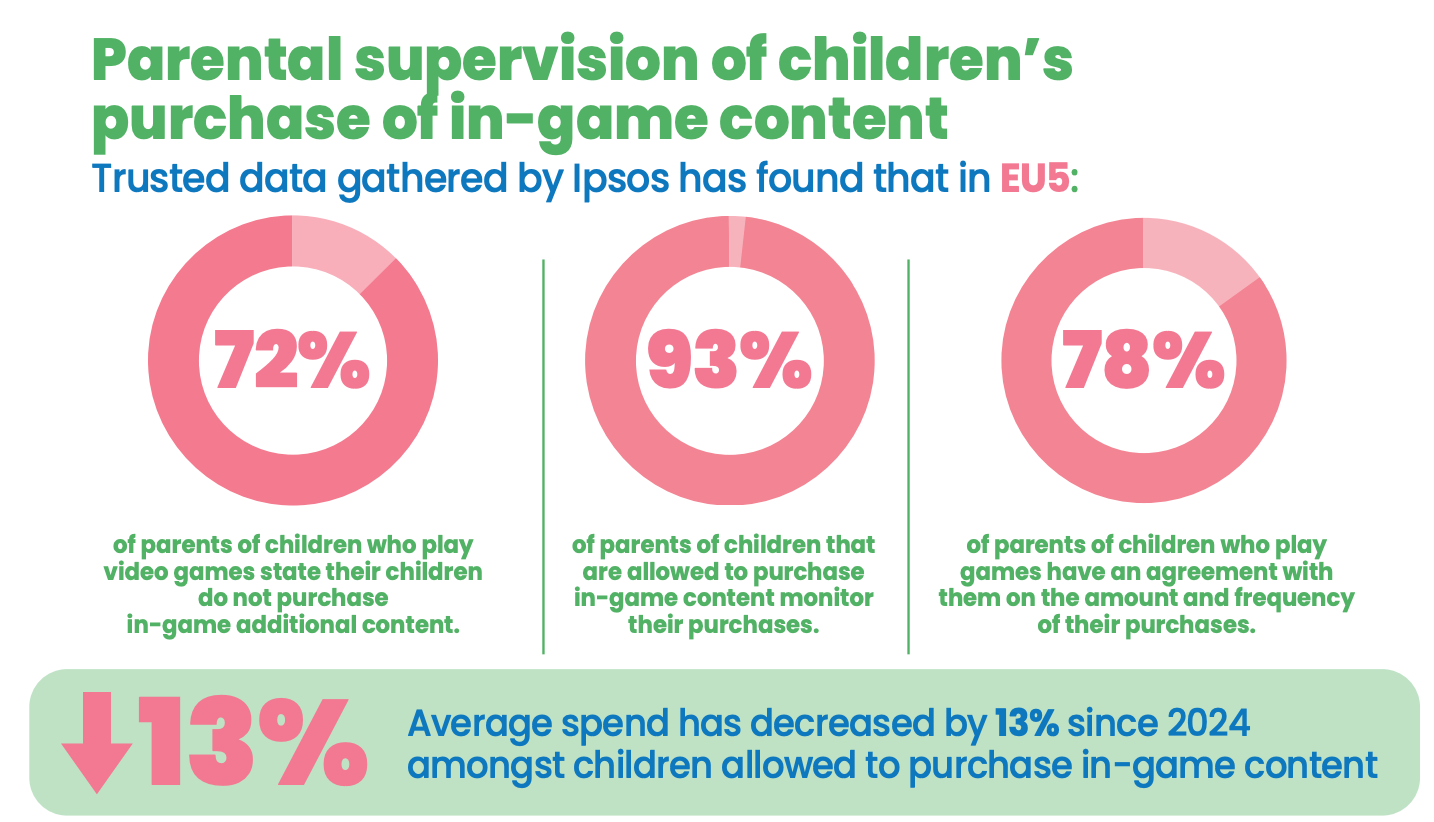
72% of parents say their children do not buy in-game content. A year ago the figure was 76%.
Among parents whose children are allowed to buy, 93% monitor those purchases. 78% have an agreement with their child on how much and how often they can spend.
Average spending by children who are allowed to buy fell 13% compared with 2024. The year before, the drop was 21%.
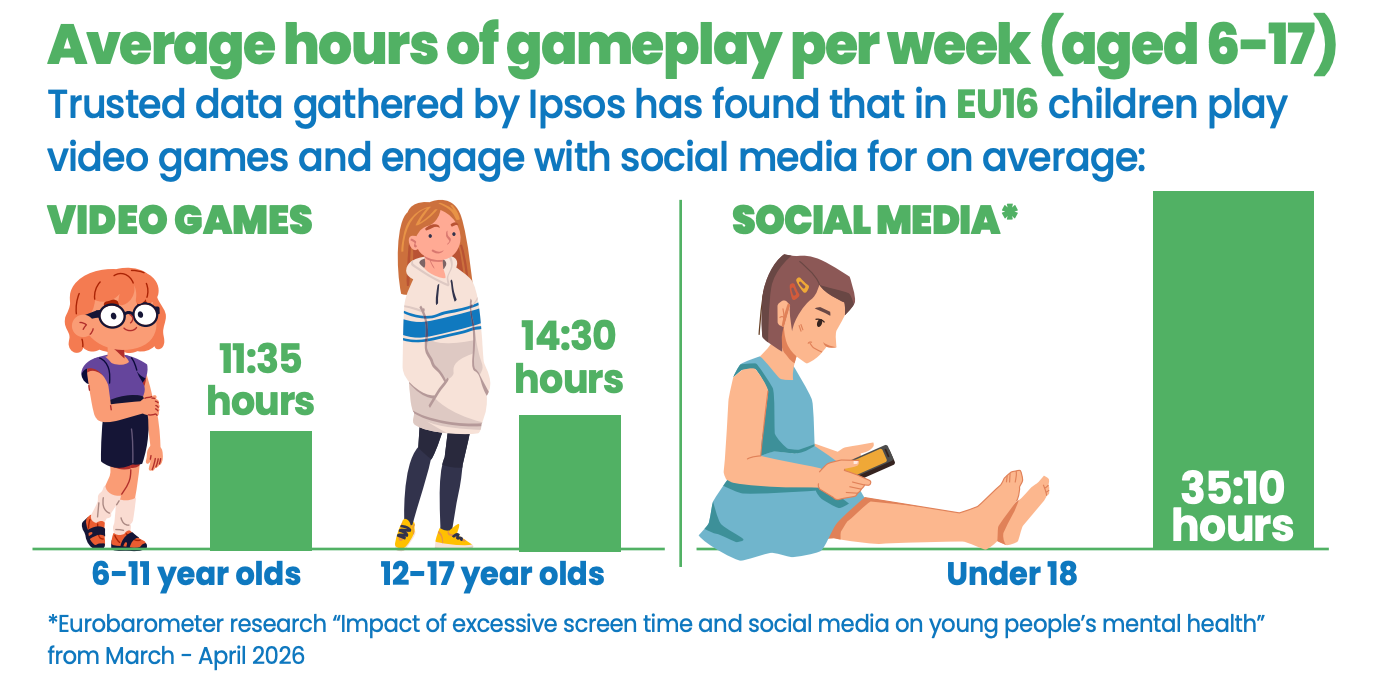
Children aged 6-11 play an average of 11 hours 35 minutes a week, and children aged 12-17 play 14 hours 30 minutes. Under-18s spend 35 hours 10 minutes a week on social media.
79% of parents use at least one parental control tool, and 74% monitor their child’s online communication in games in some form.